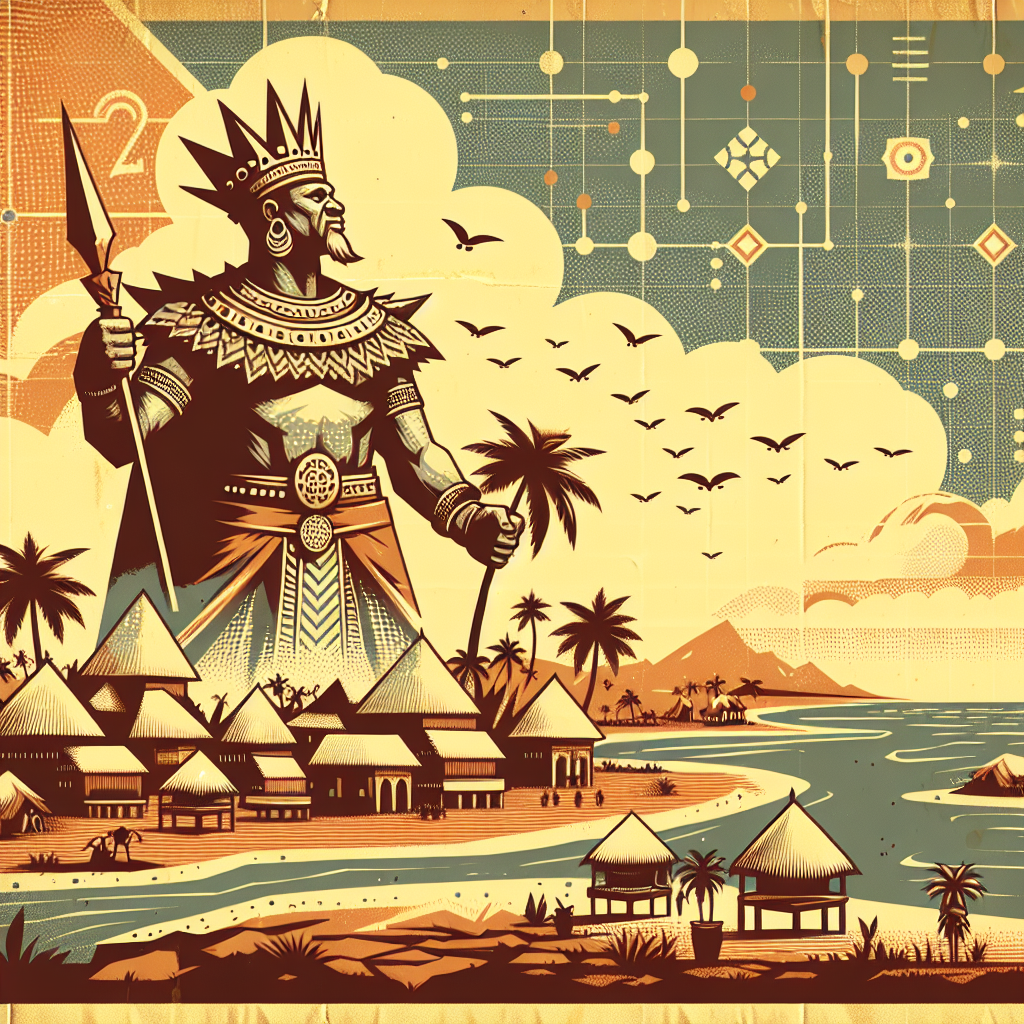

Imagine being crowned king not by virtue of birth, but by sheer determination and brilliance. That's the story of King Jaja of Opobo, a man whose impact still echoes through history. Born in the year 1821 in what is now modern-day Nigeria, a boy named Jubo Jubogha began his life in a way so many others did at the time—captured and sold into slavery. However, his story would take a remarkable turn, transforming him into a pioneering leader and a symbol of resilience.
King Jaja's journey from an enslaved youth to a paramount chief is one that combines a mix of hardship and cunning strategy. After gaining his freedom, Jaja became involved in trade and quickly climbed the ranks to become the head of the Anna Pepple House—the most influential merchant house in Bonny, which was a prominent trading hub. By the time he founded the Kingdom of Opobo in 1870, Jaja had become an influential player, utilizing his wits to maintain control of the palm oil trade, which was a booming industry at the time.
In choosing the site for Opobo, Jaja displayed remarkable foresight. The kingdom was strategically located within the lucrative Niger Delta area, which facilitated easy access to the trade routes. This advantageous positioning allowed King Jaja to wield substantial influence over trade dealings with European powers, who were eager to acquire palm oil and other resources. Yet, Jaja's story was not just about trade; it was also about defying imperial domination.
As his wealth and power grew, so did tensions with the British, who were keen on expanding their colonial reach into Africa. Jaja's refusal to grant the British control over Opobo's trade routes fueled conflict. His assertion of economic independence was a bold challenge to the colonial order, but it eventually led to his downfall. On a fateful trip to London in 1887, under the guise of diplomatic talks, Jaja was arrested and exiled to the West Indies. Many saw this as an unjust demonstration of colonial force.
King Jaja's legacy lives on, not only in history books but also through the 'King Jaja of Opobo Memorial'. This memorial stands as a testament to his remarkable life, a symbol of what it means to rise against odds, challenging the status quo. Located within the community he established, the memorial is a gathering spot for those who remember his contributions to the cultural and economic fabric of Nigeria. It serves as a reminder of the complex interactions between traditional societies and colonial powers.
The narrative of King Jaja of Opobo stirs a mix of admiration and reflection. On one hand, it showcases his incredible leadership and vision; on the other, it highlights the harsh realities of colonial manipulation and greed. Critically, it prompts us to consider the perspectives of both the colonized and the colonizers. From the angle of the colonizer, Jaja represented an obstacle to Britain's perceived civilizing mission, a narrative used historically to justify imperial expansion. Yet, this same narrative often fails to account for the ambitions, dreams, and agency of the colonized themselves.
The younger generation, particularly Gen Z, has much to glean from Jaja's life. As digital natives, Gen Z connects dots differently, valuing stories of resistance and triumph. They understand deeply that sovereignty and control over one's resources should never be taken lightly. Globalization has repackaged colonialism's economic patterns, which makes Jaja’s story relevant in the conversations that we continue to hold about equity, fairness, and justice on a global scale.
In thinking about how far Africa and the world have come since the days of Jaja, we must recognize the need for vigilance against modern forms of exploitation. The memorial is a stark reminder, a call to action to address the issues of the present with the lessons of the past. Jaja’s defiance teaches us about the power of self-determination—the belief that individuals and communities can resist forces that aim to confine them to a certain narrative or system.
The memory of King Jaja of Opobo goes beyond his role in Nigeria's palm oil trade. It transcends his interactions with British colonial forces. His resilience, strategic intelligence, and dedication to his people establish him as an iconic figure—a leader whose story encourages reflection on Africa's historical narrative and its position today in a global society. The legacy of Jaja invites us to examine his life not just as black and white, but as a spectrum of challenges and victories that continue to inspire hope for the future.
History tends to repeat itself if its lessons are ignored, and thus, remembering King Jaja is crucial for crafting the kind of nuanced global conversations that advocate for justice and equity today. As we continue examining these historical narratives, the importance of memorials takes center stage, providing a space for learning, reflection, and perhaps, inspired action.