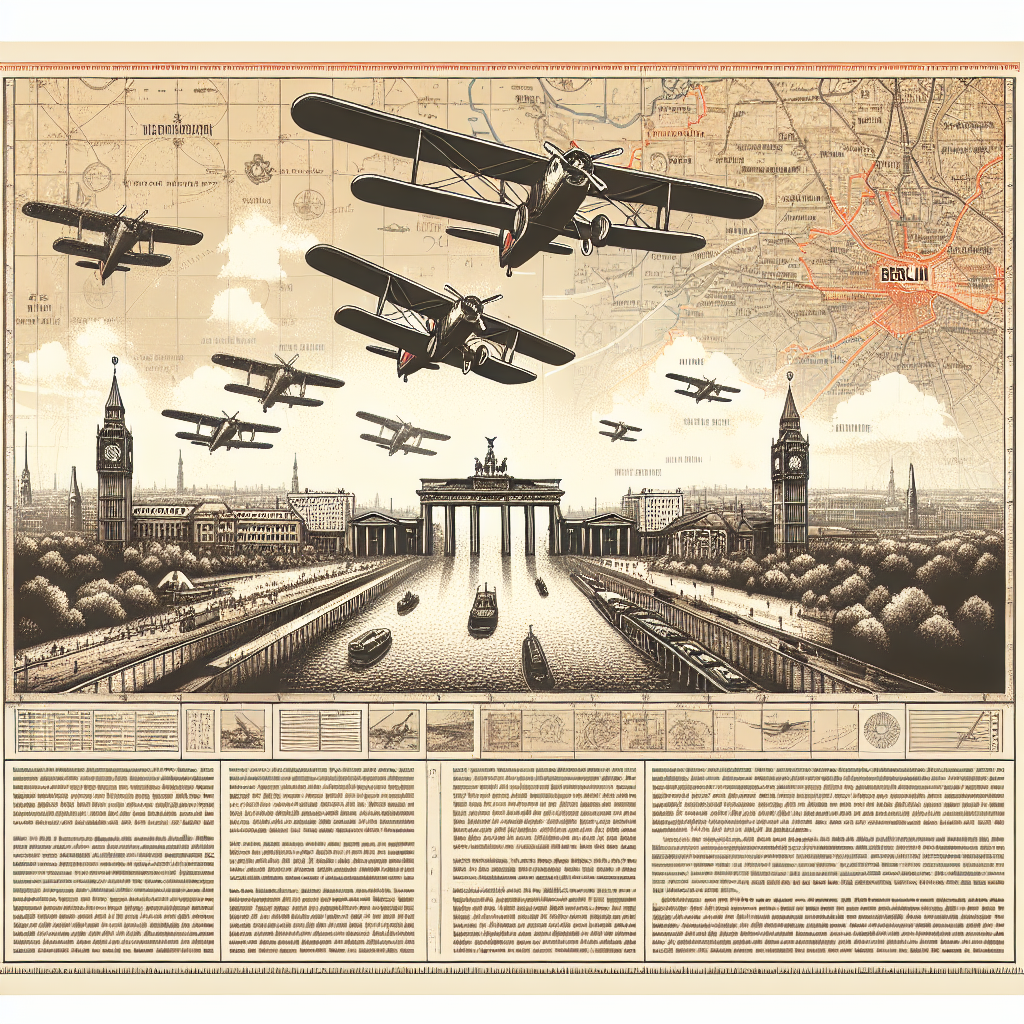

June 1948 was no ordinary month in a year already filled with post-war changes and tensions. This was the time when the Berlin Airlift began, an incredible operation led by the Western allies, a daring move in response to the Soviet Union’s blockade of land routes to West Berlin. It was a momentous occasion not just for what it represented in terms of geopolitical chess, but also for the very real impact on the lives of Berliners who faced potential starvation. The significance of this month stretched from political offices in Washington D.C. and Moscow all the way to the people on the ground in Germany, whose daily lives were directly affected. The resilience shown by Berliners through their willingness to rely on air shipments for food and supplies was nothing short of extraordinary.
Amidst these post-war alliances and confrontations, June 1948 also marked the establishment of the National Health Service (NHS) in the United Kingdom under the Labour government. This felt like a radical revelation in healthcare and remains a milestone that young people across generations could appreciate. For the first time, healthcare became a right and not a privilege, ensuring every citizen had access to medical care funded by taxation. It’s a concept that has stirred debate for decades, especially amongst those who struggle with the idea of government-managed health care. Yet, to many, the NHS symbolizes a promise of equality, offering hope where there was once none.
Elsewhere, the issue of integration was taking on a unique form. In the United States, as the presidential campaign of 1948 heated up, President Harry S. Truman signed Executive Orders 9980 and 9981, which aimed at desegregating the armed forces and the federal workforce. This was no small feat in an era where racial discrimination permeated almost every aspect of American life. Many saw this as an overdue step towards racial equality, while others viewed it as a drastic shift away from embedded societal norms. This period was fraught with opposition, and Truman’s actions divided opinions. Yet, it helped lay some groundwork for the Civil Rights activity that would gain momentum in the following decades.
That month was also home to a cultural milestone: the introduction of the Long Playing Record or LP by Columbia Records in New York City. This revolutionized the music industry by allowing longer albums and gave artists room to experiment with concepts and themes beyond the limits of previous formats. The LP would fuel the music explosion known as the “album era,” deeply influencing how music would be experienced and produced in the following decades. This innovation was a starting line not just for musicians but also for music lovers who would find joy, solace, identity, and protest in those spinning circles of vinyl.
To consider June 1948 is to embrace the extent of human ingenuity and resilience on both macro and micro scales. On one hand, worldwide political tensions challenged the strength of newly formed alliances, representing a turning point in the Cold War relations. Governments grappled with taking stands and making decisions that would lay the groundwork for future peace and conflict alike.
At the same time, the shifts happening were deeply personal. They were about ensuring that people who lived with uncertainty could access food, healthcare, and jobs without discrimination. These events are a testament to the strength and complexity of humanity during transformative times.
Even when considering modern debates around universal healthcare or military policy, the actions taken in June 1948 remain influential. This tells us something about the strength of visionaries willing to battle the status quo and strive towards more equitable systems. That doesn’t mean it was easy, nor does it suggest that everyone agreed. It does, however, reflect a determination to push for something better—even if it wasn’t perfect.
Sometimes, it takes looking back to appreciate how far we’ve come and recognize where the roads have led and diverged. June 1948 was indeed a pivotal moment, full of complexities that echo through to today. And while we might look at these events from our current lens, layered with decades of hindsight, they still remind us of the power of bold decisions and solidarity in times of adversity.