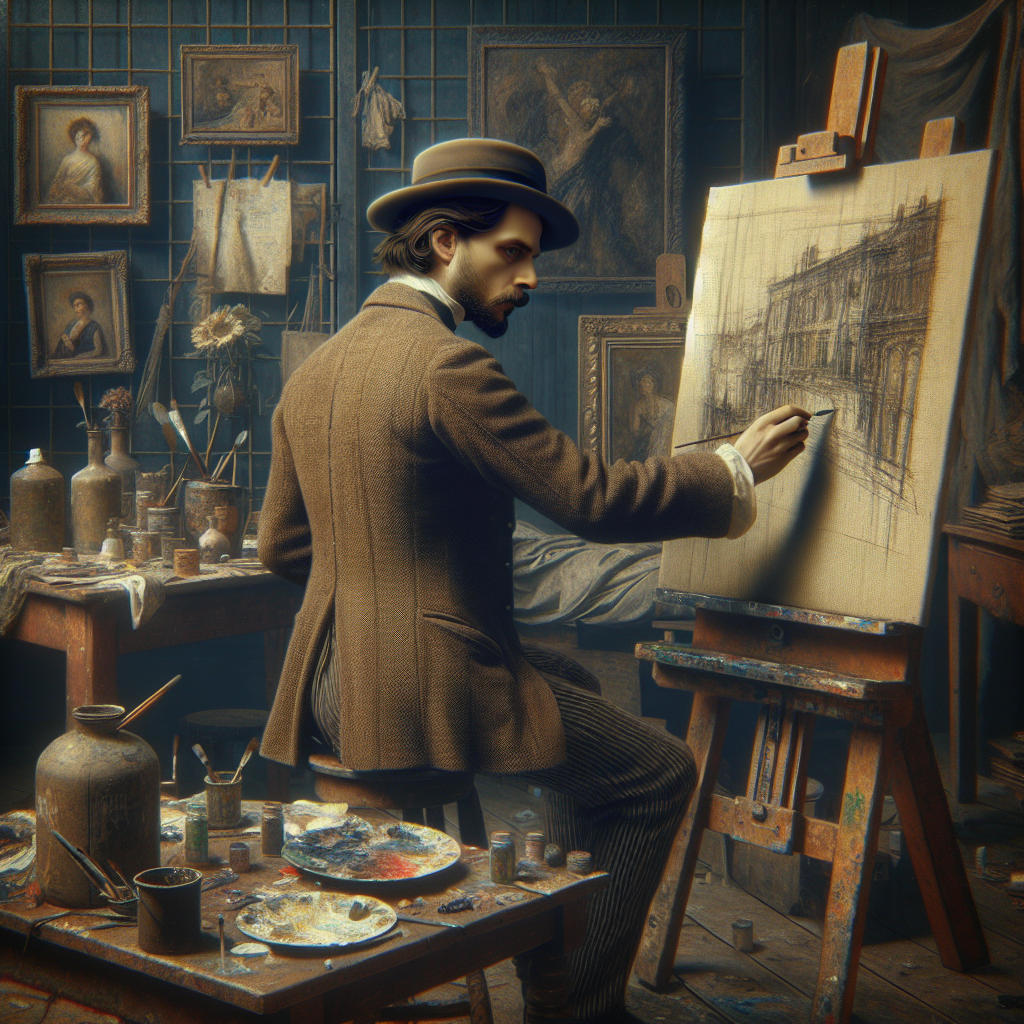

The Artistic Legacy of John Butler Yeats
Imagine a world where art and intellect collide, creating a legacy that transcends generations. This is the world of John Butler Yeats, an Irish artist and intellectual whose influence is still felt today. Born in 1839 in County Down, Ireland, Yeats was a man of many talents. He was not only a painter but also the father of one of the most famous poets of the 20th century, W.B. Yeats. His life spanned a period of great change, from the Victorian era into the early 20th century, and he spent much of his later life in New York City, where he continued to paint and write until his death in 1922. Yeats's work and ideas were deeply rooted in the cultural and political upheavals of his time, making him a fascinating figure to explore.
John Butler Yeats initially studied law at Trinity College Dublin, but his passion for art soon took over. He moved to London to study at the Heatherley School of Fine Art, where he honed his skills as a portrait artist. His portraits were known for their psychological depth and attention to detail, capturing not just the likeness but the essence of his subjects. Yeats's work was well-received, and he became a respected figure in the art world. However, his career was not without its challenges. He often struggled financially and faced criticism for his unconventional style, which did not always align with the prevailing tastes of the time.
Despite these challenges, Yeats remained committed to his art and his ideals. He was a firm believer in the power of art to inspire and provoke thought. His work often reflected his interest in the human condition and the complexities of identity. Yeats was also deeply engaged with the cultural and political issues of his time. He was a supporter of Irish nationalism and believed in the importance of preserving Irish culture and heritage. This commitment to his roots is evident in his work, which often features themes of Irish history and mythology.
Yeats's influence extended beyond his own work. As the father of W.B. Yeats, he played a significant role in shaping the poet's worldview and artistic sensibilities. The elder Yeats's intellectual curiosity and passion for art and literature were passed down to his children, who went on to make their own significant contributions to the arts. W.B. Yeats, in particular, credited his father with instilling in him a love of literature and a deep appreciation for the power of words.
While John Butler Yeats's work may not be as widely known as that of his son, his contributions to the art world and his impact on his family are undeniable. His portraits continue to be celebrated for their emotional depth and technical skill, and his writings offer valuable insights into the cultural and political landscape of his time. Yeats's legacy is a testament to the enduring power of art and the importance of staying true to one's ideals, even in the face of adversity.
In considering the life and work of John Butler Yeats, it's important to acknowledge the broader context in which he lived. The late 19th and early 20th centuries were a time of great change and upheaval, both in Ireland and around the world. Yeats's work reflects the tensions and contradictions of this period, offering a window into the complexities of identity, culture, and politics. His commitment to his art and his ideals serves as an inspiration to artists and thinkers today, reminding us of the power of creativity and the importance of staying true to our values.