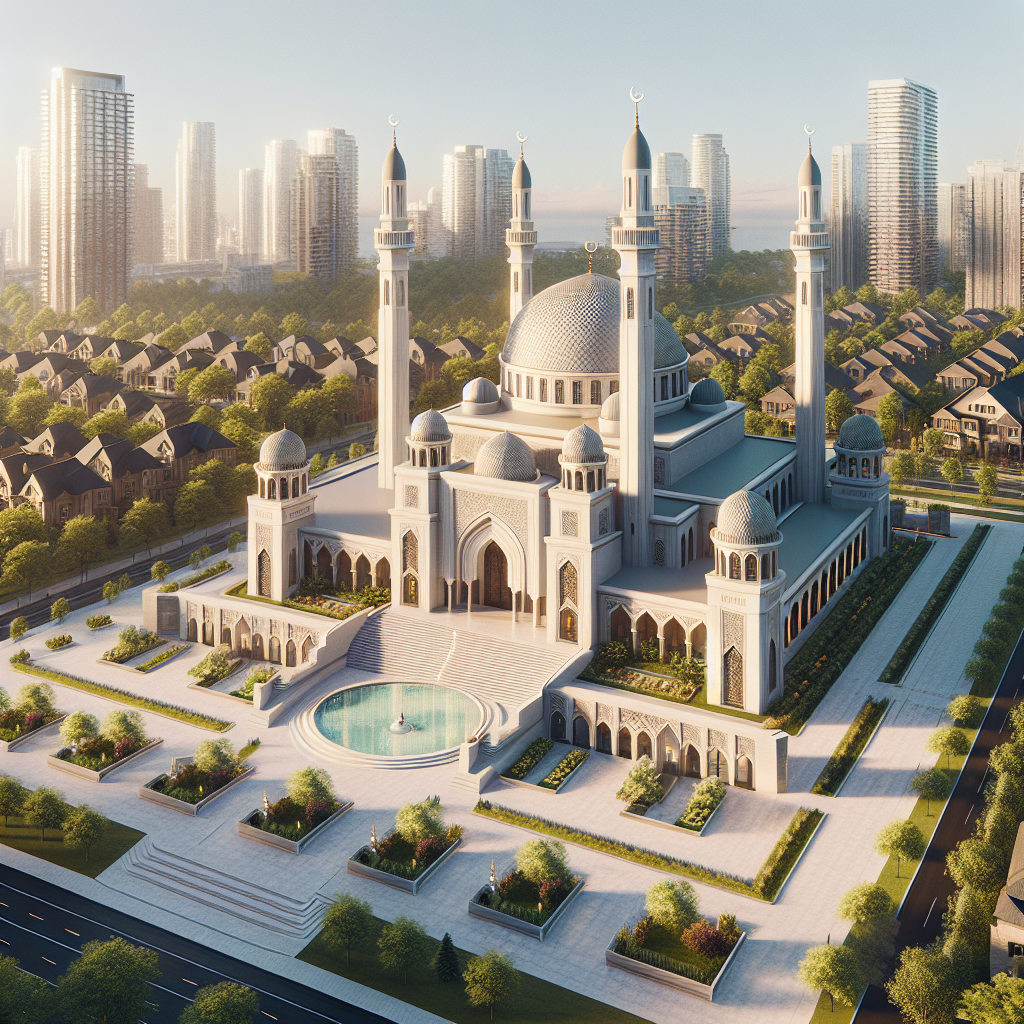

Bathed in a swirl of urban sounds and city bustle stands Toronto's Jami Mosque, a mesmerizing blend of history, architecture, and community spirit. Built originally in 1910 as a Presbyterian church, this building has gracefully morphed into a vibrant hub for Muslims in the area. Acquired by its current owners in 1969, it highlights a fascinating cultural shift showing how urban spaces remain fluid, constantly adapting to the dynamic tapestry of Toronto’s population. Located in the pulsating heart of Toronto’s Bloor West Village, the mosque continues its century-long legacy of bringing people together.
Despite its vital role, the Jami Mosque doesn't just serve as a spiritual haven. It wears multiple hats. Nestled in an ever-evolving multicultural enclave, it has become a symbol of unity. The building itself is a beautiful piece of architecture with arched windows and a striking dome that mirrors traditional Islamic art aesthetics and serves as a welcoming beacon for worshippers and visitors alike. It’s a place where faith is expressed not just through prayer, but through community initiatives, educational programs, and outreach activities, making it a significant pillar of support in the surrounding neighborhoods.
Its role in offering a safe space for discourse and mutual respect cannot be overemphasized. Faith is complicated, personal, and sometimes controversial. Yet, spaces like the Jami Mosque manage to transcend these boundaries by offering not only religious services but also a platform for people of different backgrounds to engage in dialogue. This dialogue isn't just between Muslims but extends across faiths, emphasizing mutual respect and understanding. This effort towards building bridges is crucial, especially in a world sometimes scarred by fear and misunderstanding.
The community spirit at the Jami Mosque is infectious. It hosts a variety of programs catering to different age groups, including youth mentoring initiatives and women’s study circles. These programs are designed not just to educate but to empower. They encourage young minds to think critically about their faith, their place in society, and their potential to make a positive impact in their communities.
Moreover, the Jami Mosque is known for its charitable work. It hosts food drives, collects clothing for the needy, and provides refugee support, showing a commitment to social justice. For those who disagree with the mission or the methods of religious organizations, they can find common ground in these humanitarian efforts. After all, helping those in need transcends religious lines.
However, the significance of the Jami Mosque extends past its local impact. It also represents the broader challenges and triumphs faced by Muslim communities in Western countries. It showcases how faith communities can contribute positively to societal cohesion. With the rising incidents of Islamophobia, having a mosque that is open and welcoming helps dispel myths and educate the larger community.
The architectural heritage of the mosque symbolizes a bridge between the past and the present. Originally a Christian worship site, the fact that it now serves a predominantly Muslim congregation is a testament to Toronto's ever-changing demographics and the peaceful coexistence of different cultural identities in Canada. For some, this shift might evoke concerns about cultural erasure. But it, more importantly, paints an optimistic picture of adaptation and unity.
The mosque’s transformation from a church into a mosque might also prompt some to reflect on the nature of religious spaces. After all, their essence lies in the shared human need for connection and purpose. A building may change its outward symbols, but the cultural and emotional experiences it houses remain. This perspective encourages broader acceptance while embracing the notion that communities are ever changing.
In an era that incessantly highlights divisions, the Jami Mosque reminds us of shared humanity. Whether you are a person of faith or someone who questions the structures of organized religion, there is value in understanding places like the Jami Mosque. It invites us to think, engage, and learn from each other’s journeys, seeking commonality amidst diversity. Its narrative is not just one of religious faith, but of intertwined human destiny, community action, and the shared human longing to belong.
The ongoing life of Jami Mosque in Toronto shows that religious institutions, regardless of their faith, can be powerful vessels for community solidarity, education, and compassion. As each prayer echoes within its walls, it signals more than a reverence for the divine. It stands as a testament to the strength, resilience, and unity of the human spirit.