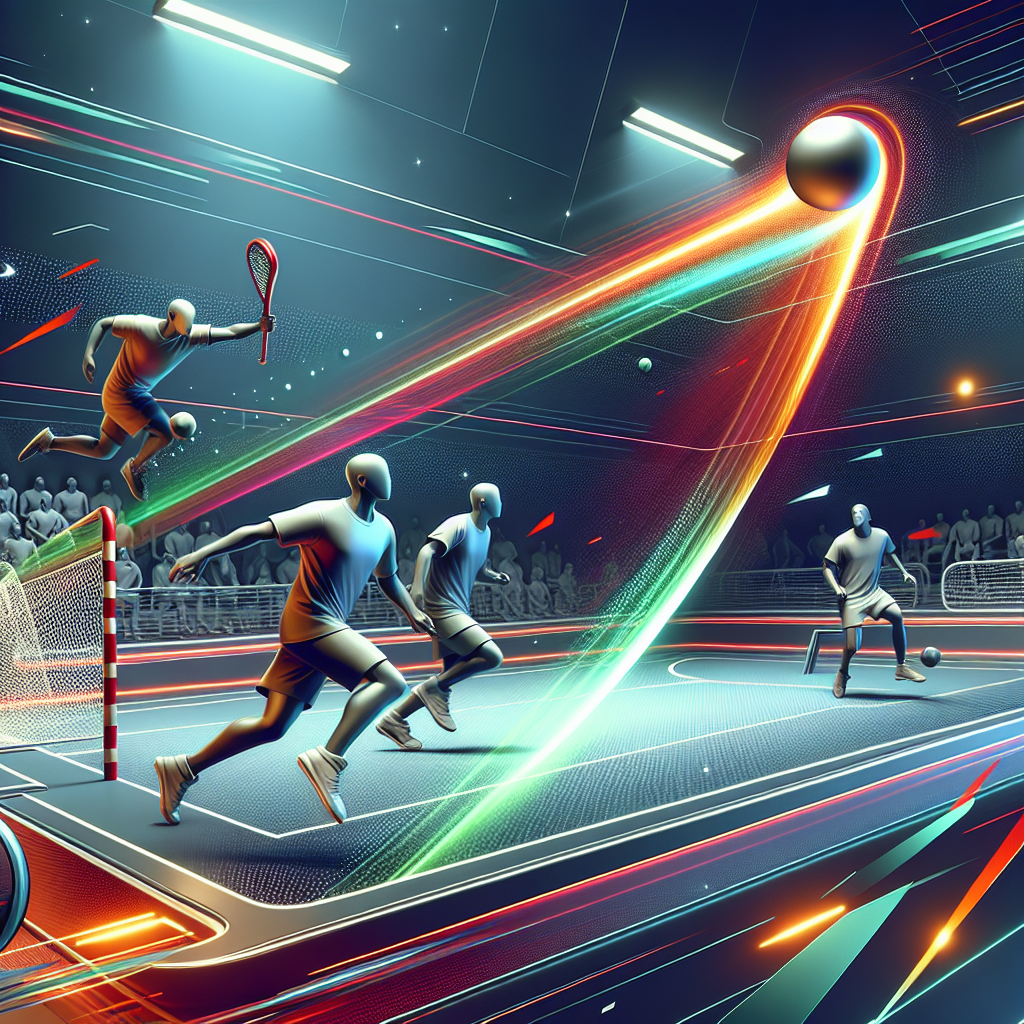

Imagine a sport where players race against time, gravity, and each other, all in a dance of agility and skill. That sport is Jai alai, a dynamic and fast-paced game known to few yet celebrated by those who play or watch it. Born in the Basque Country of Spain during the 19th century, Jai alai, which means "merry festival," made its way into the lively culture of American spectators, especially in the early-to-mid-20th century in places like Florida and Connecticut. It's in these areas that it blossomed, capturing the hearts of those who appreciated the sheer adrenaline it offered.
Played in a three-walled arena called a fronton, Jai alai is all about hurling a small, hard ball called a pelota at speeds that can exceed 180 mph, earning it the title of the "fastest sport in the world." Players catch and throw the pelota using a curved wicker basket called a cesta strapped to their arms. The game involves teams of two or singles competing to score points by rebounding the pelota off the fronton walls. In its essence, it's a blend of extreme handball and skillful acrobatics, demanding not just physical prowess but strategic thinking.
Yet, while Jai alai is thrilling, it's not without its complexities. The sport isn't just a physical activity, but a linchpin to community connections and gambling cultures, particularly when it had its heyday in the U.S. Mid-century, Jai alai was as much a social event as a sporting one, drawing crowds who would wager on outcomes as they might at horse racing tracks. In those vibrant gatherings, generations young and old were united by the thrill of the game and the possibilities it promised.
But like many niche sports, Jai alai faced challenges as it encountered the modern world. Its popularity began to wane as other sports, media, and entertainment options burgeoned. The decline started in the late 20th century and continued into the 21st, as the demographic of its audience aged and the younger generation moved towards sports they deemed more accessible or trending, such as basketball and esports. The closure of several frontons due to financial constraints echoed the shifting tides of public interest.
In today's digital and globalized landscape, where data flows fast and cultural trends evolve rapidly, Jai alai struggles to maintain its footing. Yet, the sport persists through dedicated enthusiasts who are passionate about keeping history alive. There are pockets of revitalization efforts, where aficionados endeavor to introduce Jai alai to new audiences, highlighting not just its physical challenges but its cultural richness. These efforts often include outreach programs and beginner-friendly sessions aimed at demystifying the game for newcomers.
Critics, however, argue against pouring resources into a sport with declining viewership, suggesting that energies might be better invested in more popular or emerging sports. They caution about the practical difficulties in reviving Jai alai on a wide scale, noting the infrastructure and investment required compared to return-on-interest. Undoubtedly, this viewpoint stems from valid concerns about sustainability and financial feasibility.
Yet, those advocating for Jai alai often speak passionately about more than just numbers. They highlight the importance of preserving cultural heritage and promoting sports diversity in a world increasingly homogenized by mainstream media. For them, every match played, and every new player who discovers the game, is a victory over uniformity.
In an era of increasing social consciousness, younger generations are beginning to appreciate not just what is new and popular, but what is rich with stories and steeped in tradition. Jai alai stands as a testament to this narrative—a meeting point of past and present, innovation, and impulse. Instead of fading away, it's positioned uniquely to offer something rare: an experience where speed meets tradition, and every second counts.
Amidst its challenges, Jai alai also possesses a unique opportunity to foster global cultural exchange, especially among Gen Z and millennials. This group, often heralded for its appreciation of mobility and diversity, may find value in this quirky, fast-paced sport that clearly differs from the usual lineup. With the rise of digital media platforming and sharing experiences, there's room for Jai alai to carve a niche yet again in the hearts of a diverse, sports-loving audience.
Like any sport, Jai alai is fundamentally about people—those who play it, those who watch it, and those who support it. It's a shared story of challenge, competition, and camaraderie. While its future remains uncertain, the spirit of Jai alai—the merry festival at its core—persists. Despite declining mainstream attention, it continues to beckon those willing to catch its swift trajectory and ride with it into history.