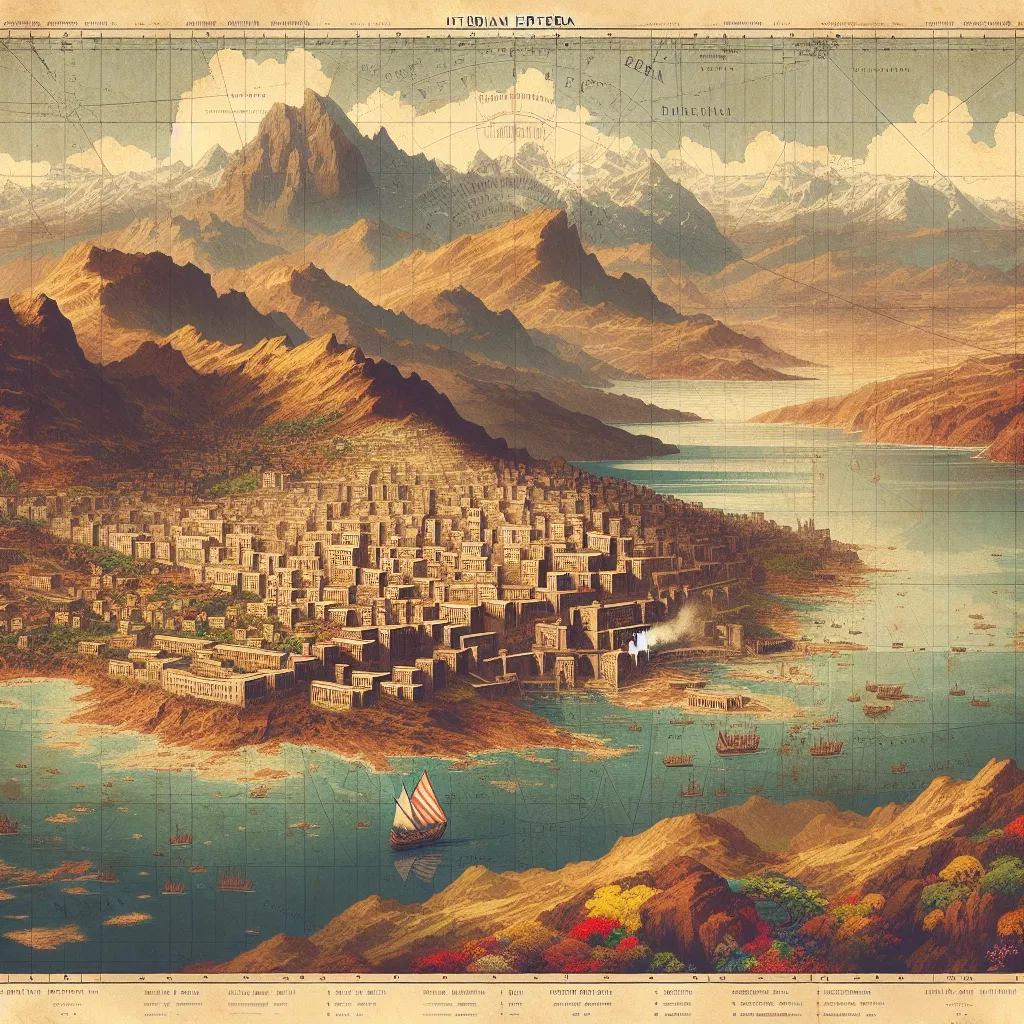

Italian Eritrea may sound like a setting from a historical novel, but its origins and impacts have real-world significance. This historical chapter refers to the period from 1890 to 1941 when the Kingdom of Italy established and maintained control over Eritrea, in the Horn of Africa. It was located on the Red Sea coast, an area prime for strategic imperialistic ambitions due to its proximity to the Suez Canal and its promise of vast unexplored resources.
The pursuit of creating a 'second Rome' led Italy to expand its territories into Africa during the Scramble for Africa, a period marked by European countries voraciously annexing lands. With a desire to compete with other powerful nations and propel themselves onto the world stage, Italy saw Eritrea as the prime location for its colonial ambitions. It was officially pronounced as a colony in 1890 after conflicts and treaties with local leaders.
This period was not just about territorial expansion; it deeply interwove with the lives of Eritrean people. One can't overlook the impacts of colonial agendas on native cultures. Italy’s occupation entailed infrastructure development intended not only for local benefit but to also bolster Italy’s imperial presence. Roads, railroads, and ports were constructed, which to the Italians were signs of progression. But questioning whose progress matters is crucial here. For many Eritreans, this modernization came at the high price of autonomy and cultural erosion.
Eritrea's local population dealt with systemic discrimination and a class system that placed Italians above Africans. Italian Eritrea was marked by policies instituting racial segregation, with Italian authorities enforcing urban-planning strategies that separated Europeans and Africans, reinforcing a hierarchy that demanded local Eritreans to adopt European customs and alien rules. Despite efforts to modernize, many Eritreans were denied equal opportunities to partake in this so-called 'progress.'
Culture-wise, the Italian influence during the colonial reign left a significant imprint. With the introduction of Roman architecture, Christianity’s propagation, and Italian as a lingua franca, Eritrea became a melting pot of cultures, with some remnants of this era still visible in architecture and language. As a vibrant bridge between African and European influences, Eritrea stands today as a unique blend.
World War II saw a wind of change sweeping across the globe, and Italian Eritrea was no exception. Amidst the chaos, British forces took control of the colony in 1941, marking the end of Italian rule. The ensuing decades brought their struggles. Eritrea, once Italy's pride, would face a complicated path ahead, having to fight for its independence from Ethiopian rule until 1993.
But was the Italian Colonial legacy wholly negative? While many condemn such imperial endeavors for their exploitative nature, there are complexities to explore. Some argue that the infrastructure and modernization seeds planted during this period laid the groundwork for future advancements. Supporters point at the bridges, roads, and urban layouts that continue to serve Eritrea. Yet delineating modernization from cultural whohelpensibility and repressive colonial governance remains essential.
Others contend that Italian rule provided Eritrea with an international connection and distinct identity amidst its struggles for autonomy. While this view isn’t widely accepted, it’s crucial to understand that the history of colonization is clouded with nuances and opposing perceptions. The question remains open-ended: can any perceived short-term gains truly overshadow the regrettable long-term impact of lost autonomy?
Gen Z, known for its activism and commitment to understanding historical injustices, often challenges the glorification of colonialism. It prompts contemplation: how can we assess such histories while striving for more equitable futures? Recognizing these complex narratives is a step towards healing and understanding the intricate bonds we share with our pasts.
The story of Italian Eritrea holds multiple lessons and challenges us to reflect on our shared history. It teaches us the value of questioning power dynamics and highlights the resilience of a people enduring decades of external governance. Eritrea today represents more than just the scars of colonialism; it is a land shaped by diverse influences, unique in its identity and vital in its lessons for those invested in creating a just world. Let the echoes of its history influence positive change in future narratives.