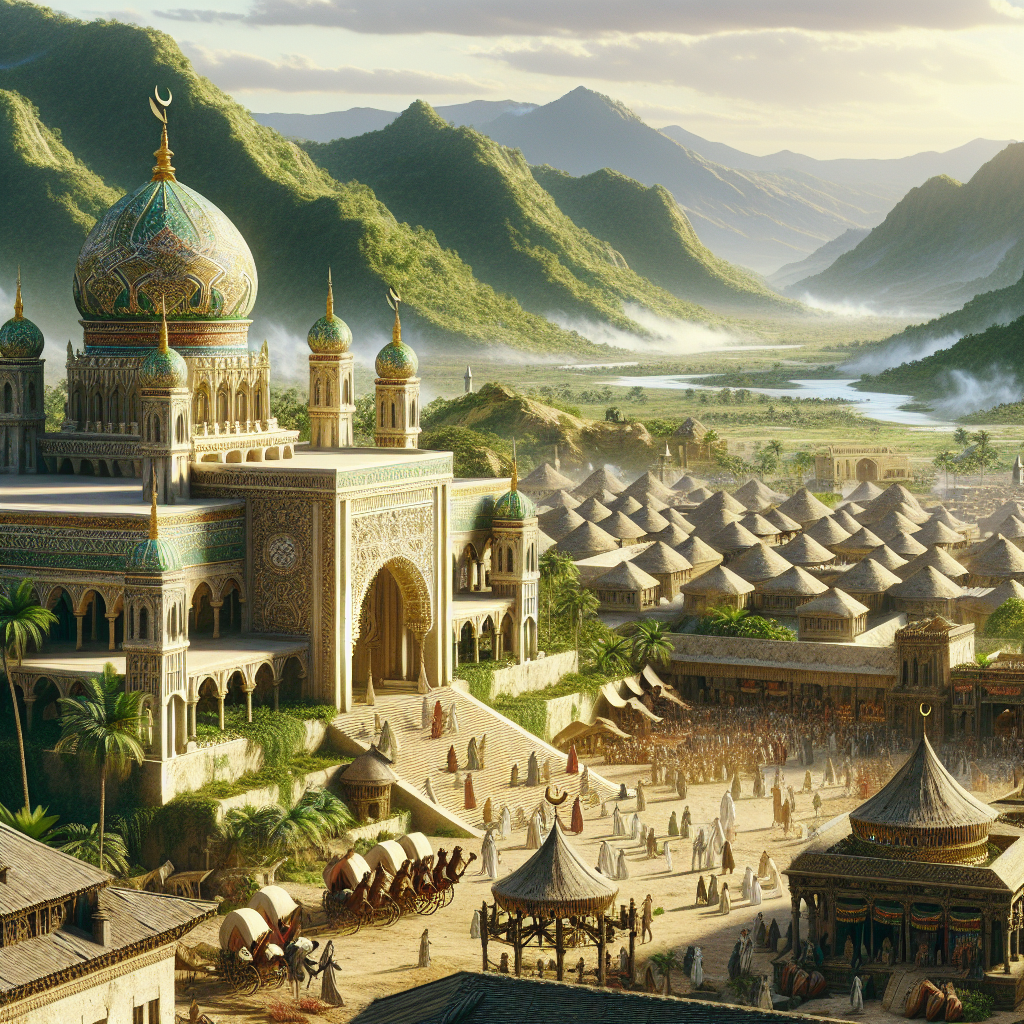

Ifat was more than just a blip on the historical radar; it was an ancient Sultanate that thrived in the Horn of Africa during the medieval period. This intriguing region, flourishing between the late 13th century and the early 15th century, was nestled in present-day Ethiopia and parts of Djibouti and Somaliland. A vibrant mix of cultures and traditions, Ifat was ruled by the Walashma dynasty and played an influential role in the Islamic world. But don't let its grandeur fool you; it was a hotbed of conflict, as Ifat found itself wedged between giant neighbors who endlessly squabbled over its fertile lands and strategic trading routes.
Ifat's significance goes beyond territorial acquisitions—its contribution to the religious and cultural shifts in the Horn of Africa adds depth to its history. The people of Ifat were largely Muslim, and the region became a critical Islamic center that fostered ties with Arabian states, indirectly influencing trade along the Red Sea and the Indian Ocean. It was a land of merchants and sages, where trade flourished under an intricate network stretching from the Indian subcontinent to the Nile basin. Salt, gold, and ivory were key exports that cemented its economic weight, turning Ifat into a treasure trove before the era of modern financial empires.
Despite its economic and cultural achievements, Ifat's story is also one of conflict and resilience. During the 14th century, the Sultanate found itself locked in a series of grueling wars with the Christian-led Ethiopian Empire, spearheaded by expanding rulers like Amda Seyon I, who coveted its lush lands and pivotal trade routes. These skirmishes weren't just about territory; they were clashing ideologies —Islam and Christianity— resulting in a powder keg of fragile alliances and strained negotiations. But Ifat was tenacious; it stood firm enough to influence neighboring sultanates, providing a buffer zone against would-be aggressors.
Ifat's historical battles weren’t merely territorial; they ripple through today's geopolitical debates. The struggle for land and identity, seen in Ifat's resistance, echoes in current global conflicts. The enduring lesson from Ifat is the importance of dialogue and understanding. For every Ifat, there’s a tale of reconciliation waiting to be told. Advocates pushing for peace in today’s fractured world have drawn from stories like Ifat's to inspire calls for negotiation as a means to resolve conflict.
The narrative of Ifat also encourages us to consider the voices often lost in retelling history —those of traders, musicians, and everyday folk who added rich layers to the tapestry of human existence in Ifat. They are the unsung actors in the dialogues between cultures, whose stories contribute to our understanding of diversity and coexistence. It’s a lesson equally urgent today as societies worldwide grapple with multiculturalism and the challenges it brings.
While Ifat eventually succumbed to forces it could not overcome, it’s a testament to the reality that even the mightiest empires are fleeting. The eventual fall of the Sultanate in the face of Ethiopia's expanding might serves as a reminder that geopolitical landscapes constantly shift and that past borders are frequently forgotten. It's a sombre reflection on the cycle of rise and decline that has played out across centuries around the world.
However, the history of Ifat shouldn't solely be painted in broad strokes of battles and diplomacy. The region was a melting pot of arts, sciences, and architecture. Mosques and schools in Ifat were beacons of learning and enlightenment, fostering scholars and students alike. These institutions promoted the growth of knowledge, which seeped into every aspect of life in the region, showcasing the importance of intellectual inquiry even amidst strife.
Understanding Ifat means acknowledging the beauty of a culture that thrived amidst adversity and reminds us of the resiliency intrinsic to human societies. Its lessons resonate, especially among Gen Z, who seek meaning and continuity in a world of rapid change and instability. Ifat's blend of tradition and adaptability offers a mirror for our times—a piece of historical introspection entailing the ebbs and flows of power, the evolution of culture, and the endurance of human spirit.
So here we stand, on the shoulders of ancient giants, gazing into the complex mosaic of history, sometimes glimpsed through the lens of Ifat. It’s a means to question our current narratives and a call to remember the whispers of the past, yearning to be acknowledged in our story of humanity.