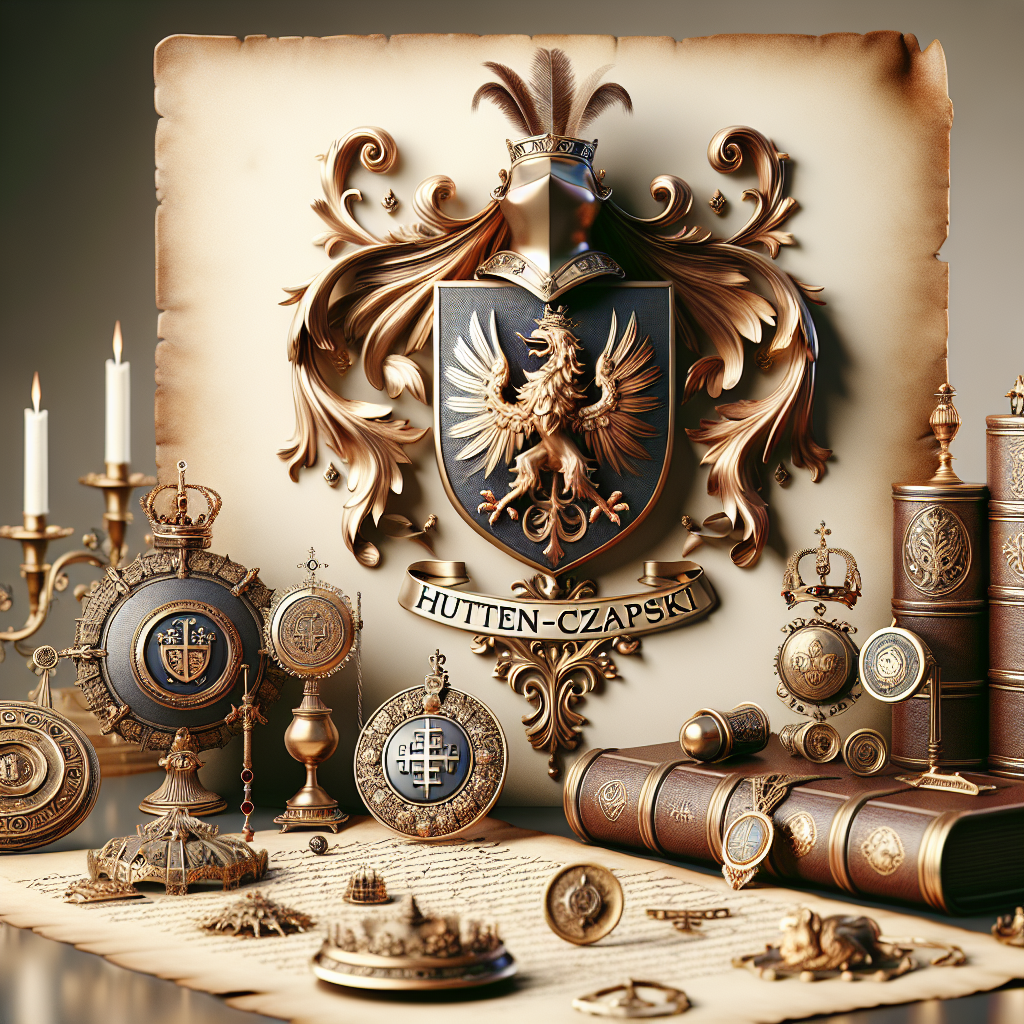

The Curious Case of Hutten-Czapski: A Historical Enigma
Imagine a name that sounds like a riddle wrapped in a mystery, and you've got Hutten-Czapski. This intriguing figure, Count Emeryk Hutten-Czapski, was a Polish nobleman, numismatist, and collector who lived during the 19th century. Born in 1828 in the region that is now Belarus, he spent much of his life in Poland, where he became renowned for his vast collection of coins, medals, and other historical artifacts. His passion for preserving history was driven by a desire to safeguard Polish heritage during a time when the country was partitioned and its culture was under threat.
Hutten-Czapski's life was a testament to the power of dedication and curiosity. He was not just a collector but a preserver of history. His collection, which he meticulously curated, became one of the most significant in Europe. It included rare coins and medals that told the story of Poland's rich and tumultuous past. His work was not just about amassing objects but about understanding and preserving the narratives they carried. This was particularly important during a period when Poland was struggling to maintain its identity amidst foreign domination.
Despite his noble status, Hutten-Czapski was not immune to the political upheavals of his time. The 19th century was a period of great change and turmoil in Europe, with revolutions and wars reshaping borders and societies. For Poland, this meant being partitioned by neighboring powers and losing its sovereignty. Hutten-Czapski's efforts to preserve Polish culture through his collection can be seen as a form of resistance against this erasure. He understood that history and culture are powerful tools for maintaining a nation's identity.
However, not everyone viewed Hutten-Czapski's work in the same light. Some critics argued that his focus on collecting and preserving artifacts was an elitist pursuit, disconnected from the struggles of ordinary people. They believed that true resistance required more direct action against the occupying powers. This perspective highlights a tension that still exists today between cultural preservation and political activism. While both are important, they often appeal to different audiences and can sometimes be at odds with each other.
Hutten-Czapski's legacy is a complex one. On one hand, he is celebrated for his contributions to preserving Polish history and culture. His collection, which is now housed in the National Museum in Kraków, continues to be a valuable resource for historians and scholars. On the other hand, his approach raises questions about the role of cultural preservation in times of political struggle. Is it enough to safeguard history, or should more direct action be taken to address the issues of the present?
For today's generation, the story of Hutten-Czapski offers a chance to reflect on the importance of history and culture in shaping our identities. It also prompts us to consider how we can balance the need to preserve the past with the demands of the present. In a world where cultural heritage is often threatened by conflict and globalization, his work serves as a reminder of the power of history to inspire and unite us.
Ultimately, Hutten-Czapski's life and work remind us that history is not just about the past. It is a living, breathing part of who we are and who we aspire to be. Whether through collecting, preserving, or engaging with history in other ways, we all have a role to play in ensuring that the stories of our past continue to inform and enrich our future.