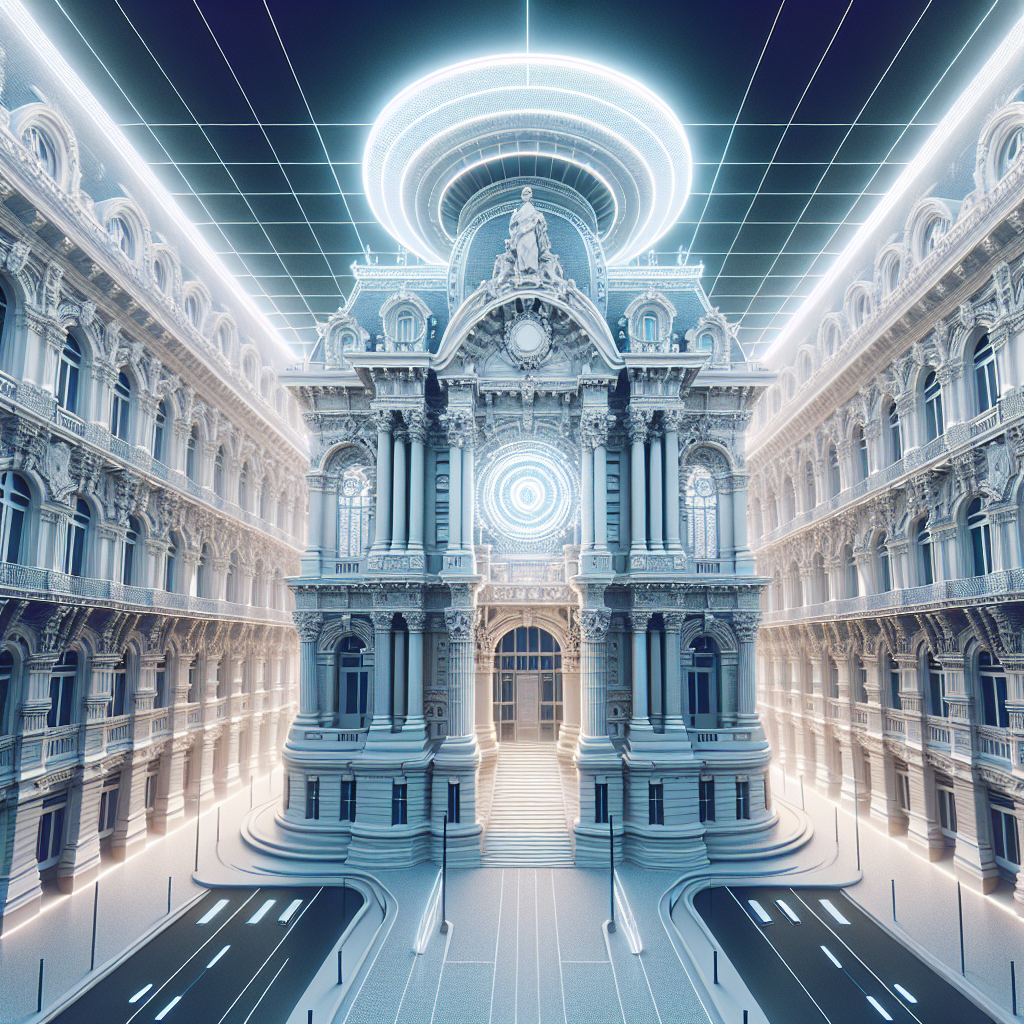

Montpellier may not always make the top of your travel list, but it should. When you find yourself in the 11th most populous city in France, stepping into the sleek, modernist Hôtel de Ville should be on your agenda. Who knew a city hall could be so cool? Opened in 2011, this architectural marvel, located in the Port Marianne district, is a far cry from the traditional, opulent municipal buildings seen throughout Europe. Designed by celebrated architects Jean Nouvel and François Fontès, it’s not just a place for local governance but a symbol of the city’s commitment to embracing the future. This place is worth exploring because it challenges the norm and represents the spirit of a city that's unapologetically progressive and innovative.
The building itself is a sight to behold. With its bold, blue-tinted glass exterior, it mirrors the surrounding environment, playing with light and reflecting the river and lush greenery nearby. This becomes a metaphor for transparency and fluidity in local governance, echoing the values many young people hold dear. Inside, the structure is just as intriguing, with vast open spaces, comfortable meeting areas, and modern facilities that complement the city’s reputation as a tech and culture hub.
From the very start, the Hôtel de Ville was designed to be more than an administrative building. It's also a space for public gatherings and civic engagement. Strikingly modern yet functional, it serves as a venue for various community and cultural events. The ground floor often hosts art exhibitions, conferences, and workshops, bringing the arts to the community in a space otherwise reserved for bureaucracy. It's a little bit punk rock in its intention, challenging the stereotype of dusty old government buildings.
Now, why should this matter to you? Because it represents a shift in how cities prioritize their spaces, aligning more with the values of open, engaged, and dynamic living. Millennials and Gen Z demand something different from their cities: sustainability, innovation, and inclusivity in public spaces, and the Hôtel de Ville in Montpellier embodies that. Moreover, it invites every citizen to step in and interact, literally dissolving the barriers between the people and the policymakers.
Critics might argue the money spent on such projects could be put to better use elsewhere. It's a valid concern when considering pressing social issues like housing, education, and healthcare. However, proponents see it differently. Investing in modern infrastructure can be a catalyst for urban regeneration and job creation. It can stimulate economic activity by establishing the city as a center for innovation and culture, attracting business, tourism, and international attention.
Beyond its innovative design, the Hôtel de Ville puts Montpellier on the map for more than just sun and student life. It becomes part of a larger narrative about how cities can adapt to modern challenges with creativity and audacity, making it an icon of civic pride. For those interested in city planning, architecture, or even environmental science, the building invites you to witness how form meets function in a truly sustainable fashion.
Walking around Montpellier, you might notice the city's blend of ancient charm—complete with its medieval streets and historic sites—and contemporary edge. The Hôtel de Ville stands as a testament that both worlds can coexist harmoniously. It's proof that urban development doesn't always have to come at the cost of historical preservation but rather complement it, embracing tradition while looking to the future.
The beauty of places like the Hôtel de Ville is that they push us to think differently about how we use public spaces. It's an opportunity for towns and cities worldwide to reimagine their own spaces, considering how architecture can better serve the people. More than a physical structure, it represents a vision of unity and interaction. Imagine a future where every city hall is not a closed-off building but a vibrant space open to all. This is how cities can become more resilient and aligned with the needs and aspirations of their younger residents.
Whether or not you find yourself in Montpellier, the story of the Hôtel de Ville serves as a conversation starter about what we value in our civic spaces. It challenges us to consider the potential of architecture to inspire communities and forge engaged, adaptive environments. Filters on Instagram might show you its stunning facade, but it's the dialogue it fosters about urban evolution that holds the real magic. As the world continues to change, it's places like these that prompt us to keep asking questions and pushing boundaries.