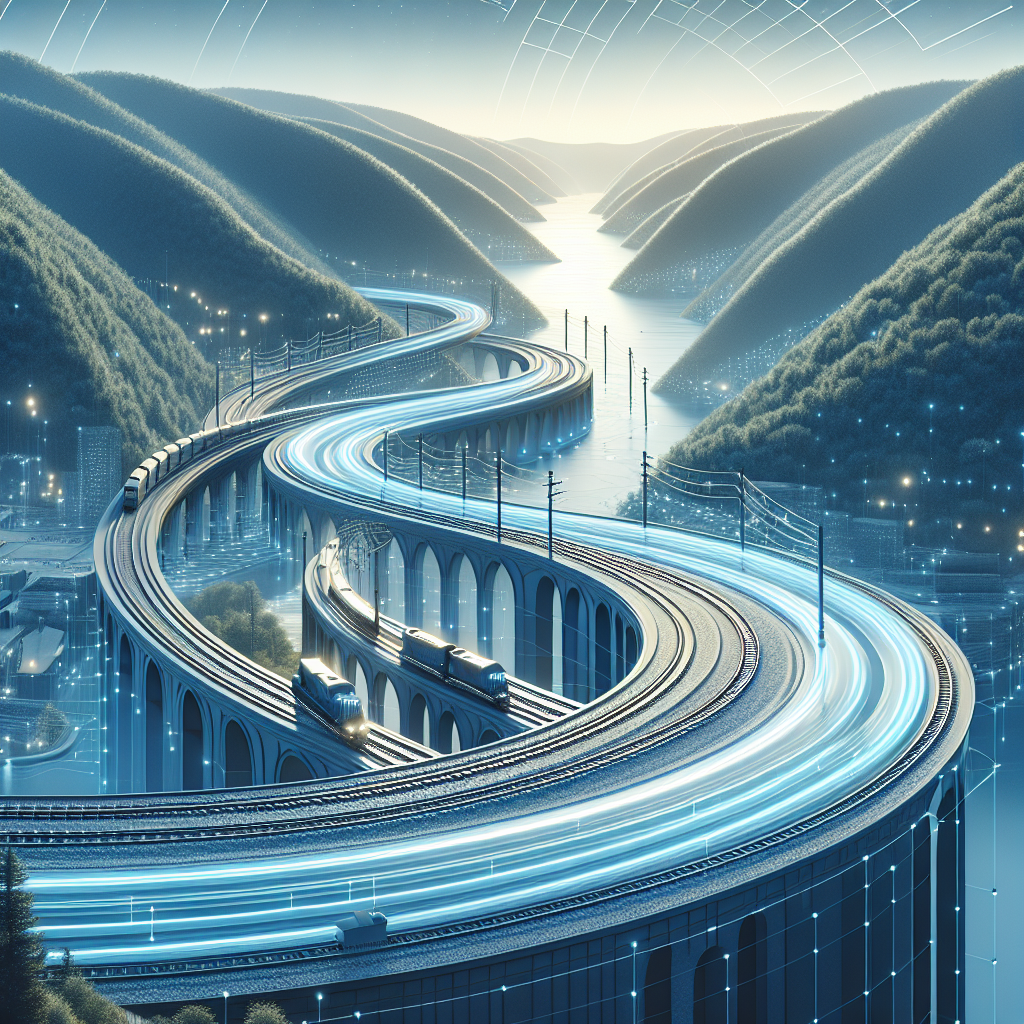

Are you ready for a wild ride on a loop of rail that’s transformed travel and engineering since the 19th century? The Horseshoe Curve in Pennsylvania is not just a marvel of engineering; it’s a testament to the human spirit challenging nature and overcoming odds. Born out of the necessity to conquer the Allegheny Mountains, this enchanting, curving track was conceived in the mid-1800s by engineers who believed it was possible to link Philadelphia to Pittsburgh through mountains and ravines.
The story begins in the height of the industrial revolution. It was 1854, and the nation was surging forward, quite literally on the rails of progress. The challenge was immense: constructing a railway that could safely and efficiently carry heavy loads up mountainous terrain. Despite skepticism, construction began in 1852, aiming to close the gap between the eastern cities and the western countryside. The result was a remarkable crescent of steel and wood, elegantly laid out over the daunting landscape.
Trains thundered over this engineering masterpiece, compressing the eternity of travel in a marvelous loop, echoing with the hopes of countless passengers journeying between cities. This was more than just a raily way to connect A to B; it was a promise of growth, uniting a burgeoning nation still healing from its own divisions. Railways were the new bloodlines, merging fragmented states and bridging economic opportunities.
But the Horseshoe Curve isn’t just important because of what it transports, or how it does it. It’s iconic due to its unique shape—a graceful swoop that spans a valley, almost like a colossal iron horseshoe. It’s visually stunning and drew attention from every corner, becoming an attraction in its own right. People didn’t just ride the trains for necessity but came to marvel at the audacity of its construction.
The innovation wasn’t just limited to the engineers who imagined it but also involved the hands and hearts of many workers, including Irish immigrants. These early railway builders carved the Horseshoe Curve into the side of the mountain with labor that was intense and ambitious. Their hard work should not be overshadowed by the broad strokes of history but highlighted for the resilience and sheer will of getting the job done in perilous conditions.
It’s also crucial to consider the different impacts of such feats. While marveling at the engineering genius, we shouldn't overlook the environmental concerns. The railway’s construction altered landscapes and disrupted existing ecosystems. It's the constant balance between progress and preservation—a dialogue we continue today. There are questions and criticisms regarding the expansion of human footprints through nature's domains. It’s fascinating to witness history providing context for ongoing discussions about sustainable development and environmental responsibility.
By the time the Curve was completed, it had already changed the rhythm of life in the region, fueling industries, and altering the economy. Coal was a lifeblood for the regions, and the railways were its veins, pumping energy across states. Horseshoe Curve was pivotal in sustaining this supply chain, linking resources with need. So much was a single line on a map altering destinies!
For present-day Gen Z, who thrive in a world dominated by instantaneous connections, the Horseshoe Curve is an intriguing historical contrast. In our digital-first world where everything seems a click away, understanding the importance of something like the Horseshoe Curve adds dimension to how far we’ve come. It was one of the original disruptors, challenging existing norms, and reshaping boundaries much like the technological advancements of today.
The legacy of Horseshoe Curve stands resilient, not just as a piece of history, but as an ongoing adventure. It remains a functioning rail line, albeit a bit quieter than in its heyday. Yet, it draws enthusiasts, history buffs, and tourists wanting a slice of the past. It’s a reminder of when humanity dared to reshape the world with mostly muscle and imagination, interpreting nature as a challenge rather than an obstacle.
Despite changes in the modes of transportation and communication, nodes like Horseshoe Curve ensure there's continuity in the fabric of progress. Lucky for us, it’s preserved as a national historic landmark, a tribute to an era where the sprawling network of railways began knitting a nation together. Now, it also serves as a nostalgic journey taking us back to a time when the world was just starting to shrink, courtesy of the tracks that coiled like a horseshoe.
Who could have thought a modest stretch of steel could carry so such significance, effortlessly proving its might in a world that so easily forgets the old in favor of the new? It's a place where you can step out of the hustle, stand in awe of the quiet loops, and feel a bit of the pulse that once drove a country towards modernity. The Horseshoe Curve is truly a curve where past, present, and potential continue to meet.