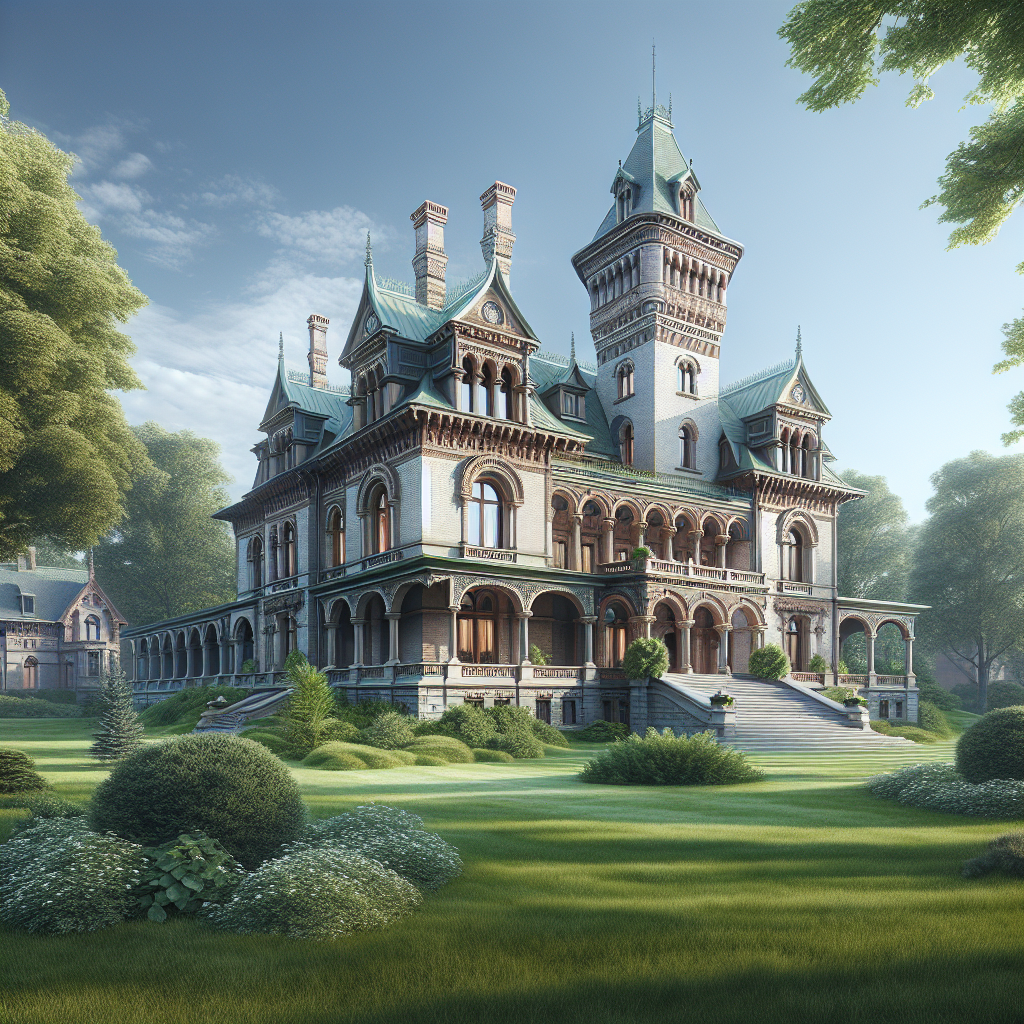

Have you ever thought about where philosophy meets architecture in a whispering dance with history? Nestled on the tree-lined streets of LaSalle, Illinois, the Hegeler Carus Mansion is more than just an architectural wonder. Built in 1874 for zinc manufacturer Edward C. Hegeler, this mansion is an ode to innovation, intellectual pursuit, and entrepreneurship. Designed by architect W. W. Boyington, who also crafted the Chicago Water Tower, the mansion tells a story of cultural significance and progressive thought encapsulated within its 57 rooms.
The mansion rests as a monument to a family committed to advancing philosophical inquiry through Open Court Publishing Company. Founded in 1887 by Paul Carus, Edward Hegeler's son-in-law, Open Court became a beacon for sharing innovative ideas about religion, science, and philosophy. It fostered an East-West intellectual dialogue uncommon for its time, opening a window into diverse perspectives.
Walking through the mansion feels like stepping into a time capsule, with every room whispering tales of deep conversation and rigorous thought. The mansion's intricate woodwork and grandiose parlors are not just housing; they're spaces where progressive dialogue and dynamic thinking took place. Imagine being in a room where Carl Sandburg read his poetry, or where pioneering discussions about Eastern philosophies occurred long before globalization kicked in.
A young mind might ask, "What relevance does this old house hold today?" More than just a static relic, the mansion encourages us to think beyond everyday trivialities. It stands as a reminder of the importance of dialogue and open-mindedness, principles that are ever-relevant in our hyperconnected age. It serves as proof that pushing boundaries in philosophical and scientific arenas is timeless.
Preserving a mansion like this is never without its challenges. Supporters argue that keeping historical sites alive bolsters the cultural and educational fabric of our communities. Critics, on the other hand, sometimes view the funds required for maintenance as excessive, arguing that history should give way to more practical, immediate needs. It's a conversation worth having as we contemplate what we're willing to preserve for future generations.
Despite differing viewpoints, what's undeniable is the Hegeler Carus Mansion's role as a hub for spreading revolutionary ideas in its day. Consider its significance in promoting comparative religion, Darwinian theory, and Eastern philosophies at a time when such notions were not mainstream.
With the emergence of digital platforms today, younger generations have the means to exchange ideas in ways Paul Carus could only dream. Yet, understanding the groundwork laid by places like the Hegeler Carus Mansion enriches our comprehension of what it means to truly exchange ideas across cultural and intellectual borders.
The mansion is listed as a National Historic Landmark and serves as a physical record of America’s more contemplative endeavors. The preservation work involves various experts, from historians to architects, each working meticulously to ensure authenticity while keeping its doors open to the public.
Walking its ornate hallways, one is reminded of the critical role it played in advancing dialogues that people engage in today—proving that rich heritage can coexist with modern thought. While digital spaces are crucial for contemporary discourse, visiting such historic places offers organic wisdom you just can't get online.
It's also essential to note that the story of the Hegeler Carus Mansion isn't merely an elite narrative. It resonates with anyone fascinated by the confluence of tradition and forward-thinking. It invites each visitor to question not just the architecture and design, but also the cultural and historical climates it endured and continues to exhilarate.
In an era so saturated with historical erasure, keeping structures like the Hegeler Carus Mansion both alive and relevant requires commitment. But isn't saving tangible connections to our past—especially those encouraging open-mindedness—worth every effort?
While we take strides towards future advancements, remembering places like the Hegeler Carus Mansion could inspire us to embrace ideas challenging the status quo. A mansion whispering through corridors, urging you to keep pushing, questioning, and wondering: what are the boundaries yet to be broken? More importantly, how might we be courageous enough to engage with history to inspire the future?