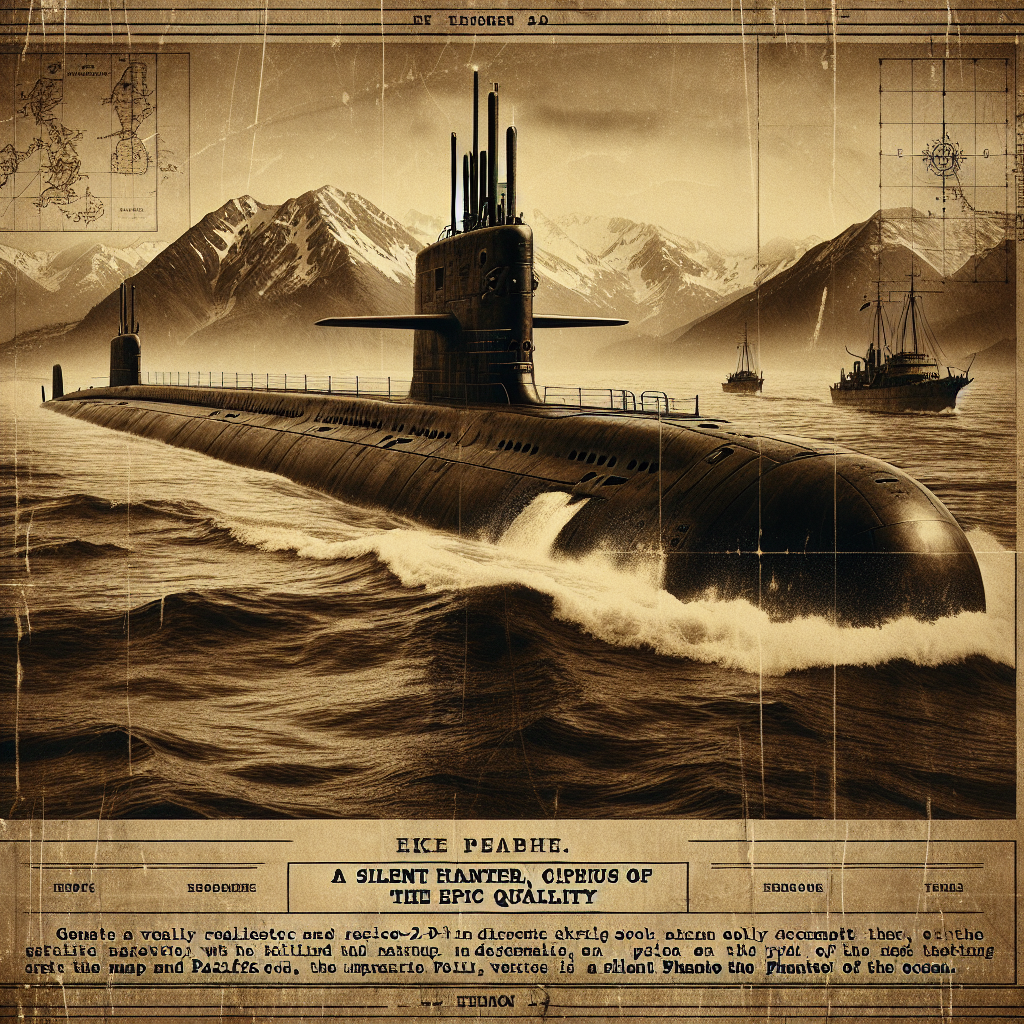

In the dark and mysterious world of deep-sea warfare, the Ha-101-class submarine stands out as a fascinating piece of history, full of intrigue and significant geopolitical implications. Crafted as a result of the intense demands of World War II, these Japanese subs were part of a desperate race to control the Pacific waters. Designed and used by the Imperial Japanese Navy during 1944 in the far reaches of the Pacific Ocean, they were part of Japan's innovative yet ultimately futile efforts to turn the tide of war.
The Ha-101-class submarines were designed primarily for the purpose of supply and transport, standing apart from the typical hunter-killer models that most people imagine when they think of submarines. The notion behind these vessels was pragmatic yet filled with urgency: transport needed supplies under the waves to island garrisons, who were increasingly cut off by Allied naval dominance. This class was smaller, more compact, and easier to build quickly, fulfilling the need to operate stealthily across contested waters.
In a world that remembers WWII largely in terms of European battles and the atomic bomb, the Pacific theatre often seems like an overlooked side-show to many. It’s easy to forget that complex naval strategies and innovations shaped the course of this critical world conflict. Submarines like the Ha-101-class played a vital role, albeit largely unsung, in these maritime engagements. Much of their story is marked by the desperation of wartime innovation in Japan—a nation reaching the limits of its ability to sustain its overseas empire.
Perspective can actually be an odd thing. While these technological marvels of their time showed impressive Japanese innovation under duress, they were also a testament to the lengths to which empires will go to maintain control over far-flung territories. This was a moment in time when vast distances and rugged island outposts became battlegrounds of strategy and survival in WWII.
It might seem paradoxical to some folks why these subs matter. They were not built for spectacular confrontations but for logistical lifelines. They ferried ammunition, food, and medical supplies across the treacherous waters haunted by Allied submarines and airplanes. This unsung logistical chess game determined the fate of soldiers and civilians stationed in isolated island territories, directly influencing the tactical landscape of the Pacific.
As with any wartime machine, one can't help but feel the echoes of the human stories buried in their rusting hulls. The crews onboard these submarines often faced perilous journeys through closely watched waters, where a single error could mean death in the icy depths. The stress and anxiety felt by these young sailors are perhaps unimaginable to us today. Their duties were not merely about transporting goods but trying to extend the life of a failing military strategy.
Reflecting on war’s impact leads to a better understanding of ongoing international, social, and ethical implications. The Ha-101-class represents a poignant lesson about the extent of human ingenuity in the face of adversity, but also a cautionary tale about the measures we employ under extreme circumstances. It offers a profound reminder that engineering prowess is, at its best, a neutral tool that can be shaped for both beneficial and malicious purposes, depending on those who command it.
There are resonances of this historical narrative that can be felt even today. The geopolitical tensions in oceanic regions, like the South China Sea, where modern submarines now glide silently beneath the waves, reflect a somewhat familiar situation. Nations continue to test the boundaries of power and resource distribution just as they did back in the 1940s.
And with this context, one might understand the resonant symbolism of these Japanese submarines beyond their immediate wartime utility. As issues like climate change start to affect island nations, and as supply chains face renewed threats, the challenges faced by the Ha-101 can offer insight into how technology can be repurposed for peaceful means, such as shipping food and medical supplies to regions hit hardest by global environmental changes.
People today, with access to unparalleled information and history, carry the potential to learn from these past narratives to forge better paths forward. The true legacy of the Ha-101s isn’t merely bounded to the annals of war. It is about understanding the past so we might wield our knowledge more wisely in a world where resources remain deeply political and human ingenuity remains one of our most powerful assets.