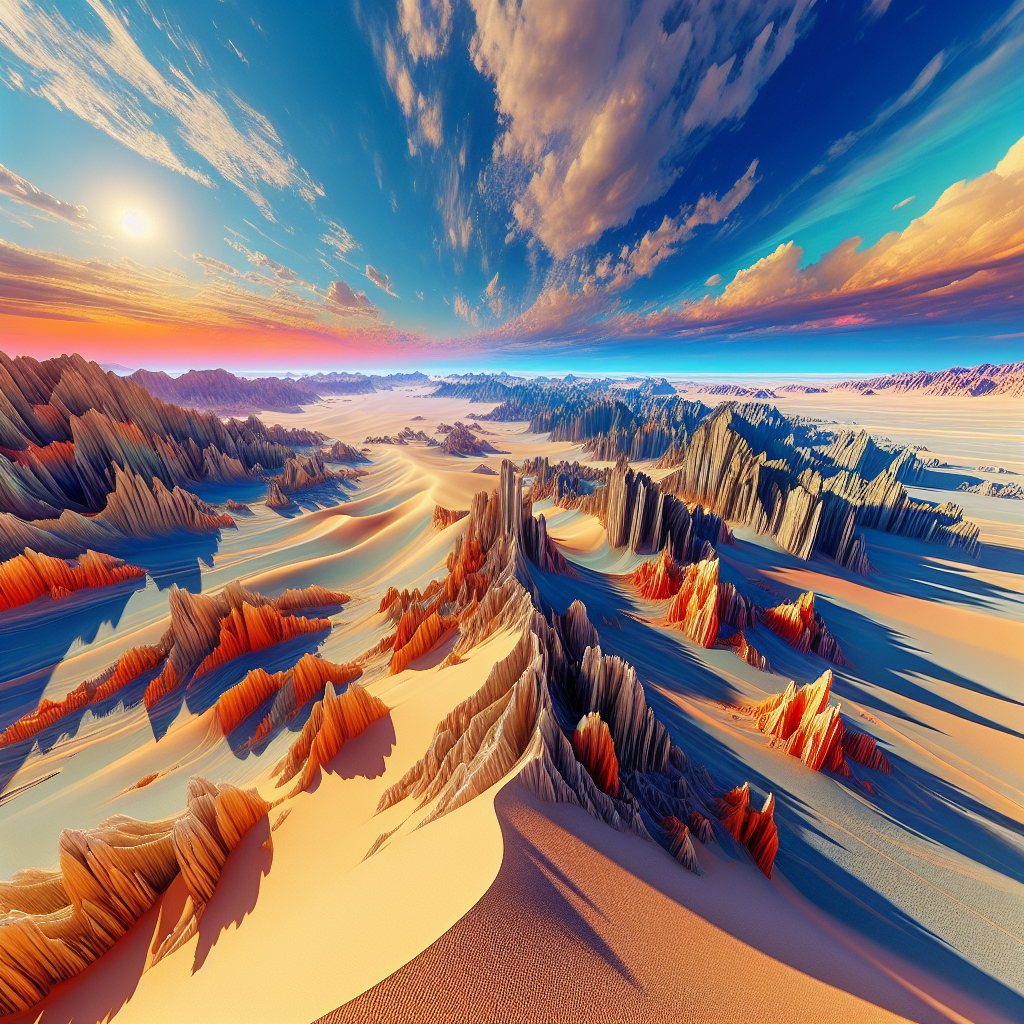

The Enigmatic Beauty of the Gran Desierto de Altar
Imagine a place where the sun kisses the earth with such intensity that the sands shimmer like gold. This is the Gran Desierto de Altar, a vast and mesmerizing desert located in the northwestern part of Mexico, within the state of Sonora. It is part of the larger Sonoran Desert, which stretches across the United States and Mexico. The Gran Desierto de Altar is known for its stunning sand dunes, some of which reach heights of up to 200 meters, making it one of the most significant dune fields in North America. This desert is not just a barren wasteland; it is a vibrant ecosystem teeming with life and a testament to nature's resilience.
The Gran Desierto de Altar is a place of extremes. The temperatures can soar to over 120 degrees Fahrenheit during the day and plummet to near freezing at night. Despite these harsh conditions, the desert is home to a variety of plant and animal species that have adapted to survive in this arid environment. Cacti, shrubs, and hardy desert plants dot the landscape, while animals such as the desert tortoise, kit fox, and various lizards and snakes make their home here. The desert is also a critical habitat for migratory birds, providing a resting place during their long journeys.
For centuries, the Gran Desierto de Altar has been a place of mystery and intrigue. Indigenous peoples, such as the Tohono O'odham, have lived in and around the desert for thousands of years, developing a deep understanding of its rhythms and resources. They have used the desert's plants for food, medicine, and materials, and have developed spiritual connections to the land. Today, the desert continues to hold cultural significance for these communities, serving as a reminder of their heritage and resilience.
The Gran Desierto de Altar is not just a natural wonder; it is also a place of scientific interest. Researchers study the desert's unique geology, climate, and ecosystems to better understand how life can thrive in such extreme conditions. The desert's sand dunes, in particular, are of interest to scientists studying wind patterns and sediment movement. Additionally, the desert serves as a natural laboratory for studying climate change, as its ecosystems are highly sensitive to shifts in temperature and precipitation.
However, the Gran Desierto de Altar faces challenges. Human activities, such as mining, agriculture, and tourism, pose threats to the delicate balance of the desert's ecosystems. Water extraction for agriculture and urban development has led to the depletion of vital water sources, impacting both the environment and local communities. Conservation efforts are underway to protect this unique landscape, but balancing human needs with environmental preservation remains a complex issue.
Some argue that development is necessary for economic growth and that the desert's resources should be utilized to benefit local communities. They point to the potential for job creation and improved infrastructure as reasons to support development. However, others emphasize the importance of preserving the desert's natural beauty and ecological integrity. They argue that sustainable tourism and conservation can provide economic benefits without compromising the environment.
The Gran Desierto de Altar is a place of contrasts, where beauty and harshness coexist. It challenges our perceptions of what a desert can be and reminds us of the delicate balance between nature and human activity. As we continue to explore and understand this remarkable landscape, we must also consider our role in its preservation. The desert's future depends on our ability to appreciate its value and to act as stewards of this extraordinary environment.