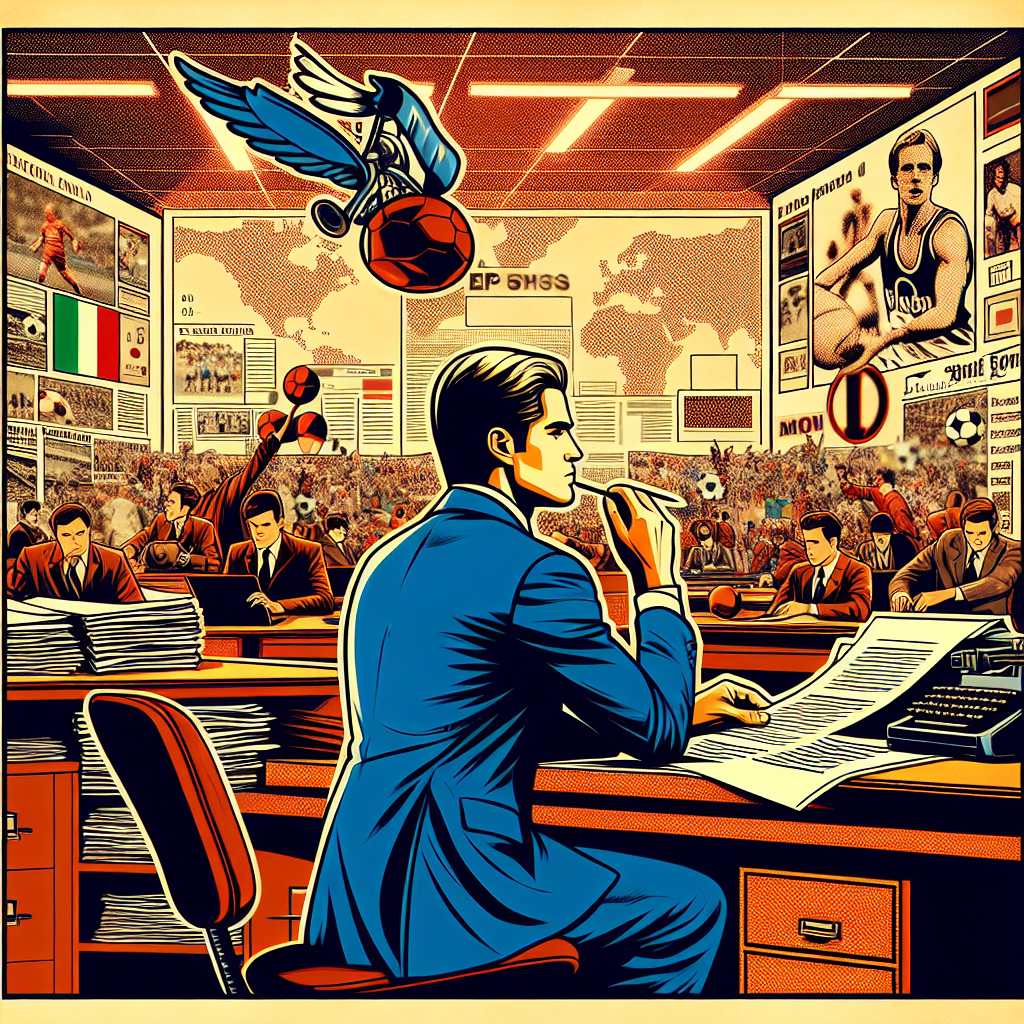

Gianni Brera wasn't just any sports journalist; he was the type of writer who could make a Tuesday evening soccer match feel like a classic war epic, bringing to life passion and intricacies that others might overlook. Born in San Zenone al Po, Italy in 1919, Brera was a force of nature within the world of sports writing, especially during the vibrant mid-20th century. He revolutionized the way people viewed soccer (or football, as it’s known in most parts of the world) and molded how Italians, and Europeans alike, consumed sports journalism. His influence was not just felt in Italy but echoed throughout the international sports community, leaving a lasting legacy.
Brera's approach to sports journalism was both academic and poetic. He treated soccer as a reflection of larger societal dialogues, capturing stories well beyond the playing field. As the editor of Gazzetta dello Sport, a prestigious Milan-based newspaper, he transformed the paper into a beacon for literary sports journalism. His writing style was bold, unafraid to weave in cultural critiques and sociopolitical observations, making sports fans question the deeper context of a simple game. By crafting vivid narratives that juxtaposed humor with acute analysis, Brera kept readers glued to each column, eagerly awaiting his perspective.
Soccer, the game Brera adored and critiqued, was his proverbial canvas. With his pen, he painted intricate pictures of tactics, rivalries, and heroics. While some saw a match as just a competition of athletic prowess, Brera viewed it as a theater of strategy, a stage where personal and national pride were displayed. Not just concerned with the scoreline, he delved into the nuances of play, the psychological duel between a striker and a goalkeeper, the choreography of midfielders weaving through defenses.
The essence of Brera's writing lay in his ability to reflect the pulse of post-war Italy. He saw soccer as a microcosm of societal change. His narratives often served as a commentary on Italian identity, bridging the gap between the local fervor and global influence. Post-war, Italy was in a transformative phase, grappling with new political identities and economic realities. Through soccer, Brera commented on these shifts, making his columns more than just match analysis.
His viewpoints, although respected, were not free from criticism. Critics sometimes labeled Brera's work as overly dramatic. They argued that his deep dives might have elevated soccer beyond its entertainment value, placing undue cultural weight on every kick and pass. Yet, to many, this was part of his genius—drawing out layers of meaning from a universal language of sport.
Brera's political perspectives, resonant with Italy's complex relationship with tradition and modernity, were nuanced. While he was liberal in many of his social commentaries, his take on soccer often championed traditionalism. He adored the defensive 'catenaccio' style that Italy became known for—prioritizing strategic gamesmanship over flashy offense. Fans of the offensive game saw this approach as stifling innovation and excitement, but Brera revered its tactical brilliance.
Above all, Brera's choice of words was his trademark—colorful, often infused with unique expressions he created, many of which have seeped into the mainstream vernacular. Terms like libero, centrocampista, and straniero all became part of the soccer lexicon, illustrating his impact beyond journalism and into the language of the sport itself.
In Brera's world, the story of soccer told the story of life itself. Through his eyes, a 90-minute game was a narrative filled with tension, beauty, betrayal, and transcendence. His style could capture the emotional spectrum of sportsmanship and athletic perseverance, offering a profound commentary on what it means to struggle, prevail, or sometimes, heartbreakingly, fail. These stories resonated deeply with readers because they were reflections of their own lives.
Gianni Brera’s career spanned several decades, flourishing until his passing in 1992. Throughout this time, he remained a passionate voice in sports journalism, his legacy enduring even in today's digital age. While the platforms and mediums have evolved, the essence of Brera’s storytelling—connecting and transforming the audience through narrative—is timeless. For a generation raised on Tweets and TikToks, understanding Brera's work offers a reminder of the rich tapestry of storytelling through which sports can be experienced. His work encourages exploration beyond statistics and highlights, embracing the beauty of narrative in every moment played.