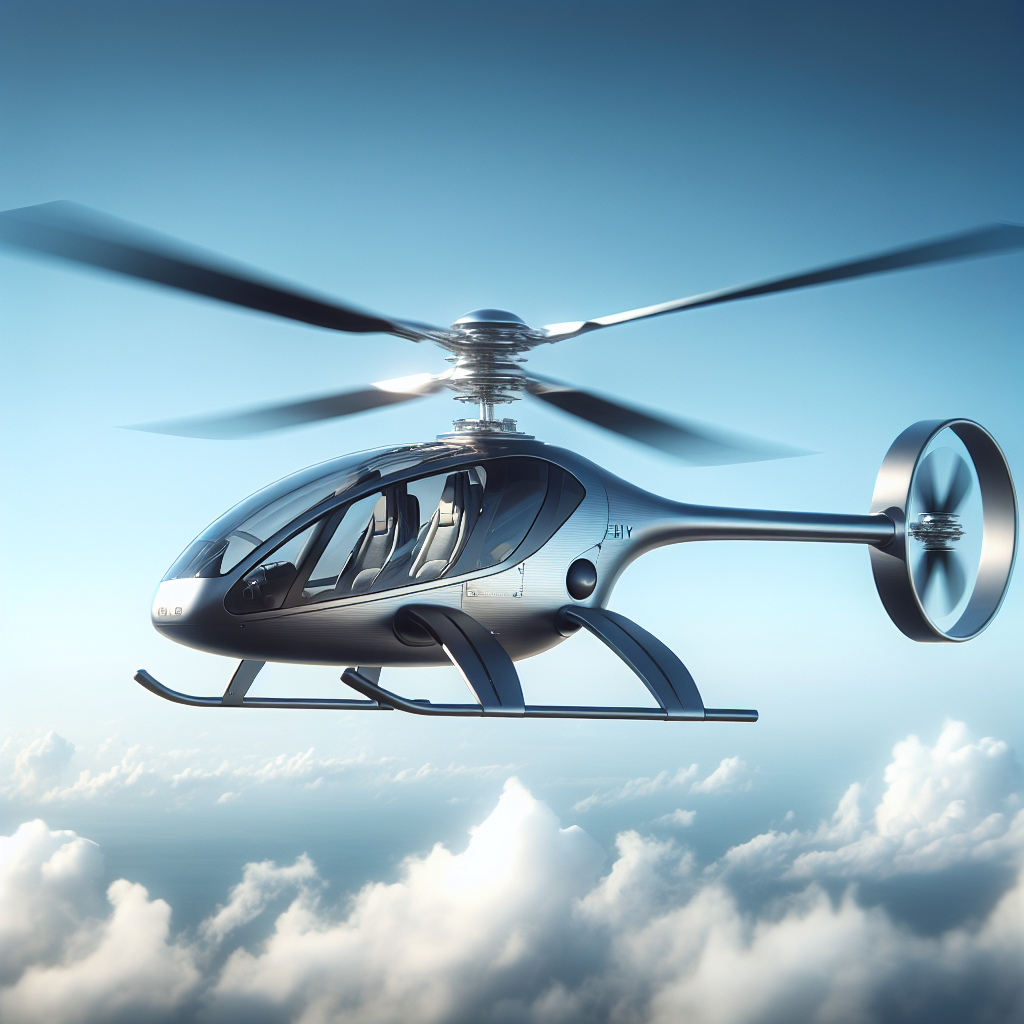

The GEN H-4: A Flying Contraption for the Modern Age
Imagine a flying machine that looks like it belongs in a sci-fi movie, yet it's real and ready to take to the skies. The GEN H-4 is a personal helicopter, designed by Japanese engineer Gennai Yanagisawa, that has captured the imagination of aviation enthusiasts around the world. First introduced in the early 2000s, this compact helicopter is a marvel of modern engineering, allowing individuals to experience the thrill of flight in a way that was once reserved for pilots of larger aircraft. The GEN H-4 is primarily used in Japan, where it was developed, but its unique design and capabilities have sparked interest globally.
The GEN H-4 is a tiny helicopter, weighing just about 70 kilograms, and is powered by two small engines. It can reach speeds of up to 90 kilometers per hour and can fly for about an hour on a full tank of fuel. Its design is simple yet effective, with a single seat for the pilot and a minimalist frame that supports the rotors. This simplicity is part of its charm, making it accessible to those who may not have extensive flying experience. The helicopter's small size and ease of use make it an attractive option for personal transportation, aerial photography, and even recreational flying.
However, the GEN H-4 is not without its challenges. Safety is a significant concern, as with any aircraft, and the helicopter's small size means it can be more susceptible to weather conditions and turbulence. Additionally, the regulatory environment for personal helicopters varies widely from country to country, which can limit where and how the GEN H-4 can be used. In some places, it may require a pilot's license or special permits, while in others, it might be restricted altogether. These factors can make it difficult for potential owners to navigate the legal landscape and fully enjoy their flying machine.
Despite these challenges, the GEN H-4 represents a fascinating step forward in personal aviation. It embodies the spirit of innovation and the desire to make flight accessible to more people. For those who dream of soaring through the skies, the GEN H-4 offers a unique opportunity to do so in a way that is both thrilling and relatively affordable compared to traditional aircraft. It also raises interesting questions about the future of personal transportation and how we might integrate such technologies into our daily lives.
Critics of the GEN H-4 argue that it is more of a novelty than a practical mode of transportation. They point out that its limited range and speed make it unsuitable for long-distance travel, and its open design offers little protection from the elements. Additionally, the noise generated by the helicopter can be a concern, particularly in urban areas where noise pollution is already an issue. These criticisms highlight the need for continued innovation and improvement in the field of personal aviation.
On the other hand, supporters of the GEN H-4 see it as a stepping stone towards more advanced personal flying vehicles. They believe that as technology continues to evolve, we will see more efficient, quieter, and safer designs that can overcome the current limitations. The GEN H-4 serves as a proof of concept, demonstrating that personal helicopters are not just a fantasy but a viable option for the future. It encourages further research and development, pushing the boundaries of what is possible in aviation.
The GEN H-4 is a testament to human ingenuity and the enduring fascination with flight. It challenges us to think about how we can make the skies more accessible and what that might mean for our society. Whether you view it as a quirky gadget or a glimpse into the future, the GEN H-4 is undeniably an intriguing piece of technology that captures the imagination and inspires dreams of flight.