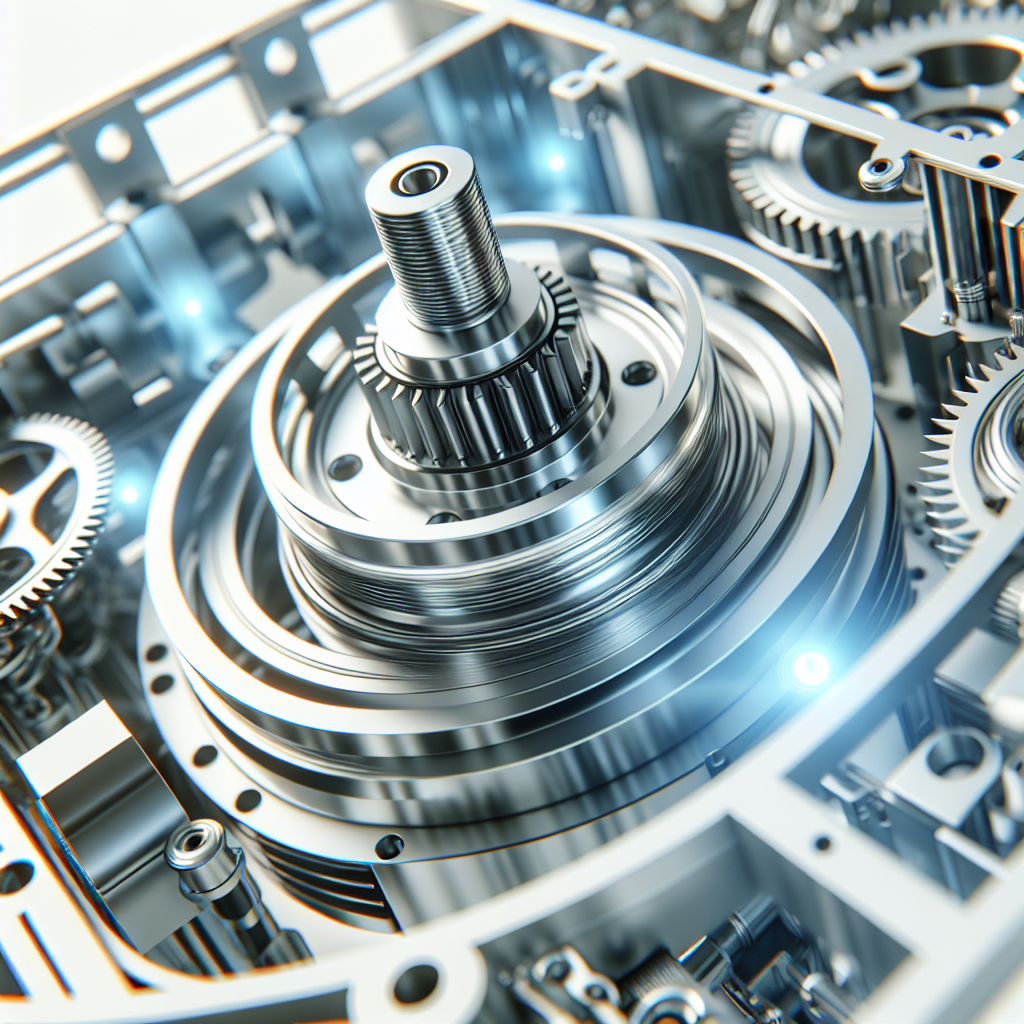

Ever heard of a bearing that bends? Flexure bearings, in all their splendid simplicity, are quite the engineering marvel. These are devices used primarily when one wants precise movement with the minimal mechanical friction possible, which is especially handy in high-precision equipment. Developed and utilized by engineers and designers who were tired of the limitations imposed by traditional bearings, flexure bearings have carved a niche that might not sound glamorous, but it's crucial.
The magic of these little wonders lies in their structure. Unlike regular bearings, which rely on rolling elements or sliding parts, flexure bearings achieve their motion through material flexibility. Imagine a thin metal strip. When load is applied to it, it bends. This bending causes a force that allows for slight rotations or movements. It's like adding a dash of flexibility to the otherwise rigid predictability of machines.
So, who exactly was batman-like enough to give us this cutting-edge stuff? Flexure bearings have been part of the engineer's toolkit for quite some time, but their popularity boomed with the rise of precision industries like aerospace and electronics during the mid-20th century. As the need for meticulously controlled movements and minimal mechanical wear increased, designers started embracing this elegant solution.
The applications for these bearings are vast and varied. Picture a laser scanning device, which needs precision more than your average origami champion. Or consider that space exploration rovers have to endure the harsh and unpredictable environments of Mars. Flexure bearings are a godsend here, offering minimal maintenance while ensuring utmost precision. Other uses can be seen in robotics and automation, where precise movements are paramount, and every fraction of a misstep can mean disaster.
But let's not gloss over the criticisms. Opponents of flexure bearings, albeit few and far between, often point to their limitations. Chief among them is the dependency on the properties of the materials. Flexure bearings can generally handle less load-bearing compared to traditional bearings. In an era that's constantly looking to push the boundaries of what's possible, there's some valid apprehension about their long-term performance in extreme conditions.
However, the environmental impact of flexure bearings is another reason to consider their benefits. With fewer parts to replace and simplify, they stress sustainability and reduced waste, major concerns for the environmentally-conscious Gen Z. No oil, no moving parts, and longer lifespans translate into less pollution and more harmony with our planet. It's like doing precision engineering with Mother Nature's blessing.
For the future, the potential improvements and innovations with flexure bearings look promising. As material science develops, stronger and more durable materials will enable these bearings to take on heavier loads with ease. Moreover, advances in 3D printing technology might redefine how these components are manufactured and deployed, leading to even more tailored solutions across diverse fields.
Some skeptics might argue for conventional bearings, particularly in high-load applications. Yet, in an era where precision and ecological awareness are becoming top priorities, flexure bearings could redefine the benchmarks engineers strive for.
Mind you, the discussion between flexure and traditional bearings doesn't have to be outrightly oppositional. It's more about understanding the specific needs of an application and choosing the right tool for it. While a flexure bearing might not yet replace the good ol' ball bearing in your father's car engine, it's more about realizing its value in places where modern mechanics meet micromovements. It's not just about moving forward; it's about moving smart.
Whether you're an aspiring engineer or someone with a knack for knowing what makes precision instruments tick, understanding flexure bearings is like radar vision into the world of high-tech design. It's a subtle reminder that sometimes, bending a little doesn't need to break anything – it just might make it better.