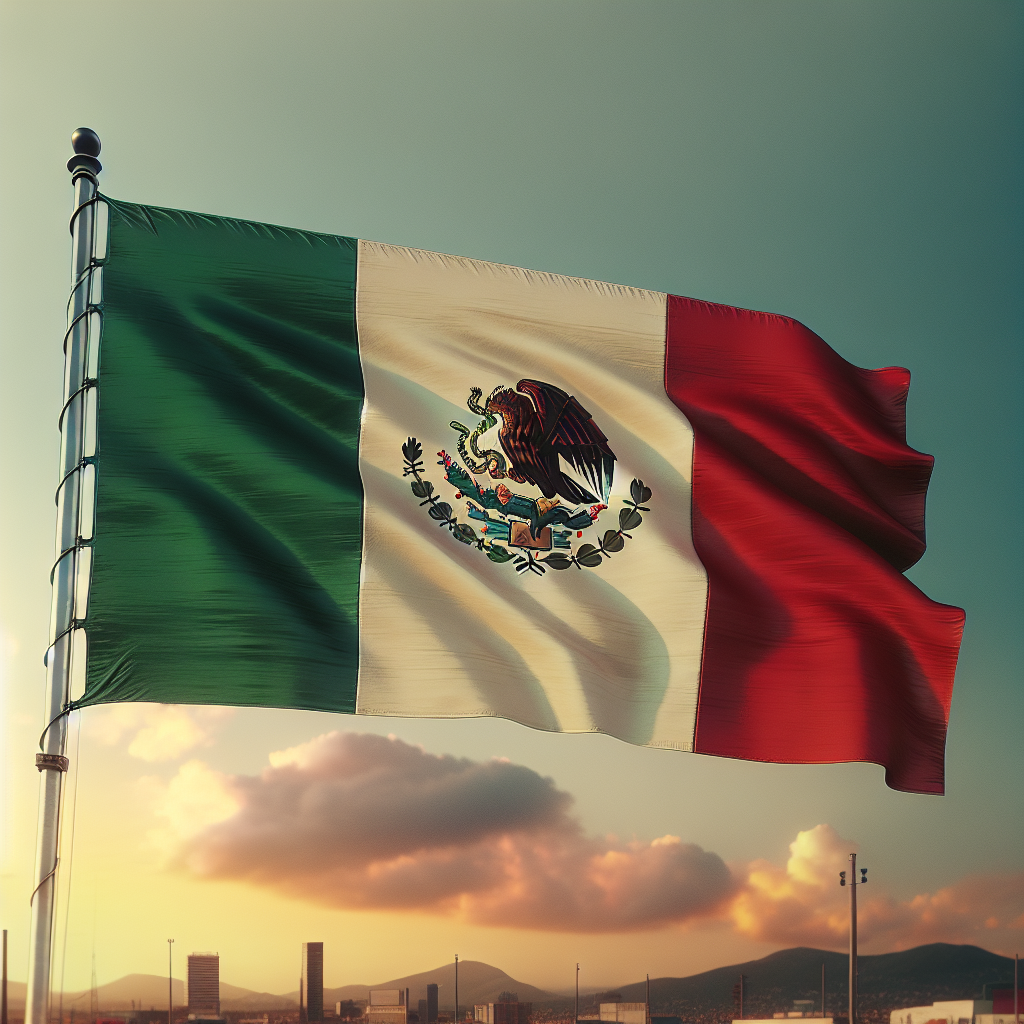

The Flag of the Three Guarantees: A Symbol of Unity and Independence
Imagine a flag that embodies the spirit of unity, religion, and independence all at once. The Flag of the Three Guarantees, also known as the Trigarante Flag, was a significant emblem during the Mexican War of Independence. It was first introduced in 1821 by Agustín de Iturbide and Vicente Guerrero, two key figures in Mexico's fight for freedom from Spanish rule. This flag was flown in Mexico, symbolizing the three core principles that guided the nation towards independence: religion, independence, and unity. The flag's design featured three vertical stripes of white, green, and red, each color representing one of the guarantees. The white stood for religion, the green for independence, and the red for unity among the Mexican people.
The Mexican War of Independence was a complex and lengthy struggle that began in 1810 and lasted until 1821. It was a time of great upheaval and transformation, as the people of Mexico sought to break free from the colonial rule of Spain. The Flag of the Three Guarantees emerged during the final stages of this conflict, representing a new vision for the nation. It was a symbol of hope and a promise of a better future, uniting diverse groups under a common cause. The flag was part of the Plan of Iguala, a revolutionary document that outlined the terms for Mexico's independence and the establishment of a constitutional monarchy.
The Plan of Iguala was a pivotal moment in Mexican history, as it brought together different factions that had been fighting against Spanish rule. It was a compromise that sought to address the concerns of various groups, including the Creoles, the indigenous people, and the mestizos. The Flag of the Three Guarantees was a visual representation of this agreement, embodying the principles that would guide the new nation. It was a powerful symbol that helped to rally support for the cause of independence and bring an end to the conflict.
While the Flag of the Three Guarantees was a unifying symbol, it also faced criticism and opposition. Some people viewed it as a compromise that did not go far enough in addressing the needs and aspirations of all Mexicans. Others saw it as a temporary solution that would eventually give way to a more democratic and inclusive system. Despite these criticisms, the flag played a crucial role in the final stages of the war and the establishment of an independent Mexico.
The legacy of the Flag of the Three Guarantees is still felt in Mexico today. It serves as a reminder of the struggles and sacrifices made by those who fought for independence. It also highlights the importance of unity and compromise in achieving common goals. While the flag itself is no longer in use, its principles continue to resonate with the Mexican people. The modern Mexican flag, with its green, white, and red stripes, is a testament to the enduring values of independence, religion, and unity.
In reflecting on the Flag of the Three Guarantees, it's important to consider the broader context of the Mexican War of Independence and the challenges faced by those who sought to create a new nation. The flag was more than just a piece of cloth; it was a symbol of hope and a vision for a better future. It represented the aspirations of a diverse and complex society, united in their desire for freedom and self-determination. As we look back on this period in history, we can learn valuable lessons about the power of symbols and the importance of working together to achieve common goals.