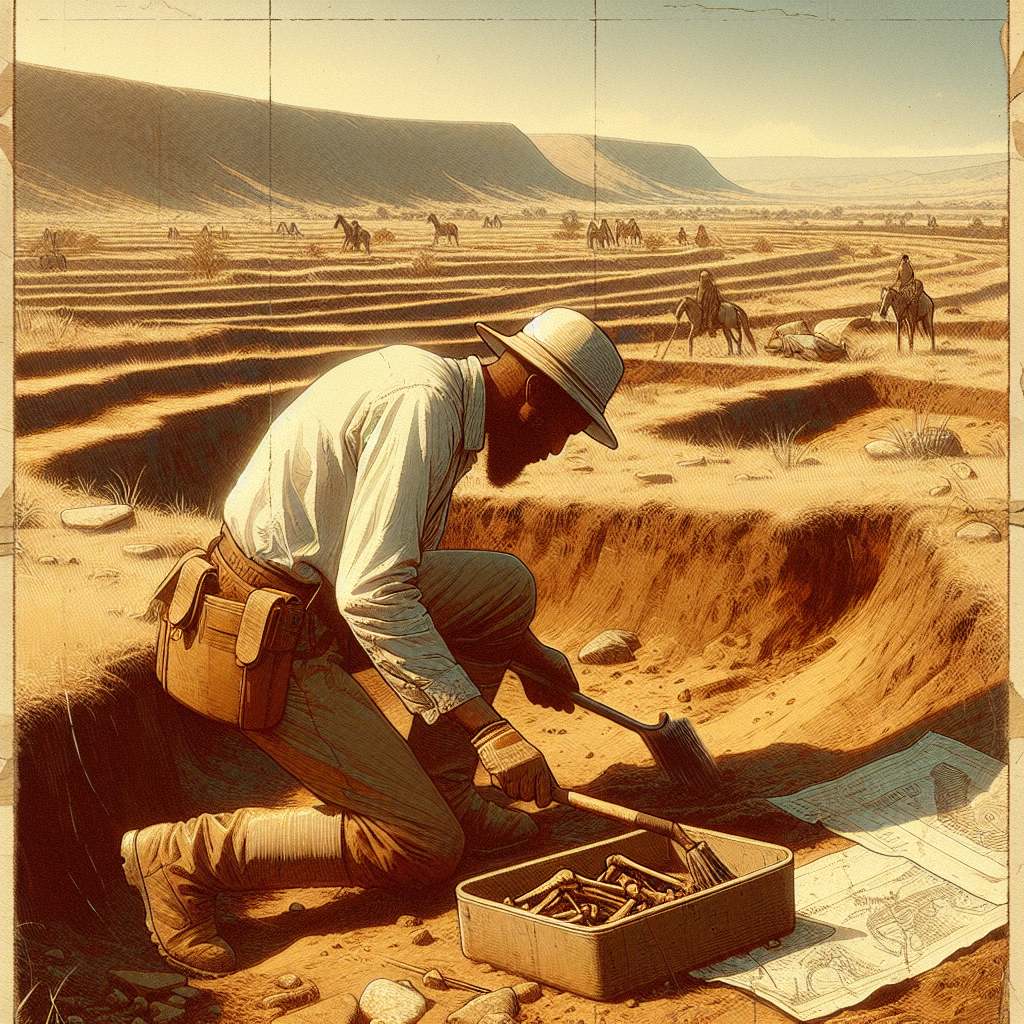

Felix A. Chami might not be a household name, but his work could fill the pages of a bestselling thriller filled with ancient ruins and daring discoveries. Born in 1956 and hailing from Tanzania, Chami is a renowned archaeologist whose efforts have dramatically altered our understanding of East African history. By digging into the past — both literally and figuratively — he has provided fresh insights into ancient maritime trade networks along the Swahili Coast, revealing just how interconnected this region was long before modern maps were drawn.
Chami's archaeological career largely kicked off in the 1990s, a time when much of Africa's archaeological landscape was severely understudied. During his research, he unearthed evidence that not only challenged existing Western-centric historical paradigms but also elevated the status of African civilizations in historical discourse. His work has taken him to places like the Mafia Archipelago and the Tanzanian mainland, where his discoveries highlighted the vibrant cultural and economic exchanges between Africa, Asia, and the Middle East long before European colonization.
Reviving the concealed narratives of coastal African societies, Felix Chami was able to establish how integral these regions were to ancient global trade. Through his excavations, Chami unearthed artifacts like Chinese porcelain and glass beads, symbolizing a time when the Swahili Coast was a buzzing hub of international trade. This was not merely a one-way transaction where African societies received goods from outside — rather, it was a complex network of mutual influence. In challenging Western historical perspectives, Chami's discoveries have also emphasized how colonial narratives have often understated African ingenuity and agency.
Despite Chami's significant contributions to archaeology, like any academic in a field so intimately connected with human history and identity, his work doesn't escape scrutiny or criticism. Some argue that he places too much emphasis on the external interactions of Swahili societies at the expense of other internal cultural dynamics. For instance, critics suggest that while he focuses on trade connections, the complexity and richness of the local societies themselves deserve more spotlight. Yet his supporters argue that these critiques miss the point — Chami’s work underscores the profound and frequently overlooked impact that African civilizations have had on the world stage whose stories we're only beginning to piece together.
Chami’s perspective aligns with a broader, politically liberal view that appreciates the multiplicity of narratives and the decolonization of knowledge. He emphasizes embracing the complexity of African histories beyond the colonial scripts that have long dominated educational systems worldwide. His discoveries have found support among those eager to push for a more inclusive and accurate portrayal of history, one that gives due credit to the contributions and advancements of African societies.
What makes Chami’s work resonate particularly with a younger generation, notably Gen Z, is its alignment with movements that challenge the status quo and demand recognition for peoples long sidelined by history. This generation is accustomed to hybrid identities and interconnectedness, qualities inherently visible in the Swahili Coast cultures that Chami studies. Gen Z's interest in inclusive and accurate historical narratives dovetails with Chami's own mission to highlight the interconnected past of African civilizations.
Through his academic career, Felix A. Chami has published numerous articles and undertaken several excavations, fundamentally changing how we understand East African history. His contributions are captured in publications like The Archaeology of the United Republic of Tanzania and The African Archaeological Review. In dealing with bias in historical records and the inherent challenges of piecing together narratives from scattered artifacts, Chami inspires both peers and the public to question, explore, and most importantly, appreciate the depths of human history.
His work serves as a reminder that history cannot be owned or told by one perspective alone. Chami's contributions shine a light on ancient African societies and ignite a drive to rewrite conventional historical canons. If anything, his life's work compels us to look deeper than the surface, to take stock of the stories yet untold, and to appreciate the interconnected legacies that form the fabric of our shared global heritage.