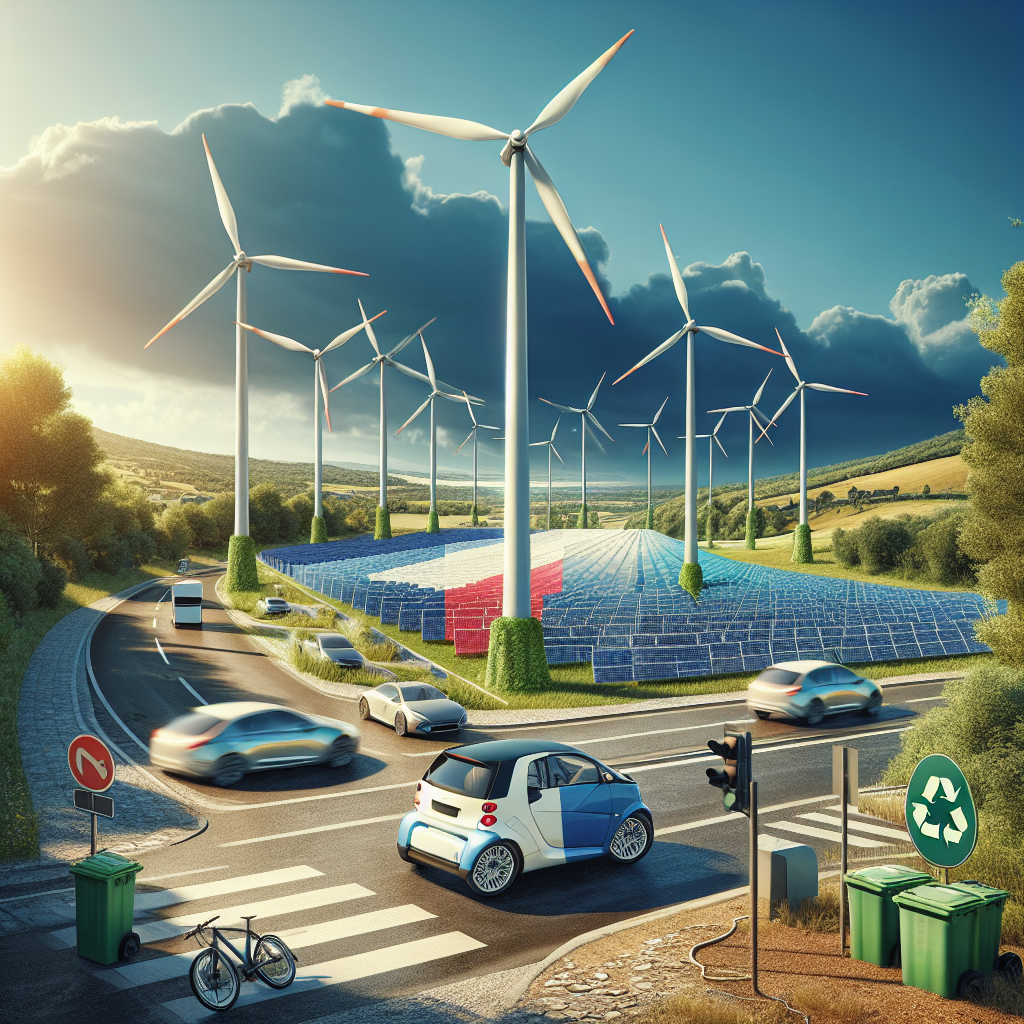

When you think about paper, you might imagine a blank sheet waiting to be filled with stories, but École Internationale du Papier, de la communication imprimée et des biomatériaux (or Grenoble INP-Pagora for short) offers a different story entirely. This French institution, set in the picturesque city of Grenoble, has been shaping innovative minds and eco-friendly technologies since its inception in 1907. The school's mission revolves around offering advanced engineering education within paper, print, and biomaterials sectors, teaching students to navigate and solve the ecological challenges of the modern world.
While the school may appear niche, its curriculum focuses on courses that are universally pertinent, as sustainability becomes increasingly central to global industry practices. The students becoming engineers here are trained not only to be technically proficient but also to be conscious of the social and environmental footprint of their work. The dynamic approach adopted by Grenoble INP-Pagora ensures that its graduates emerge ready to impact fields that are critical to conserving natural resources.
For students coming from diverse backgrounds, the blend of engineering prowess along with social responsibility provides a holistic educational experience. From paper production to cutting-edge biomaterials, the school covers a wide array of specializations within its fold. This approach signals a shift in traditional education paradigms, aligning with the Gen Z ethos that prioritizes sustainability.
But why should this interest someone who might not be directly involved with engineering or production sciences? The perspectives and technologies championed by schools like Grenoble INP-Pagora are reshaping industries worldwide. As environmental concerns continue to take center stage, the school's graduates become crucial players in articulating and implementing solutions that drive industries towards greener futures.
Tech giants and small start-ups alike are becoming attuned to the growing demands for sustainability. The expertise nurtured and developed at this institution feeds into innovative practices like producing eco-friendly packaging solutions or creating alternatives to single-use plastics that break down much more quickly and cleanly than conventional materials. The cascading effect of such innovations has the power to play a substantial role in reducing the environmental burden on our planet.
The journey at Grenoble INP-Pagora is not just limited to theoretical learning but involves hands-on experiences that can transform how industries operate. This method ensures students don’t only hypothesize about sustainability but actively develop and test solutions, working much like professionals within the safety and creativity of an educational setting. Whether one dreams of working on the next breakthrough in printable electronics or the reinvention of materials using biomaterials, the school provides the fertile ground for such aspirations to grow.
Opponents of focusing heavily on eco-friendly technology education sometimes argue that it's not economically viable on a larger scale, maintaining that current market structures are not yet ready for the full integration of such eco-conscious practices. However, institutions like Grenoble INP-Pagora are proving that sustainable education can indeed align with economic growth. By investing in talent equipped to address both existing environmental issues and future challenges, industries are likely to discover not only greater efficiencies but also avenues for new business models that were previously unimaginable.
The intimate relationship between technology and environment cultivated at this school addresses a growing need for educational systems to adapt to the ever-evolving demands of our world. Here, the future isn't solely about creating change but also understanding that maintaining what we have sustainably is equally critical. By nurturing new generations of engineers and thinkers who are aware of the delicate balance between innovation and conservation, Grenoble INP-Pagora is setting a benchmark for what transformative technical education can and should look like.
If you ever find yourself wandering the streets of Grenoble, remember that beyond the beautiful landscapes and the historical grandeur, there are students buzzing with ideas that just might change the course of how we interact with the world's resources. Education institutions like this remind us that paper is not just a blank canvas but an eco-friendly opportunity awaiting the stories of tomorrow.