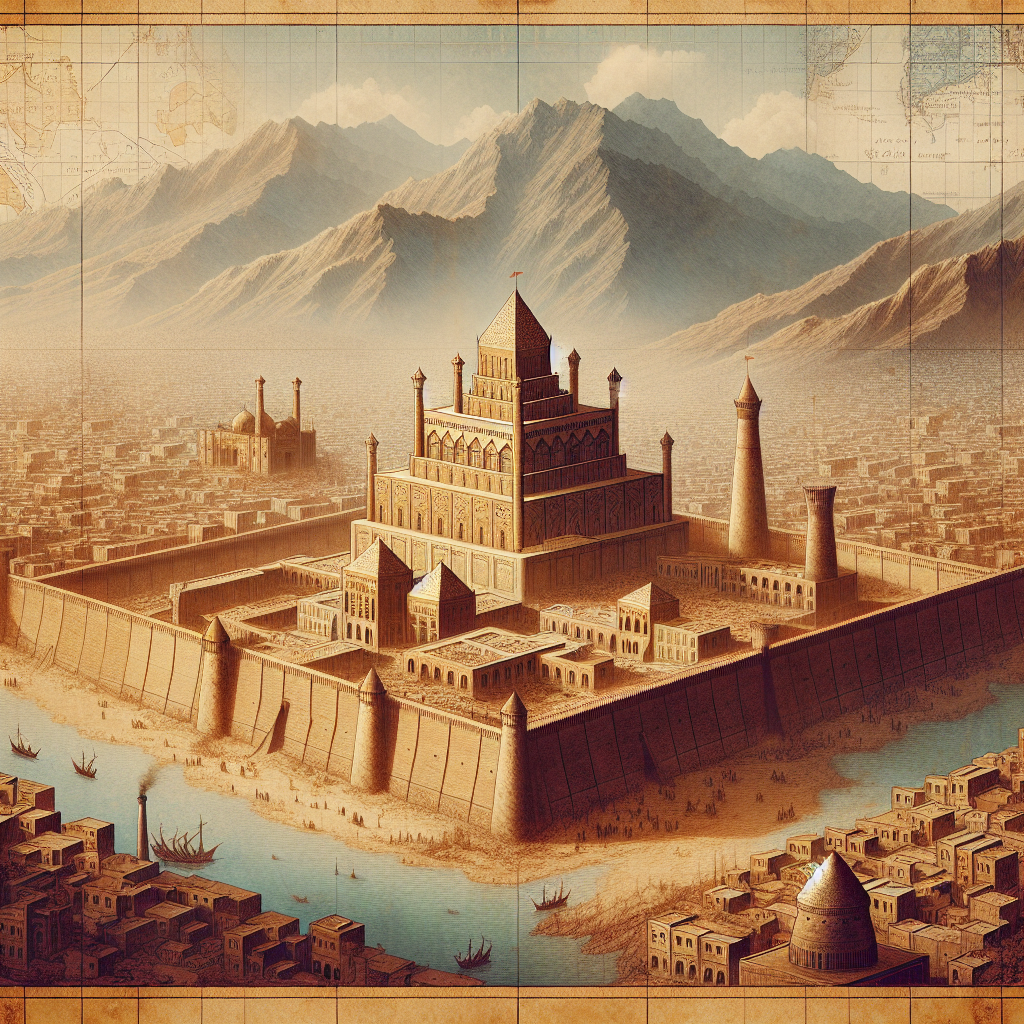

Picture this: a bustling ancient region that served as a geopolitical chessboard, bridging cultures millennia ago, called Eber-Nari. Known also as ‘Beyond the River’, this strategic zone was active around the first millennium BC, encapsulating parts of what we now know as Iraq, Syria, and Turkey. The Babylonian kings, Persian satraps, and even Roman leaders pivoted around it, ensuring Eber-Nari was always bubbling with intrigue, conflict, and cultural exchanges.
Eber-Nari, a region nestled in West Asia, was more than just land. It was a cultural melting pot where civilizations intermingled, and empires clashed and collaborated equally. The term itself, derived from the Akkadian word meaning ‘Beyond the River’, refers to the lands west of the Euphrates River. The historical timeline of Eber-Nari stretches across several influential empires, including the Neo-Assyrian, Neo-Babylonian, Achaemenid, and Seleucid Empires. Each of these dynasties left an indelible mark on the region, weaving a complex tapestry of diverse peoples.
In modern terms, Eber-Nari might seem like a footnote in history, overshadowed by the grand narratives of Mesopotamia and Egypt. Yet, its relevance is profound. For a region where olive oil, grains, and ceramics were vital trade goods, Eber-Nari was a crucial corridor for commerce and military campaigns. This made it a hotbed for social development and cultural diffusion, and a focal point for intellectual exchange during the reign of the Achaemenid Empire, in particular.
One might think about the Persian king Darius I, whose administrative prowess redefined Eber-Nari as an Achaemenid satrapy, solidifying the Persian Empire’s sprawling hugeness. In this context, the kingship was not just about unparalleled power but about crafting alliances with local elites and leveraging the region’s rich culture and economy. The administrative acumen of the Achaemenids nurtured roads, and communication systems, and catalyzed local governance, which led to relatively stable regional development.
Imagine the exchange of ideas flowing over Eber-Nari’s well-trodden paths. Here, the East met the West face to face. Traders, scholars, soldiers, and storytellers opened dialogues that might seem trivial today but were monumental then. This facilitated the rise of Aramaic as the lingua franca across the Near East, unifying a region punctuated by linguistic diversity and allowing for an unprecedented exchange of scientific knowledge, art, and religious ideas.
Of course, no story, or region, is a monologue. The conquest of Alexander the Great led to the dissolution of Achaemenid bureaucracy, throwing Eber-Nari into the Hellenistic age. This opened a new chapter of cultural fusion, bringing Greek influences into the fold, yet also ushering in periods of instability as power struggles ensued. These eras of turbulence, juxtaposed with times of peace, reflect on the vibrant, almost indecipherable mosaic of identities comprising Eber-Nari throughout the centuries.
Yet, the brilliance of Eber-Nari was also its curse. Its strategic position ensured it was a battleground for political control. Neighboring powers were relentless in their attempts to sway the region in their favor. Often, this exerted immense pressure on its lands and people, creating a cycle of growth and decimation. The indigenous populations found themselves perpetually shifting alliances and adapting to new overlords.
Talking about the people of Eber-Nari raises a sensitive topic. Discussions around such ancient regions often ignore the lived experiences and resilience of indigenous cultures. Historical records tend to lean towards the victors and their accounts. But one must remember the countless lives and stories woven into the very fabric of Eber-Nari’s existence. Their traditions, languages, and religions contributed distinctly to the rich cultural heritage of the entire region.
Looking at Eber-Nari today, contemporary Gen Z might wonder if its old echoes can still impact our digitally-driven era. The narrative teaches us about interconnectedness, an appreciation of cultural exchanges, and the value of understanding complex identities. It reminds us that borders are more than geographies; they are contact points for human experience.
There is also an argument to consider about the empires that ruled Eber-Nari, a discourse surrounding the power dynamics and the impacts of colonial and imperial ambitions. While some view the empires as architects of civilization, others perceive them in the light of oppression over native cultures. This duality exists even now, encouraging critical thought on historical legacies and their echoes today.
Eber-Nari, with its legacy of longstanding societal developments, offers lessons inseparable from our present understanding of history. It portrayed ancient ways of living, complex interactions between old-world collects, and craftily survived through numerous power shifts. These lessons remain relevant as they were then, reflecting the dynamic human story and our enduring quest for understanding and unity across divides.