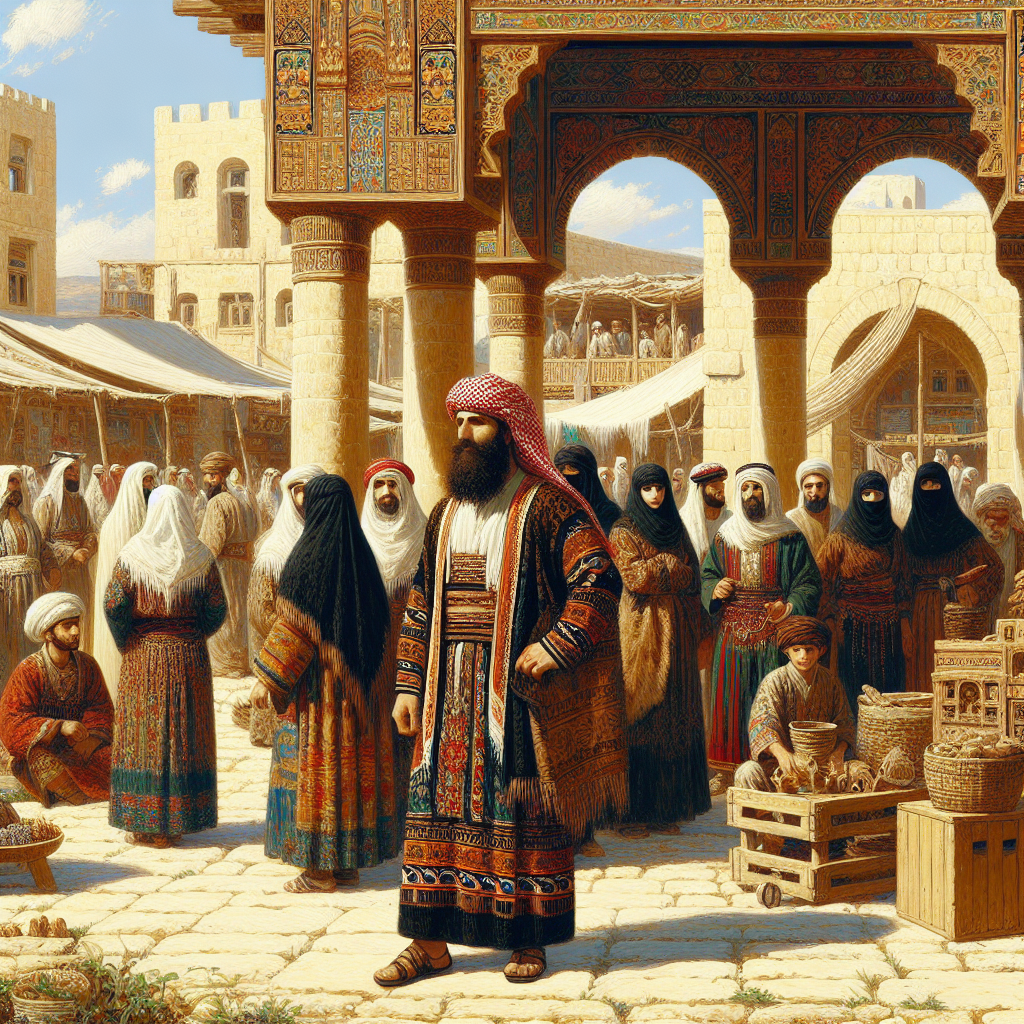

Picture a group of people living in one of the world's most war-torn countries, bound by a unique faith that is both mysterious and unyielding. That's the Druze in Syria for you, a community navigating its way through a complex social and political landscape while holding onto a secretive and spiritual belief system. Emerging in the 11th century, the Druze faith winds through history like a river, carving its path through predominantly the Middle Eastern terrain, particularly in Syria, Lebanon, and Israel. Today, Syria hosts a significant Druze population, mainly in the southwestern region, after centuries of socio-religious evolution.
With a population of roughly 700,000 in Syria, Druze individuals form part of the country’s rich mosaic of minority groups. The Druze faith is often described as an esoteric offshoot of Islam, deeply impacted by philosophies and religious beliefs that span time and geography. Perhaps most distinctively, it incorporates elements from Neo-Platonism, Gnosticism, and Ismailism. Standing apart with their unique identity, the Druze are not a proselytizing religion, and membership within the fold is restricted strictly by birth. This exclusivity is one of the aspects that adds layers of mystery around their ways.
The influence of the Druze within Syria's political and military landscape is noteworthy. The region they're mainly found in, Jabal al-Druze, also known as Jabal al-Arab, has frequently served as a stronghold of autonomy and resistance. Historically, the Druze have risen against Ottoman rule and played notable roles in the state's dynamics, demonstrating resilience and a desire to protect their sovereignty. Their tactical position has been both a shield and a challenge in navigating Syrian socio-political colors.
During the recent Syrian civil war, which began in 2011, the Druze faced significant dilemmas. With shifting allegiances and the chaotic nature of war, their political stance was riddled with caution and self-preservation. By remaining largely neutral or favoring certain powers when advantageous, such as supporting the Assad regime due to fear of extremist groups, the Druze tried steering clear of the conflict's destructive tide. Their pragmatism, however, came under criticism as some viewed it as a betrayal of broader democratic or revolutionary aspirations.
Critics argue that neutrality during moral crises might, in many ways, align too closely with oppressors, offering them unintended legitimacy. But one must peep into the practical concerns the Druze face, such as preserving their communities, protecting their people, and ensuring the survival of their distinctive culture amidst chaos. These are the difficult choices that communities must often make when faced with existential threats.
For many young Druze, like their global counterparts from Gen Z, traditional ties and modern aspirations often clash. Education, employment, and digital connectivity have introduced new dynamics that challenge traditional roles and perspectives. Straddling between the modern world and cultural loyalty, today's Druze youth are chartering their courses in uncharted territories.
The role of women within the Druze community provides another point of reflection. Druze women have been part of educational and professional fields, making their marks in ways that break conventional molds. Yet, the community's inherent conservatism presents a paradox where personal ambition meets established familial and communal expectations. In a slowly changing society, these women symbolize both the challenges of progressivism and the strength in unity.
The question of identity is a silent yet loud point of discussion among younger Druze. How does one maintain their distinctiveness in today’s rapidly globalizing world? Social media has expanded the views and interactions across borders, shaping perspectives that diverge sharply from the traditional Druze ethos. Integrating these global identities while maintaining cultural uniqueness presents a conundrum, but also an opportunity for a broader, more inclusive horizon.
While security and political solace remain major concerns for the Druze, their contributions in arts, medicine, and academia globally highlight their vibrant participation in the human narrative. Across nations, the Druze community reflects an intricate dance of maintaining roots while stretching their branches to touch newer skies. This dance is mirrored in their diasporas across continents, marking their presence not with loud statements but silent, solid credence.
As with any community caught between history and modernity, the Druze present a case study in adaptability, resilience, and dreams for unity. As they continue to navigate through Syria's storied landscapes, their story keeps evolving, like chapters of a book that refuses to be closed too soon.