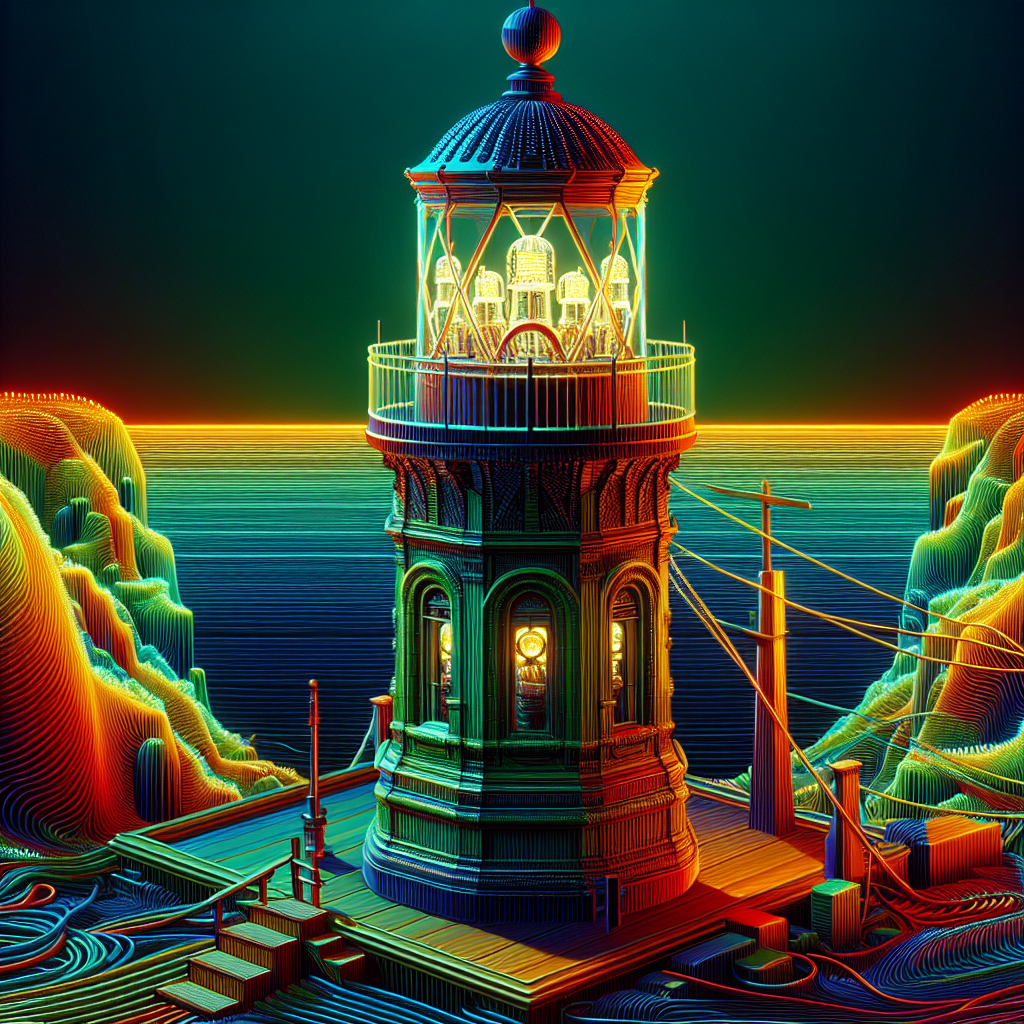

The Bright Legacy of the Dalén Light
Imagine a world where lighthouses could operate without human intervention, guiding ships safely through treacherous waters. This was made possible by the invention of the Dalén light, a revolutionary advancement in lighthouse technology. The Dalén light was invented by Gustaf Dalén, a Swedish engineer, in the early 20th century. It was first introduced in 1907 and quickly became a staple in maritime navigation across the globe. The invention utilized a gas known as acetylene, which was stored in a special container and released in a controlled manner to produce a bright, steady light. This innovation not only improved the safety of sea travel but also reduced the need for constant human oversight in lighthouse operations.
Gustaf Dalén's invention was groundbreaking because it addressed a significant challenge in maritime navigation. Before the Dalén light, lighthouses required constant maintenance and manual operation, which was both labor-intensive and costly. The Dalén light's automatic mechanism allowed lighthouses to function independently, using a sun valve to turn the light on at dusk and off at dawn. This not only saved time and resources but also ensured that lighthouses could operate in remote locations where human presence was limited.
The impact of the Dalén light was profound. It was adopted by numerous countries, transforming the way lighthouses were managed and significantly enhancing maritime safety. The invention earned Gustaf Dalén the Nobel Prize in Physics in 1912, recognizing his contribution to the field of engineering and his role in improving global navigation. The Dalén light became a symbol of innovation and progress, demonstrating how technology could be harnessed to solve real-world problems.
However, it's important to acknowledge the concerns that arose with the widespread adoption of the Dalén light. Some argued that the automation of lighthouses led to job losses for lighthouse keepers, who had traditionally been responsible for maintaining and operating these vital structures. This shift in employment dynamics was a point of contention, as it highlighted the broader societal impact of technological advancements. While the Dalén light undoubtedly improved efficiency and safety, it also underscored the need for careful consideration of the human element in technological progress.
Despite these concerns, the Dalén light remains a testament to the power of innovation. It paved the way for further advancements in lighthouse technology, eventually leading to the development of electric and solar-powered lights. These modern iterations continue to build on Dalén's legacy, ensuring that lighthouses remain a crucial part of maritime navigation.
The story of the Dalén light is a reminder of the delicate balance between progress and its impact on society. It challenges us to think critically about how we integrate technology into our lives and the potential consequences of automation. As we continue to innovate and push the boundaries of what is possible, we must also consider the human stories behind these advancements and strive to create a future that benefits everyone.