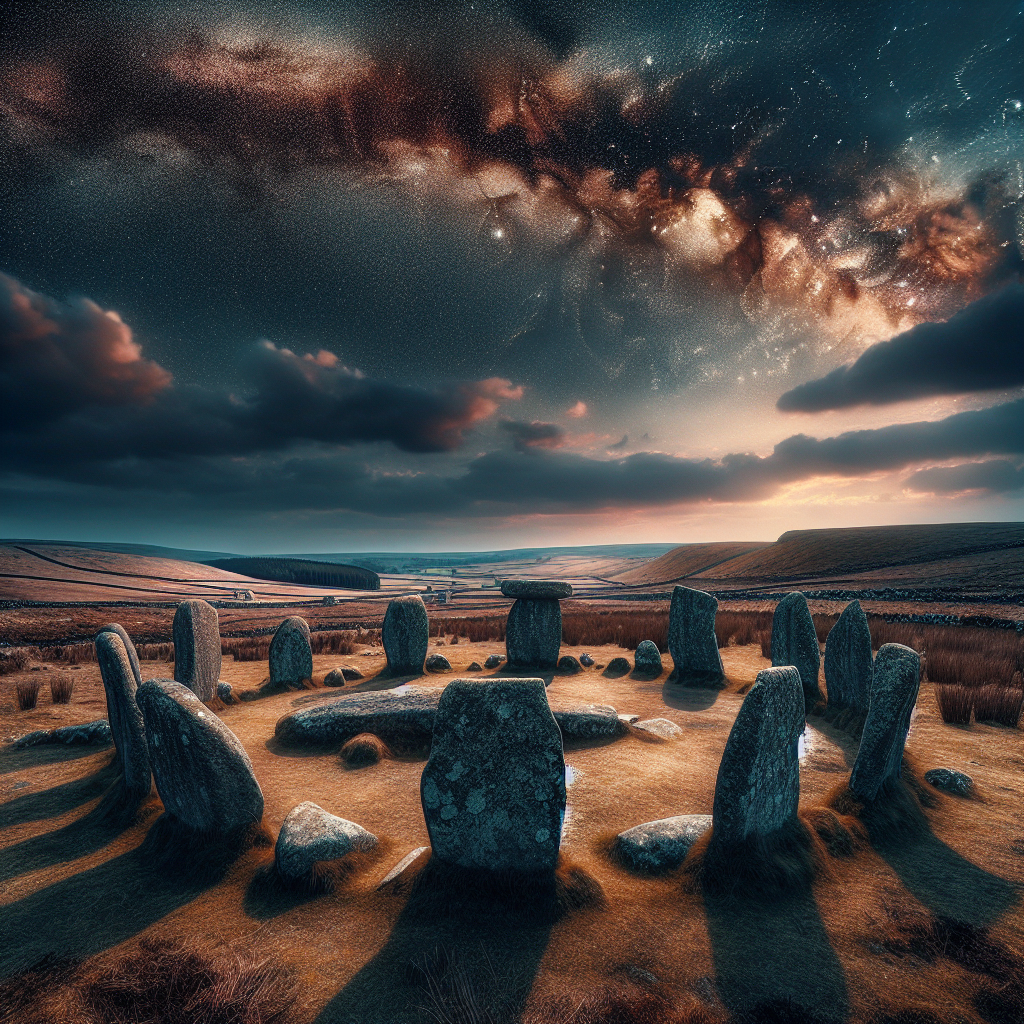

Unravel the Mystique of Craddock Moor Stone Circle
Ever wondered what a twenty-minute stroll from the bustling Bodmin Moor can uncover? Picture this: a cluster of ancient stones standing proudly on the desolate moorland, wrapped in an aura of mystery. That's Craddock Moor Stone Circle for you—a prehistoric relic rooted in Cornish earth. Archeologists and enthusiasts find themselves drawn to this enigmatic site, believed to have been constructed during the Bronze Age, around 2,000 to 1,000 BCE. Situated in the picturesque beauty of Cornwall, England, this stone circle offers more than just a glimpse into the past. It invites questions about our ancestors' understanding and appreciation of their landscape.
What makes stone circles like Craddock Moor so intriguing? The Craddock Moor Stone Circle reflects the age-old human drive to seek meaning, find connections, and create something enduring. It's neither the largest nor the most well-preserved, yet it pulses with history and invites speculation. Its stones—12 of them, now pretty much all fallen—might have served as part of an early astronomical observatory, a ceremonial monument, or simply a gathering place for ancient communities. There's a mystique in the ambiguity, allowing each generation to project its own interpretations onto these silent stones.
Oddly enough, the site’s somewhat ambiguous state fascinates heritage enthusiasts and casual visitors alike. Some come with high-tech tools to map out its features, while others come with picnic blankets to enjoy a sunny afternoon surrounded by history. The land is open, freely accessible to all. Sadly, this openness leads to a lack of protection against damage, leaving preservationists worried about its fragile future.
While stone circles pepper the landscape across the British Isles, each comes with its own stories. Craddock Moor holds secrets that speak to many but tell little. To some, it’s merely an assortment of scattered stones; to others, it symbolizes a connective thread to our distant ancestors. Numerous sites demonstrate alignment with celestial events, hinting at our ancestors' sophisticated understanding of the cycles of the sky. Whether Craddock Moor holds any such alignments remains part of its unsolved puzzle, tantalizing future researchers with its untapped potential.
There are, of course, those who argue about the importance of maintaining such sites over using these lands for more contemporary needs. On one side, there’s a passionate plea for preservation, the belief that these stones underscore our collective heritage and deserve our protection over immediate development interests. On the other, voices arise that challenge their historical value or utility, questioning the justification for prioritizing their upkeep over modern agriculture, housing, or recreation.
Balancing the reverence for ancient history with modern-day requirements is a nuanced dance. Stone circles, like Craddock Moor, tie us to a past where people carved out physical narratives that impress and inspire wonder. Is it reasonable, though, to let this dictate current land use? Advocates argue that losing such pieces of history outweighs any temporary inconvenience they might cause.
Yet, the deeper conversation here mirrors broader societal dialogues about how we value history against modernity. Gen Z, particularly known for its dynamic engagement with cultural and social issues, might find itself grappling with such conundrums. How do we, as stewards of the past and present, decide what merits time and resources? The conversation is an ongoing tug-of-war, as relevant today as it was yesterday and will be tomorrow.
In all its quiet grandeur, Craddock Moor Stone Circle extends an invitation not only to walk among its weathered stones but to ponder broader questions about our role in history's ongoing narrative. These rocks, steadfast under open skies for centuries, may seem to whisper that history is never truly silent. More importantly, they encourage us to consider our footprint and how we contribute to the stories to be told in the eons to come.
So, the next time you find yourself wandering through Cornwall, perhaps take that leisurely twenty-minute venture. The experience might not hand you direct answers, but sometimes the questions it raises are the true gifts these ancient sites can bestow.