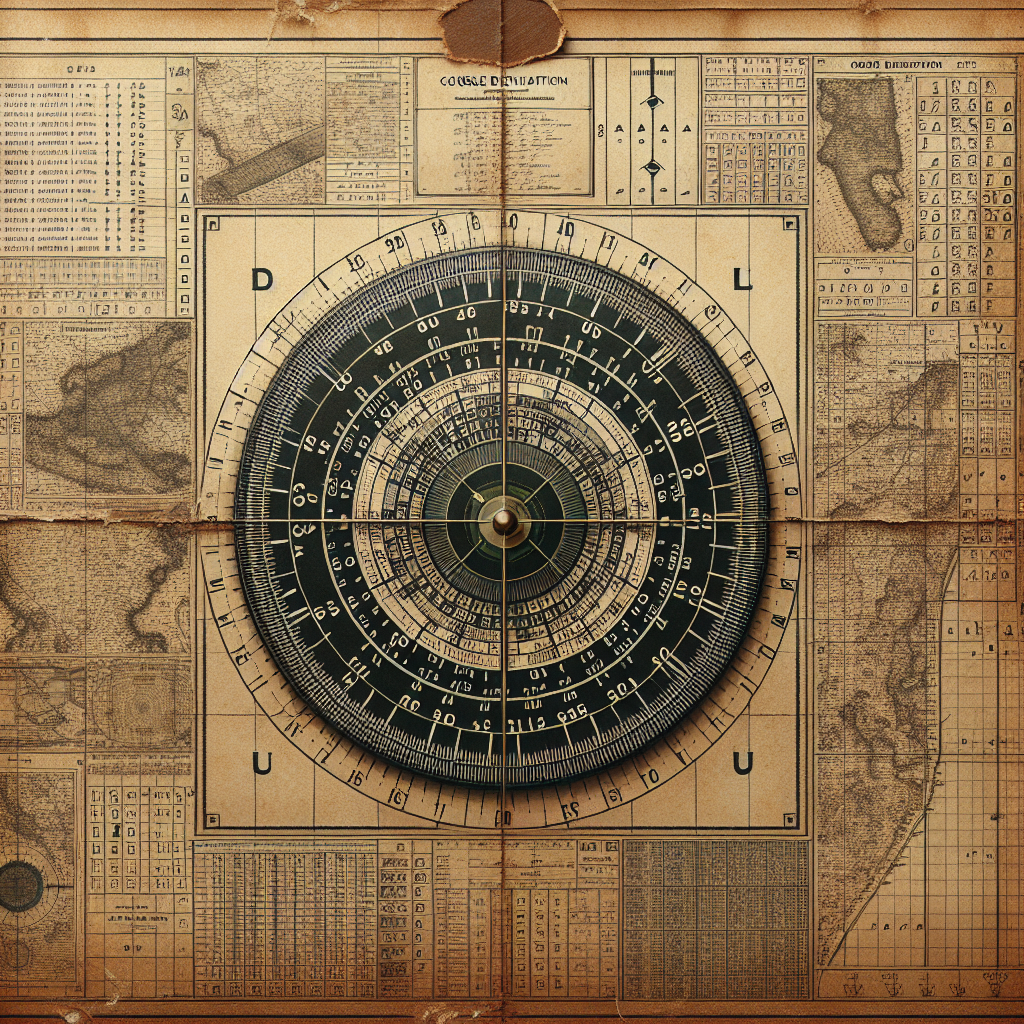

Imagine being a pilot soaring through the skies, amidst fluffy clouds, relying on a trusty gadget to stay on course. This trusty gadget is the Course Deviation Indicator (CDI) – a vital instrument in aviation that helps pilots maintain their navigation precision. Essentially, a CDI guides pilots during Instrument Flight Rules (IFR), where visual cues aren’t possible due to poor weather or during night. This narrative unfolds around the late 20th-century aviation boom when cockpit technology transformed drastically to make flying safer, particularly in the air highways cluttered with countless flights.
For anyone not invested in a cockpit career, picturing the CDI might be a little alien. At its core, the CDI is part of a larger navigation system called the VOR (Very High-Frequency Omnidirectional Range), which declutters the air vibes for a pilot. The CDI is essentially a compass-like needle on the aircraft’s instrument panel, exploring deviations from a planned flight path – think of it as a more sophisticated map route on your phone, but for the sky. It informs the pilot which direction to adjust to stay on the desired course.
While it sounds like a tiny instrument in a realm of abundant avionics, the CDI plays a massive role in ensuring that flights don't end up far off their planned course. For travelers who long for no added delays, despite airport layovers, the CDI’s precision is a comforting assurance that their journey is adhering to the planned timeline.
Historically, instruments and gadgets in aviation evolved slowly; however, with the speed of technological advancements, especially around the 1960s and 1970s, refinements like the CDI became increasingly ubiquitous. For a generation used to seamless digital integration, it might be unfathomable to operate without touchscreen capabilities or GPS navigation. Yet, the CDI persists due to its reliability and simplicity in function. Simplicity can carry sophistication.
It's also necessary to acknowledge those who believe emerging advancements like GPS completely overshadow the CDI. Modern avionics are undoubtedly revolutionary, providing pilots with an infinite digital map and more automation than ever. Yet, there exists a unique charm in the simplicity of conventional instruments like the CDI that require and reward sharp, innate navigation skills. Many veteran pilots advocate for traditional training using these instruments to perfect the instinctual responses required in aviation emergencies.
The CDI’s function is simple and apparent though it assists in complex navigation tasks. Visualize it in terms of a seesaw on an extended rod – if the plane strays from its path, the CDI swings sideways, compelling the pilot to adjust the course back to center. While advancements in aviation are worth applauding, basic navigation techniques ensure a pilot's decision-making skills remain razor-sharp in real-world, high-pressure scenarios.
Generation Z, born amidst rapid changes in tech, might find the rudimentary CDI fascinating yet alien. This generation, woven with sensors, data, and almost omnipresent GPS guidance, often overlooks the charm and appeal midcentury technology held over transportation safety and reliance. The CDI epitomizes an era when pilots and planes took to the skies with more instinct than digital reliance, honing human skill.
Given the substantial significance of sustainable technologies today, isn’t it a whimsical thought that our predecessors indulged in manually-tuned tools and sheets of paper to navigate air routes? Aviation technologies, in progressing from CDI-based systems to integrated digital navigation plots, mirror the transition from dial-up Internet to fiber broadband.
Let's not forget the environmental debates about aviation. With carbon footprints soaring as much as the planes themselves, sustainable technology remains central in bridging efficiency and eco-friendly solutions. Although the CDI isn’t directly a player in this specific game, the principles around enhancing technology to create safer, more reliable flights without a heavy electronic footprint can take cues from the sturdy, resilient designs like those of CDI.
However, the simplicity and functionality of CDIs might suggest a slower, more measured approach to life, standing in contrast to the hustle of Xennial demands. For those who enjoy knowing precisely how things tick, this painstakingly designed analog device is a marvel of a bygone era.
Ultimately, while the technological race in avionics flies at blistering speeds, the CDI remains a fundamental component. As new generations redefine skies, blending advanced calculus with physics, drawing better, smarter flight paths – somewhere behind those monitors and screens, the spirit of the CDI’s simplicity courses through. It’s both practical and nostalgic, a bridge between intuitive history and digital futures.