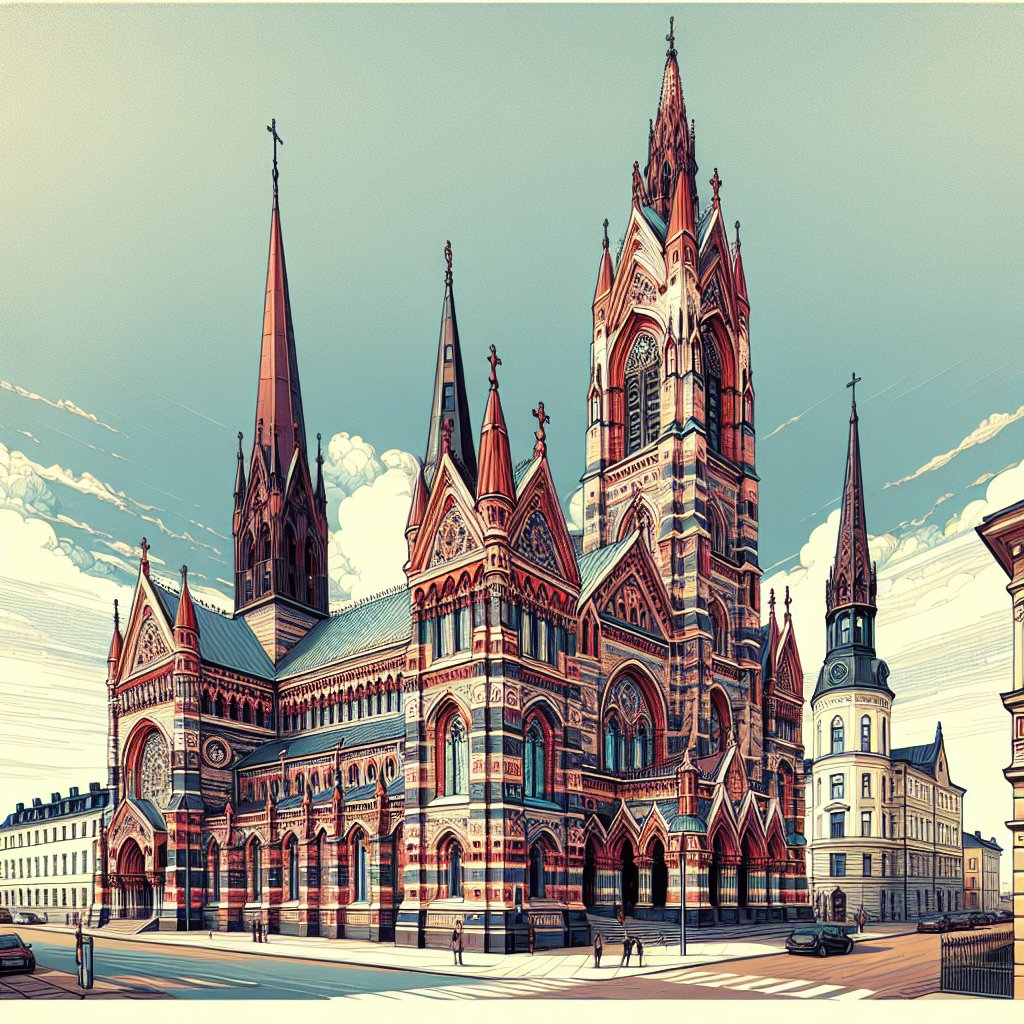

The Church of Our Saviour: A Gothic Gem in Malmö
In the heart of Malmö, Sweden, stands the Church of Our Saviour, a stunning example of Gothic Revival architecture that has been captivating visitors since its completion in 1889. This architectural marvel was designed by the renowned Swedish architect Helgo Zettervall, who was known for his work on several other significant churches and cathedrals across Sweden. The church is located in the bustling district of Rörsjöstaden, a vibrant area that reflects the rich cultural tapestry of Malmö. The Church of Our Saviour was built to accommodate the growing population of the city during the late 19th century, a time when Malmö was rapidly expanding due to industrialization.
The church's design is a testament to Zettervall's architectural prowess, featuring intricate details and soaring spires that draw the eye upward, inviting contemplation and awe. The interior is equally impressive, with its high vaulted ceilings and beautiful stained glass windows that cast colorful patterns of light across the pews. The church has served as a place of worship and community gathering for over a century, playing a significant role in the spiritual and cultural life of Malmö's residents.
While the Church of Our Saviour is a beloved landmark, it also represents a broader historical context. The late 19th century was a period of significant change in Sweden, marked by industrial growth and urbanization. The construction of such grand churches during this time was not only a response to the practical needs of a growing population but also a reflection of the era's architectural trends and the importance placed on religious institutions.
However, not everyone views the church in the same light. Some critics argue that the resources spent on such grandiose religious buildings could have been better allocated to address social issues of the time, such as poverty and housing shortages. This perspective highlights the ongoing debate about the role of religious institutions in society and how they balance spiritual needs with social responsibilities.
Despite differing opinions, the Church of Our Saviour remains a cherished part of Malmö's heritage. It continues to serve as a place of worship and community events, adapting to the changing needs of its congregation. The church also attracts tourists and architecture enthusiasts from around the world, drawn by its historical significance and architectural beauty.
For many, the Church of Our Saviour is more than just a building; it is a symbol of Malmö's history and resilience. It stands as a reminder of the city's past while continuing to play a vital role in its present and future. As Malmö evolves, the church remains a constant, offering a space for reflection, connection, and community in an ever-changing world.