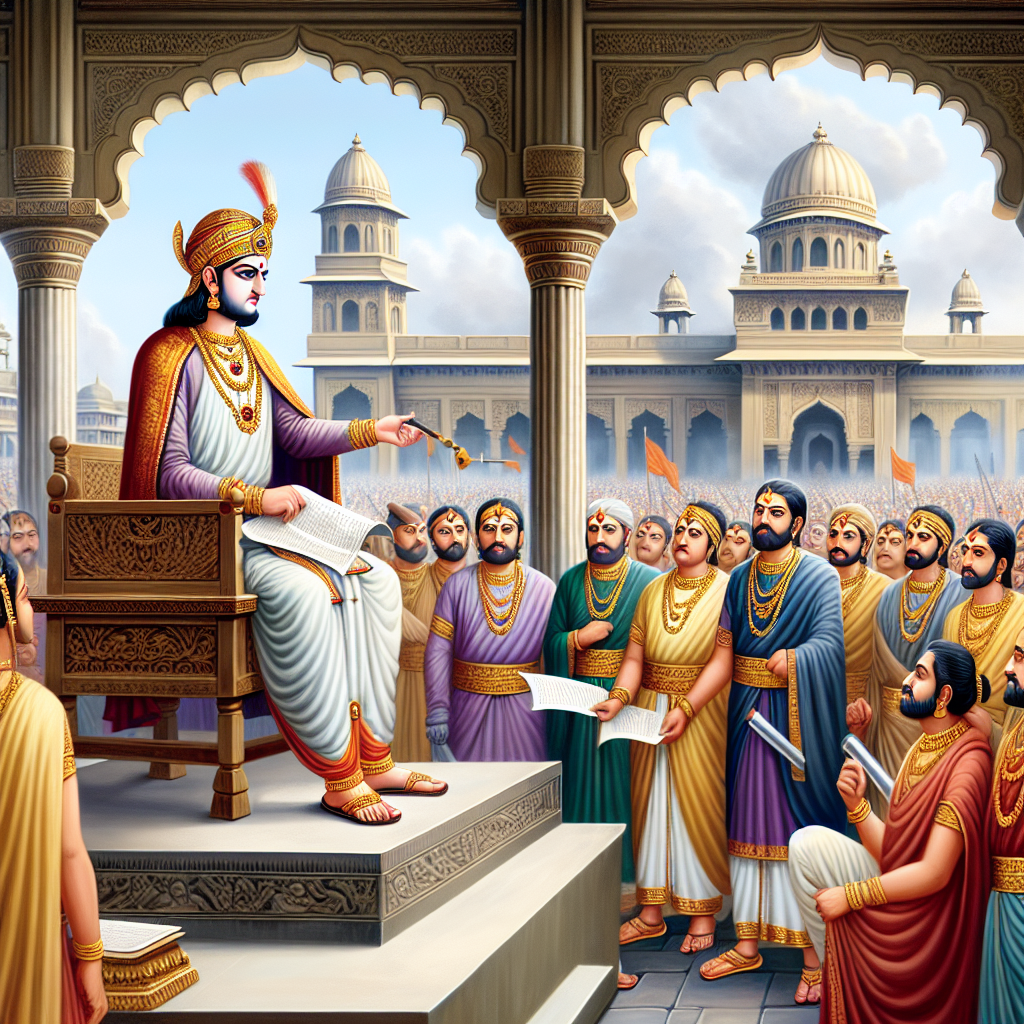

Imagine rewinding time to an era where political intrigue and war were at the forefront of shaping civilizations. The 2018 TV series 'Chandragupta Maurya' does precisely that, bringing to the screen the riveting story of the legendary Indian emperor. Broadcast on Indian TV and thriving on historical drama, this series blends myth, reality, and artistry to reconstruct the life of Chandragupta Maurya, who founded the ancient Mauryan Empire. The series, which premiered in November 2018 on Sony Entertainment Television, whisks viewers back to India in the 4th century BCE, a complex tapestry of kingdoms grappling for dominance in northern India, presenting a world rife with transformation and ambition.
The main character, Chandragupta, is played by actor Faisal Khan. He’s portrayed as a dynamic and resilient leader. The narrative highlights his journey from a destitute boy to becoming the emperor, mentored by the brilliant and cunning Chanakya, a renowned philosopher and teacher. The show doesn’t just dive into warfare and power struggles; it deeply explores the characters’ motivations, adding layers of depth to the personalities of historical figures that history textbooks often overlook.
While some might argue such dramatizations sacrifice strict historical accuracy for entertainment, they offer the opportunity to spark curiosity about ancient history among younger viewers. For a generation accustomed to fast-paced narratives, streamlining history into an engaging series can create a deeper interest in cultural roots. The creative liberties taken in the series can be seen as a narrative device allowing it to explore moral, ethical, and strategic dimensions, making it not just a retelling of historical events but a commentary on leadership and governance.
Critics have praised the show's production quality and visual aesthetics. The costumes, set designs, and cinematography create a visually captivating atmosphere that reflects the time, providing the audience with an immersive experience. Furthermore, the dynamic between Chanakya and Chandragupta becomes a focal point, illustrating the teacher's role in nurturing leadership potential. This interplay highlights themes of mentorship and wisdom, resonating with the series' modern audiences who value guidance within a competitive world.
From a politically liberal perspective, 'Chandragupta Maurya' serves as a reminder of the socio-political dynamics at play even in antiquity, showcasing issues like class disparity, power dynamics, patriarchy, and the pursuit of justice. It's intriguing how these age-old struggles mirror today's world, offering a historical lens through which viewers can examine contemporary socio-economic issues. It inadvertently invites viewers to contemplate whether humanity has genuinely progressed in its societal structures and ethical governance.
Yet, the series is not without its weaknesses. While it captivates with intensity, it sometimes falls into the trap of over-sensationalizing or simplifying complex historical nuances for dramatic effects, leading to criticism from historical purists. These criticisms underline an important dialogue between entertainment and education, highlighting the responsibility of media in accurately portraying history while remaining engaging to diverse audiences.
Both appreciation and criticism serve as testimony to the show’s reach and impact. Bridging historical events with narrative flair, the series proves to be a bold attempt at reconstructing cultural heritage, and it's precisely this blend that makes it a subject of vibrant debate among historians, educators, and entertainment critics alike.
The show's boldness in reimagining history encourages a broader conversation on how historical media shapes public perceptions. Observers argue that the dramatization of history should come with transparency so audiences are aware of artistic interpretations versus documented facts.
Gen Z, with their adeptness at sifting through information, have the opportunity to derive value from the series by engaging with it critically. They can question, validate, and seek further learning, creating dialogues that go beyond the screen. Platforms such as online discussion forums, educational videos, and podcasts related to historical series allow younger audiences to voice their interpretations and contribute to a collective understanding of history.
Ultimately, 'Chandragupta Maurya' explores narrative boundaries, appealing to a generation of viewers hungry for storytelling that connects the past's lessons with the present day. It’s an invitation to ponder our origins, understand our past decisions’ ramifications, and explore the stories beyond the headlines. Stories like these, whether hailed for their creative portrayal or critiqued for their historical liberties, enrich the tapestry of cultural narratives, bridging the age-old past with today’s ever-evolving conversations.