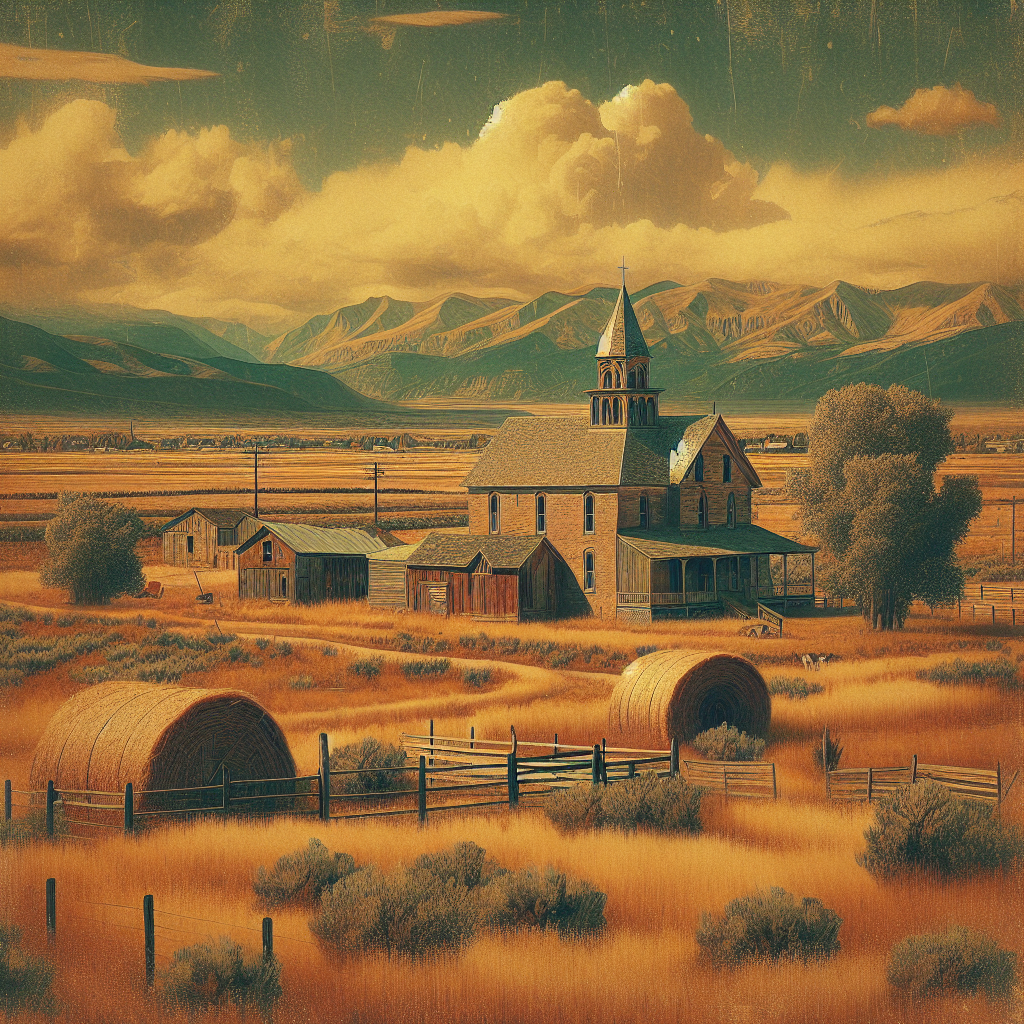

Nestled amidst the lush valleys and rugged mountains of Colorado, Chaffee County Poor Farm offers a haunting peek into a past that’s often brushed aside in history books. Born out of necessity in the 1890s, this poor farm provided refuge and labor for those who had fallen on hard times. Established in a time when social safety nets were thin and unreliable, such farms were a common fixture across America. Here, those desperate for a second chance lived and toiled in a society way less forgiving than today's.
In the heart of Salida, this farm was a place where the poor, sick, or otherwise unfortunate could find some relief – not out of sheer goodwill but out of societal obligation and economic efficiency. As towns couldn’t afford the growing expense of caring for the destitute, the poor farms became a pragmatic solution. Residents would work the land in exchange for shelter and sustenance, reflecting a time where personal gain and community responsibility awkwardly intersected.
Walking through Chaffee County Poor Farm today, you’re entering a testament to a different era. You’ll hear whispers of the hardships that people faced, a stark reminder of how far we’ve come — and how far we still have to go in terms of social equity. The atmosphere is thick with stories — some painfully heart-rending, others uplifting in their testament to human resilience.
Some see the poor farm as a relic that glorifies a past system that exploited the vulnerable. Critics claim that such initiatives were punitive rather than supportive, viewing poverty as a personal failure rather than a complex societal issue. But others argue these farms offered a dignified alternative to homelessness or jail, a place where people could contribute and find a sense of community during hard times.
While touring the property, you might catch yourself contemplating the thin line between helping and exploiting. That duality is part of the reason why the history of poor farms sparks debates even now, decades after their operation. It’s arguably a precursor to more modern social welfare systems, highlighting ongoing discussions about how society should treat its least fortunate members.
In engaging the ghosts of Chaffee County Poor Farm, you step into an ongoing conversation about human dignity and social justice. Embedded in its weathered walls are lessons about compassion, resilience, and the need for societal transformation. These lessons become even more critical as we navigate contemporary challenges — be it income inequality, access to healthcare, or fair labor practices.
Notably, nature has crept back to reclaim much of the old farmland, creating a picturesque environment punctuated by the echoes of its past. It stands as a place of reflection and a poignant reminder that no person’s worth should ever be measured purely by their productivity. Yet, it also shows that finding a balance between aid and autonomy is a timeless struggle.
In understanding the historical intricacies of such a place, we gain insight into the struggles and systems at play that continue to shape our social structures. It offers a chance to look back with empathy and project forward with a vision grounded on principles of equity and justice -- making sure history serves as a pathbreaker, not a ball and chain. It’s a call to young changemakers – like Gen Z – to shape a future that abolishes the ghosts of inequity.
Today, as we stand on the precipice of great social change, Chaffee County and other such places remind us of the resilience of the human spirit and the need for systemic justice. They push us to think deeply about what kind of world we are building and for whom. These are not just remnants of the past but urgent lessons for the future, inviting us to act with more heart and humanity.