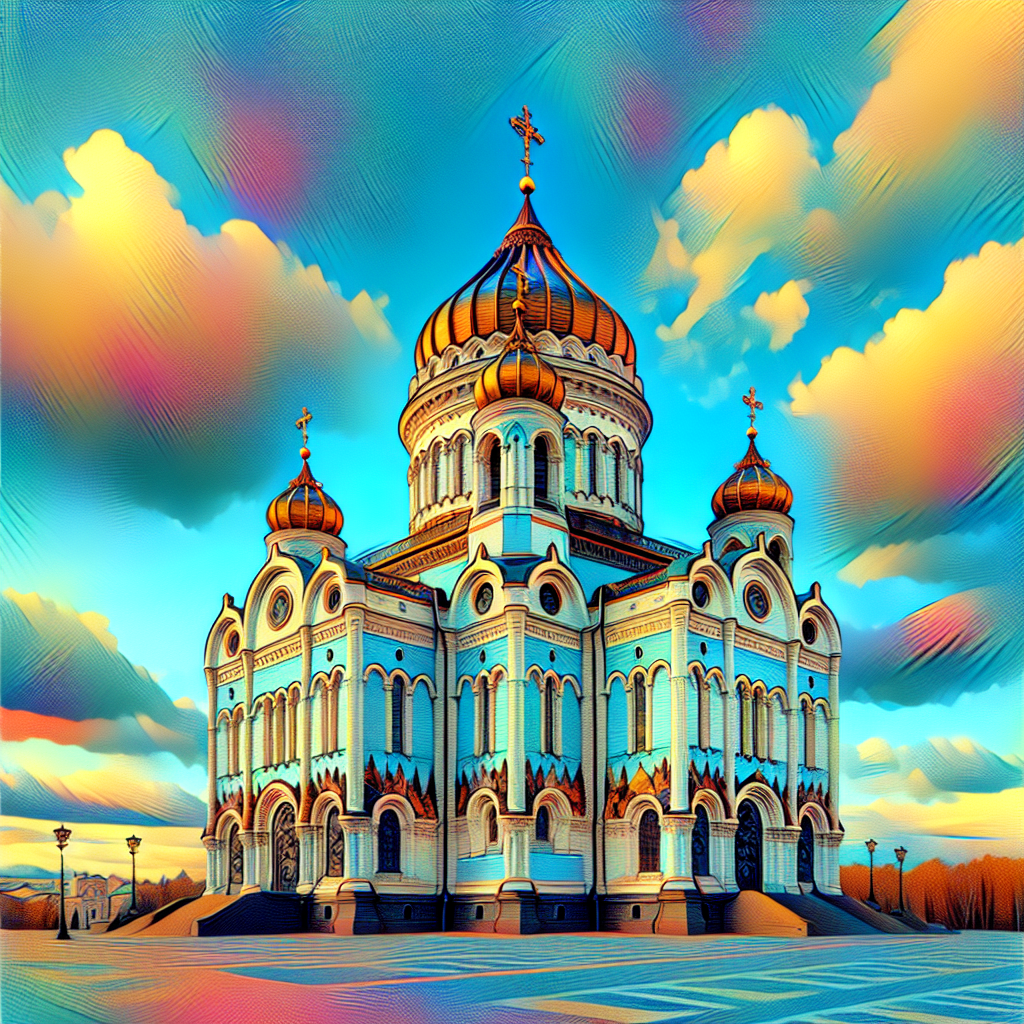

The Cathedral of Christ the Saviour: A Beacon of Faith in Samara
Imagine a structure so grand that it seems to touch the sky, a place where history, faith, and architecture converge. This is the Cathedral of Christ the Saviour in Samara, Russia. Built in the early 21st century, this magnificent edifice stands as a testament to the resilience and devotion of the Russian Orthodox community. Located in the heart of Samara, a city known for its rich cultural tapestry and vibrant history, the cathedral was constructed to replace a previous church that was demolished during the Soviet era. The new cathedral was completed in 2013, symbolizing a revival of religious freedom and cultural identity in post-Soviet Russia.
The Cathedral of Christ the Saviour is not just a place of worship; it is a symbol of the enduring spirit of the people of Samara. The original church, which stood on the same site, was destroyed in the 1930s as part of the Soviet regime's campaign against religion. For decades, the site remained barren, a stark reminder of a time when religious expression was suppressed. However, with the fall of the Soviet Union, there was a resurgence of interest in rebuilding the cathedral, driven by a desire to reclaim a piece of the city's spiritual heritage.
The architectural design of the cathedral is a blend of traditional Russian Orthodox elements and modern construction techniques. Its golden domes and intricate frescoes are reminiscent of the great cathedrals of Moscow and St. Petersburg, yet it possesses a unique charm that reflects the character of Samara. The interior is adorned with beautiful icons and mosaics, creating a serene atmosphere that invites reflection and prayer. The cathedral's construction was funded by donations from local residents and businesses, highlighting the community's commitment to preserving their cultural and religious legacy.
For many in Samara, the cathedral is more than just a building; it is a place of solace and hope. It serves as a gathering place for the faithful, hosting religious services, weddings, and community events. The cathedral also plays a vital role in the city's cultural life, attracting tourists and pilgrims from across Russia and beyond. Its presence has helped to revitalize the surrounding area, contributing to the economic and social development of the city.
While the cathedral is a source of pride for many, it is not without its critics. Some argue that the funds used for its construction could have been better spent on social programs or infrastructure projects. Others see it as a symbol of the close ties between the Russian Orthodox Church and the state, raising concerns about the separation of church and state. These criticisms reflect broader debates within Russian society about the role of religion in public life and the allocation of resources in a rapidly changing economy.
Despite these differing viewpoints, the Cathedral of Christ the Saviour remains a powerful symbol of faith and resilience. It stands as a reminder of the past, a celebration of the present, and a beacon of hope for the future. For the people of Samara, it is a testament to their enduring spirit and a cherished part of their cultural heritage. As the city continues to grow and evolve, the cathedral will undoubtedly remain a central part of its identity, a place where history and faith come together in a harmonious blend.