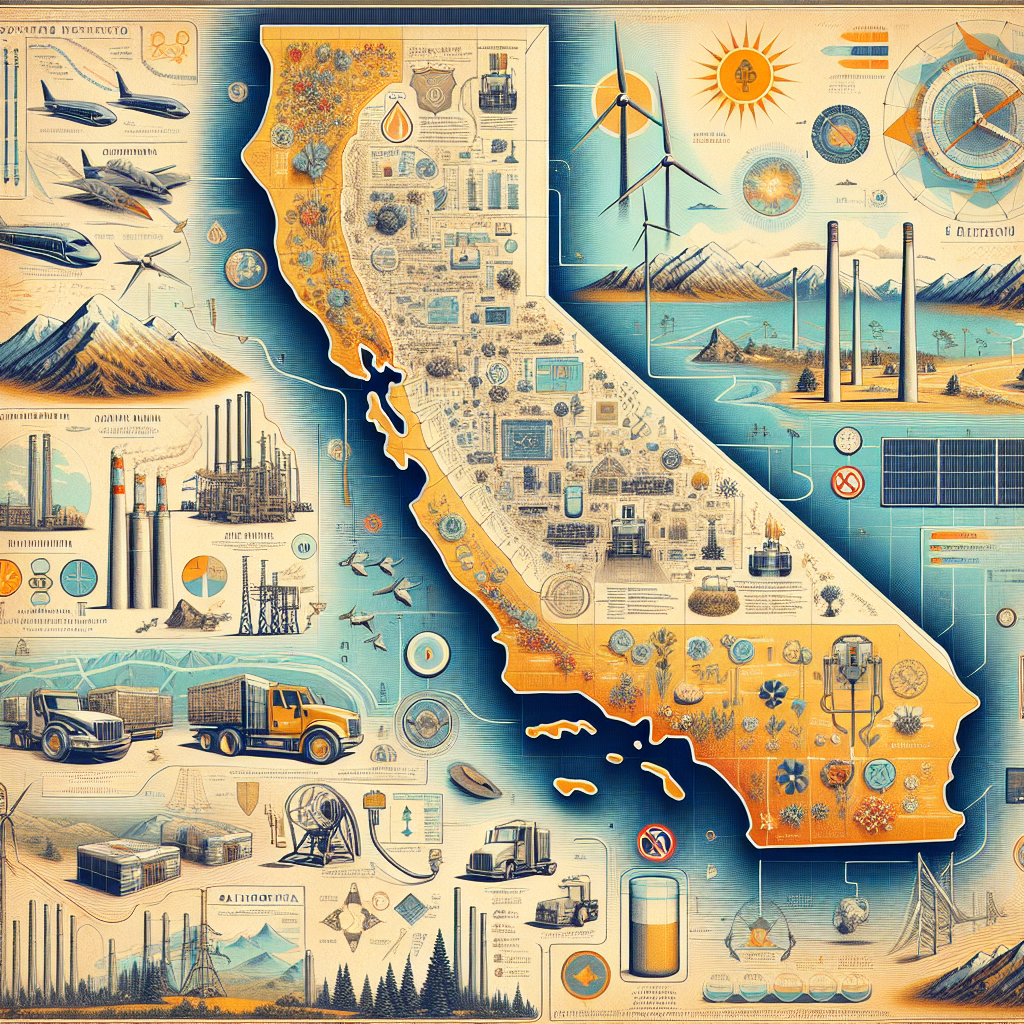

Buckle up and get ready to venture into the future—a place where cars emit nothing but water from their tailpipes, and it’s happening right in sunny California. In 1999, the California Fuel Cell Partnership (CaFCP) was born, uniting various industries and government agencies, including auto manufacturers like Honda and Hyundai, fuel providers, technology companies, and environmental agencies under one mission: to make hydrogen fuel cell electric vehicles (FCEVs) a viable reality. Happening mostly in Sacramento, the CaFCP promotes the hydrogen network essential for these cars to provide California’s roads with a cleaner, greener hustle and bustle.
If you’ve heard about the debate between electric vehicles (EVs) and hydrogen FCEVs, it's a bit like comparing apples and oranges—or perhaps more accurately, comparing earth and air. While battery electric vehicles have had a head start thanks to the charisma and charm of companies like Tesla, FCEVs are touted as the silent revolutionaries of sustainable transportation. Here’s where the state of California plants its ambitious flag. The state’s vast geographical spread and its complex environmental policies offer a perfect breeding ground for alternative fuels and pioneering energy solutions.
Hydrogen fuel cells are basically small power plants. They take in hydrogen gas and, through a chemical reaction with oxygen, produce electricity. The only emission is water vapor. What could be cooler than turning the most abundant element in the universe into an emission-free ride? The CaFCP's dream is to make hydrogen as common as coffee in a big city. Despite these intentions, California’s hydrogen station network is still a work in progress, growing from a budding technology into a more mature alternative.
Let’s be real, the upfront costs are significant. Hydrogen vehicles currently have higher price tags than their gasoline counterparts, around $60,000 in some models, though prices are beginning to drop as technology improves. The network of hydrogen refueling stations also lags behind the more established electricity grid for EV charging. As of now, there are just about 60 hydrogen stations operating in California, mostly located between San Francisco and Los Angeles.
California is betting on the virtues of FCEVs to help cut down on fossil fuel dependence. It’s a commendable goal, but requires some serious scaffolding in terms of infrastructure. The state is gambling on hydrogen’s long-range benefits, such as faster refueling time compared to EVs and the potential for large-scale energy storage. People continue to discuss pros and cons with fervor. Critics argue that the electricity used to produce hydrogen should just directly charge electric cars instead. They question the efficiency of the hydrogen production and distribution process.
Yet, the California Fuel Cell Partnership doesn’t flinch from these discussions. It’s worth emphasizing that while challenges are real, they are viewed as hurdles to innovation rather than stopping points. This collaborative approach seeks to promote the construction of new stations while also pushing for technical developments in both fuel cell technology and hydrogen production methods. These efforts are married with educational programs aimed at demystifying hydrogen for a skeptical public.
For Gen Z and newer consumers, the pull of zero-emission choices aligns seamlessly with values that prioritize environmental stewardship. A hydrogen-fueled lifestyle might sound overly futuristic, but it offers tangible paths toward reducing personal carbon footprints—a connection that resonates strongly with those wanting to make a difference.
Consumer behavior is gradually shifting to demand more sustainable products, and vehicles are right in the spotlight. Market analysts note that if California succeeds in creating a scalable hydrogen infrastructure, it could serve as a blueprint for national or even global implementations. The vision is an ambitious yet commendable pivot away from fossil fuels toward diverse renewable resources.
Even with the promise of state subsidies and environmental benefits, not everyone is jumping onto the hydrogen bandwagon just yet. The technology needs more mileage to gain public trust, but the California Fuel Cell Partnership’s goals could shape how future policies and technologies develop across the globe.
Seeing both sides, it’s important to acknowledge the potential sacrifices and gains. What do you think about converging infrastructure improvements, public interest, and governmental incentives? If hydrogen fuel cells bridge the sustainability gap, they could redefine what it means to own a car. The debate is not just academic. It’s rooted in how we see our shared future. Either way, the efforts of the California Fuel Cell Partnership could identify stepping-stones for cleaner skies and quieter roads.