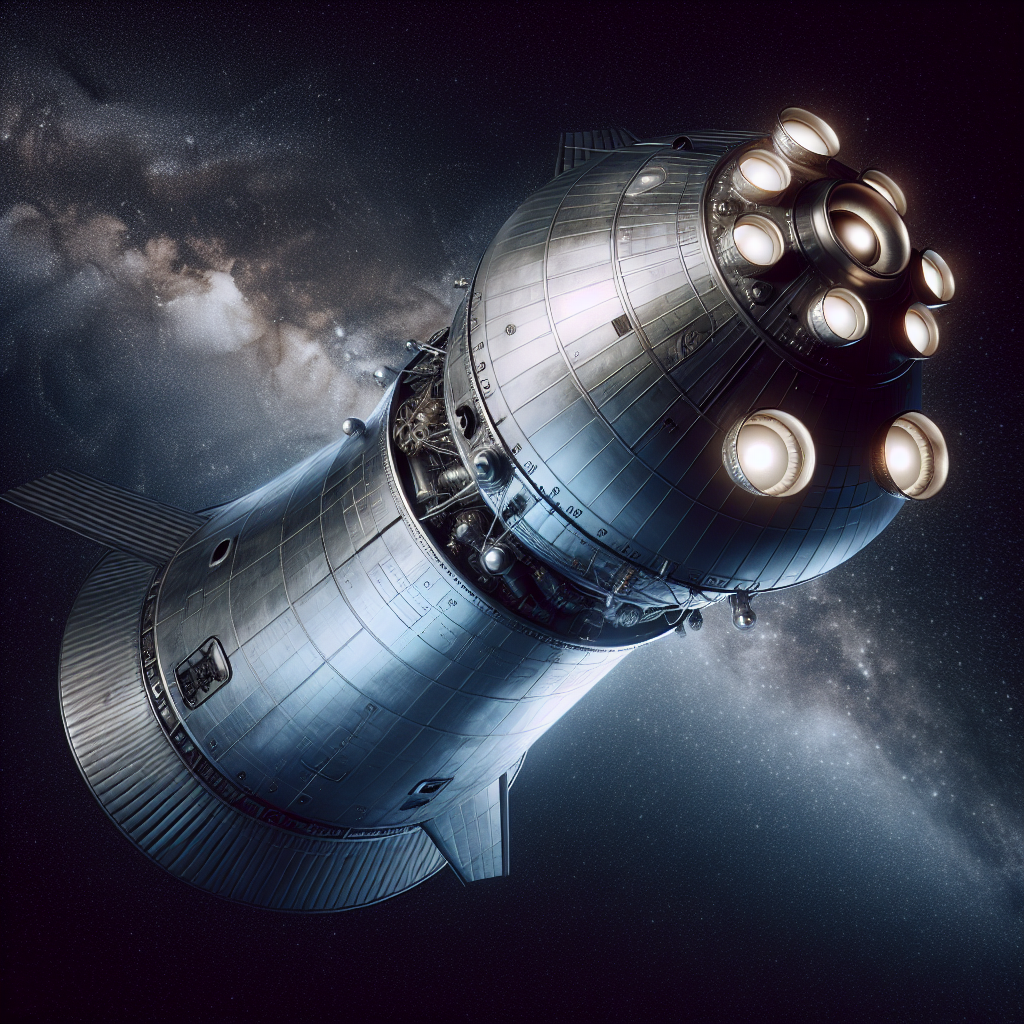

Space exploration is often seen as the final frontier, a domain where humanity pushes against the boundaries of science and technology. One of the most fascinating stories in this realm is that of BOR-5, a Soviet-era technological marvel that played a pivotal role during the Cold War space race. BOR-5, an acronym for "suborbital rocket" in Russian, was a series of atmospheric hypersonic test vehicles created by the Soviet Union's space agency in the 1980s. It existed within a context of fierce competition between superpowers and a genuine desire to understand and conquer the challenges of space travel.
The BOR-5 program began with the Soviet Union’s ambition to develop a reusable spaceplane. The spaceplane would perform tasks that satellites and space capsules couldn't, such as gliding safely back to Earth or being reused for multiple missions. This emphasis on reusability was a cornerstone of various space programs, driven by the need to reduce the astronomical costs associated with launching spacecraft. The mini-space shuttle was smaller and lighter, serving primarily as a technology demonstrator for the larger Energiya/Buran shuttle system.
The timing of BOR-5 fits into a period of immense technological progress. The U.S. had started its Space Shuttle program in the 1980s, which had implications beyond national pride. Each successful mission fueled advancements in science, technology, and even military applications. Thus, BOR-5 was not just a tool for space exploration but also a cog in the geopolitical machinery.
The flight tests of BOR-5 were conducted from 1984 to 1988. They typically launched from the Kapustin Yar Cosmodrome and landed on the Caspian coastline. These flights probed critical technologies for handling reentry heat and aerodynamic stability at high speeds. These tests were not without risk, and each one provided crucial data that contributed to our collective understanding of hypersonic flight.
One of the unique aspects of BOR-5 was its design. Unlike large, manned spacecraft, it was both unmanned and subscale, which meant it could validate important functions on a smaller and cheaper scale. This approach makes a lot of sense even today, as it allows engineers to test and refine cutting-edge technologies without the financial and ethical burdens of risking human life or sinking billions into full-scale prototypes.
It's important to acknowledge the politically charged atmosphere in which BOR-5 existed. The U.S. often viewed Soviet advancements in space as a direct threat to its own national security. The Soviet Union, on the other hand, saw American innovations as a challenge that needed a response to maintain global parity. It's easy to romanticize space exploration as a purely noble pursuit, but the reality is often more complex. Political tensions and military considerations have always lurked just beneath the surface of this scientific quest.
Despite these tensions, the BOR-5 program should inspire discussions about global cooperation. In today’s climate, where nationalism and isolationism often overshadow collective progress, the legacy of projects like BOR-5 can encourage reflection on how much we can achieve when we view technological advancement as a universal goal. Imagine how much more open and collaborative our contemporary space programs could become if nations were to look beyond their borders.
Critics might argue that the funds and resources expended on space exploration should instead be directed towards solving Earth’s more immediate issues, like poverty and climate change. These are valid points that should not be dismissed lightly. Resources are finite, and enhancing well-being on Earth should be a priority. However, many technological advancements that stem from space programs have spin-off benefits that improve life back on Earth. For example, satellite technology developed for space exploration is instrumental in weather forecasting and global communications.
Conversely, proponents of space exploration suggest that it serves as a catalyst for technological innovation. This constant push for better materials, energy solutions, and computing power has led to numerous breakthroughs. And it ignites the imagination, encouraging young people to pursue careers in STEM fields, thus broadening the human knowledge base.
Decades after its last flight, BOR-5 remains a significant milestone in the history of space exploration. By testing spaceplane technologies, it helped pave the way for future advancements in spacecraft design, informing projects such as the American X-37B and other contemporary spaceplane endeavors.
Today, as we stand on the cusp of a new space era with ambitions of reaching Mars and beyond, the legacy of BOR-5 reminds us that exploration is a human endeavor as fraught with challenges as it is full of promise. We should use the lessons learned from the past to inform a future where space travel no longer serves as a pawn in geopolitical gaming but as a unifying mission for all of humanity. It’s time to gaze skyward not with fear, but with hope and aspiration.