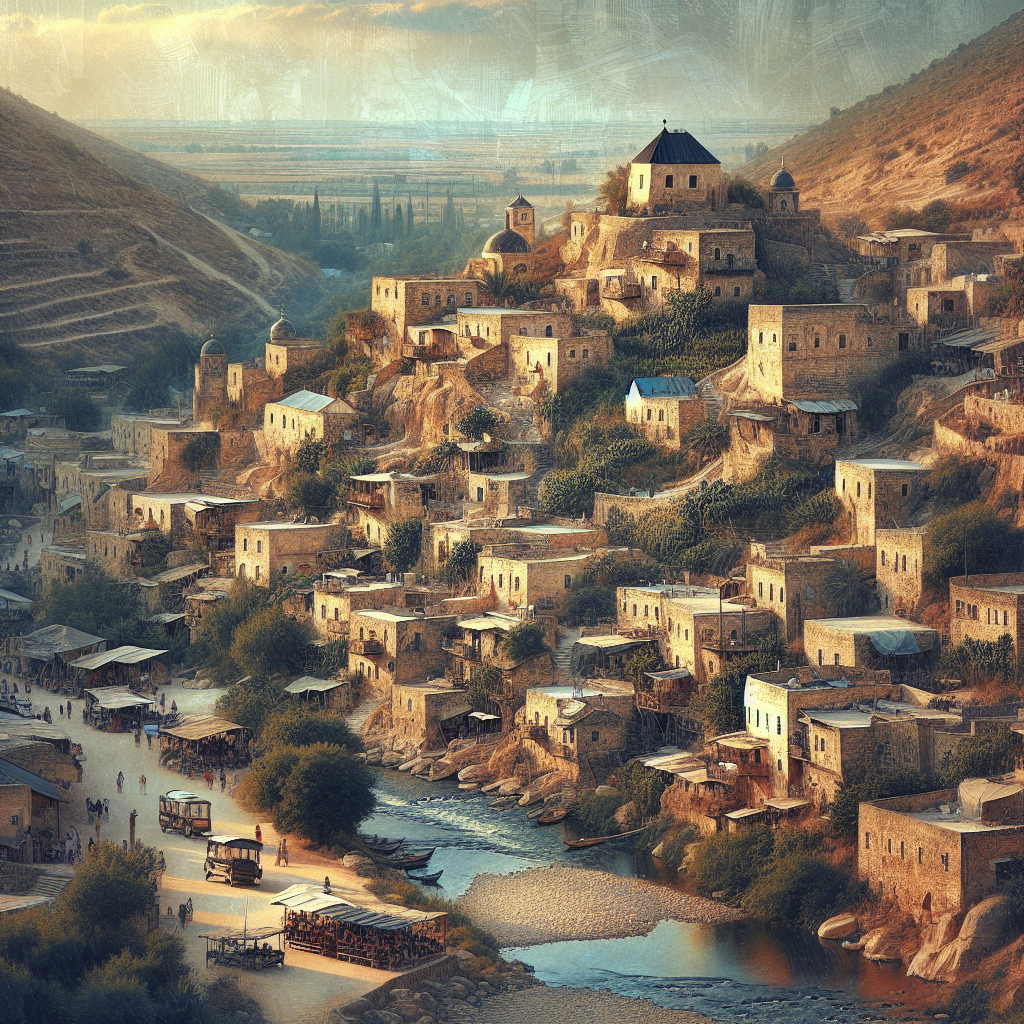

Awarta is much more than just a dot on the map in the northern West Bank of Palestine; it's a vibrant tapestry interwoven with the threads of history, resilience, and day-to-day hustle. Nestled just under 5 miles southeast of the bustling Nablus, Awarta has a population deeply rooted in its age-old lands. Even with a history that pulsates through its ancient walls, the village today is faced with a reality shaped by both its past and the political currents of the modern era. While life continues, residents live amidst the legacy of a place with a name that resonates from biblical times. Its name, derived from the Hebrew for 'to be naked', references its ancient location on a bare hill.
The villagers in Awarta could tell you stories both of daily life and their struggles that mirror those faced by many Palestinians. For centuries, the village existed as a small, tight-knit community. However, since the mid-20th century, Awarta has come to reflect the larger Israeli-Palestinian conflict. It can be hard to see children growing up against this backdrop of tension. The politics of land ownership and access has restrained the economic opportunities for many of Awarta's youth, who dream of futures that might take them beyond the confines of their village.
Awarta is a place where history breathes. The narrow alleys and stone homes speak to its ancient past. Traces of Roman, Byzantine, and Ottoman eras echo through the village. It's one of those places where if the walls could talk, oh, the stories they would share. The presence of tombs believed to be those of biblical figures Aaron's sons—Itamar and Eleazar—adds a spiritual layer, drawing pilgrims interested in religious heritage. This rich narrative should have been enough to catapult Awarta into a tourist hotspot, but reality has designed a different path.
A mix of agriculture forms the backbone of economic activity in Awarta. Like the surrounding Palestinian territories, the walls of the occupation have constricted the reach of the markets. The restrictions redefine their steps between tending to olive groves, fig trees, and vineyards—the harvest and their capacity to export are clouded by a cocktail of bureaucracy and barriers. Nearby Israeli settlements further complicate land access, and many in Awarta view these developments with frustration and unease.
Living amid the conflict brings stories of resilience but also the endless bureaucracies impacting daily life. Awarta's roads have seen their fair share of military occupations, checkpoints, and volatile confrontations. The challenges faced by Awarta today are emblematic of a broader struggle affecting Palestinian villages all over the territory. Despite these difficulties, children still play in its streets, their laughter echoing against the backdrop of the hills, offering glimpses of hope and the human spirit’s capacity to endure.
Understanding Awarta's reality requires acknowledging the multi-faceted narratives within it. While some may see it through the lens of security and conflict, others view it as a tale of cultural endurance and survival. Gen Z readers, those who are forming their viewpoints in a rapidly globalizing world, might draw parallels with stories of resistance and aspiration seen in other parts of the world. They can relate to the yearning for a space where identity and autonomy aren't dictated by external forces.
To walk through Awarta is to feel the weight of bygone eras and the immediacy of current challenges. Residents attempt to live normally, amid the complexities of permits, security concerns, and limited mobility. Life in Awarta, like life everywhere, continues in rhythm with the seasons, punctuated by the olive harvest's ancient ritual and the hope of better days. These cycles are age-old constants in a village that has, against all odds, continued its existence across centuries.
For those seeking to understand Awarta's nuance, listening is crucial. Hear stories from its people, hear them echo from its hills. Acknowledging each voice, each narrative adds depth beyond headlines and political debates. Empathy might allow observers to see Awarta as a symbol of not just conflict but survival. The village exemplifies the tension between holding onto one's heritage in a world that's increasingly interconnected yet divided.
Awarta may not feature prominently in travel guides or news articles, but its narrative enriches the larger Palestinian story. It poses questions that outline fundamental human experiences and invites observers to witness human endurance in the face of adversity. Here, on the stone-lined streets, reside dreams and challenges that reflect many aspects of the human condition. Awarta is a place that compels its visitors to pause, reflect, and perhaps gain insights into the universality of struggle, hope, and the quest for a fuller life.