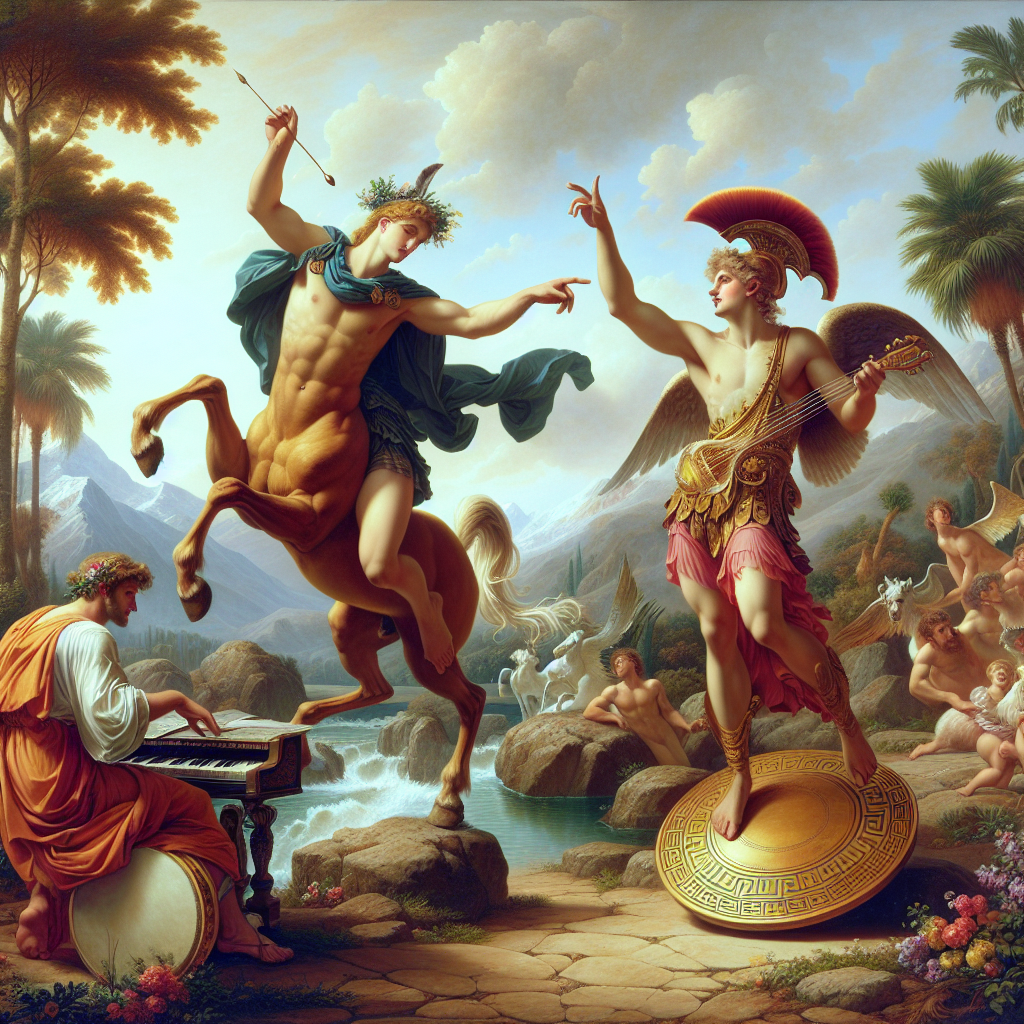

If paintings were Instagram stories, Ribera’s Apollo and Marsyas would be the most viewed by those loving a mix of mythology and drama. Imagine this: Jusepe de Ribera, a Spanish master of Baroque art, captures a myth loaded with tension and emotion on canvas around 1637. The artwork is exhibited in the Musee Oldmasters Museum in Brussels, offering a glimpse into this captivating tale born from ancient Greek roots.
In Ribera's rendering, Apollo, the god of music and poetry, stands victorious over Marsyas, a satyr who dared to challenge him in a musical contest. The consequence of Marsyas's audacity? A harsh punishment that forever exemplifies the risks within human hubris and divine retribution. As brutal as the myth's narrative may seem, Ribera unveils not just the cruelty of this punishment but also the underlying lessons about power dynamics and respect tied to artistic arrogance.
Looking at Ribera's work, we see more than just a scene from age-old lore; it's a vivid representation of the cultural values and ideals of a different era. Apollo's serene countenance juxtaposed against the tormented expression of Marsyas brings forth a narrative that's not just about punishment but a profound revelation of power and vulnerability. This is what makes Baroque art fascinating; it tells a clear story through expressive visuals, engaging the viewer’s emotions directly on a rollercoaster of empathy and comprehension.
Isn't it intriguing how a piece of art can stir varying emotions depending on one’s perspective? For those who lean towards authority and maintaining societal norms, Apollo, disciplining with divine right, might appear as a guardian of order. This perspective often aligns with traditional beliefs that see the gods’ actions as inherently justified and wise. Yet, for those who value equality and are critical of power imbalances, sympathy might grow towards Marsyas, the eternal underdog challenging higher powers, only to become a victim of their rigid systems.
In terms of historical context, the depiction of a god meting out punishment may reflect the then-prevailing ideas about justice and hierarchy during the Baroque period, a time when the divine right of kings was largely undisputed. Ribera, painting amidst the religious and political tensions of 17th-century Europe, could be interpreted as mirroring these dynamics, questioning the divine right and its implications on humanity.
The message entwined within Ribera’s Apollo and Marsyas invites us to ponder on the nature of justice, authority, and rebellion. It subtly encourages modern viewers to question the arbitrators of power today. Marsyas’s plight seems especially current in a world where the voices of marginalized often struggle against overpowering institutions.
Yet, there’s also an enduring learning ingrained in this narrative—being mindful of the battles we choose. Marsyas’s decision to challenge a god speaks to the universal human trait of challenging boundaries, though sometimes recklessly. In contemporary times, such stories resonate, reminding us of the necessity to assess the long-term effects of our defiance, while still valuing the courage it takes to oppose oppressive odds.
The allure of Ribera’s art goes beyond aesthetic admiration; it invites a dual introspection: one where we reflect on societal frameworks and the courage to challenge them, and the other where we recognize the fine line between valor and folly. While the painting belongs to a different era, its questions remain remarkably relevant.
Many might say that art such as Apollo and Marsyas is timeless precisely because it bravely captures these complex human conditions. It’s a conversation starter, ripe for discourse amidst those eager to dissect authority, rebellion, and everything in between.
So, next time we scroll through a visually overwhelming feed of modern artistic endeavors, maybe pausing a little longer on a timeless piece like Ribera’s could offer us more than just visual gratification. It could grant us a deeper understanding of historical narratives that continue to echo in today’s world.