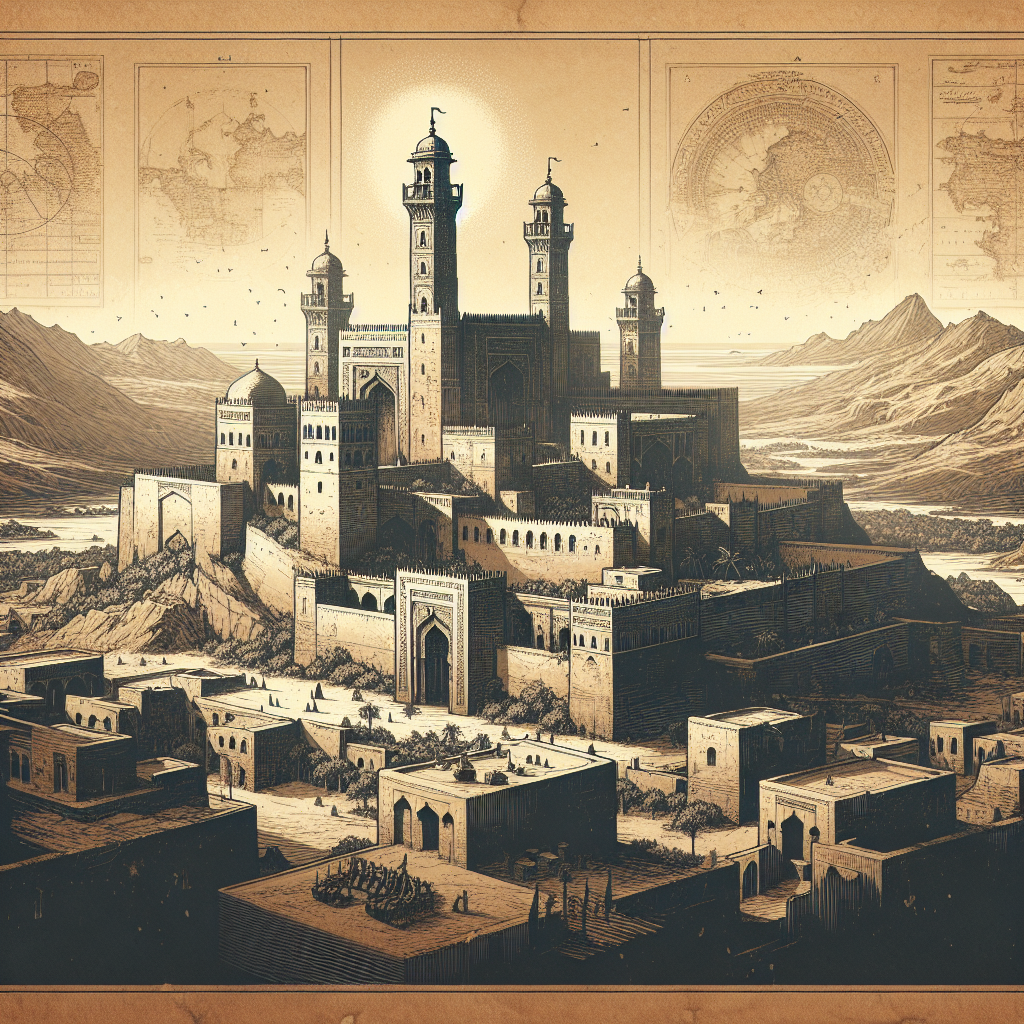

Hidden in the bustling chaos of modern Marrakech lies an ancient gem—one that has silently withstood the test of time and chaos of history. The Almoravid Qubba, built around 1117 CE during the reign of the almighty Almoravids, stands as a testament to Morocco's rich and complex history. Located in the heart of what was once the imperial Almoravid capital, this historical marvel isn't just a building—it's a story intricately woven into the Moroccan cultural tapestry.
From the outside, the Almoravid Qubba might seem unassuming. It sits relatively modest beside the more famous attractions like the towering Koutoubia Mosque. Yet, its significance is immense. Crafted in the 12th century under the almoravid ruler Ali ibn Yusuf, the Qubba served as an ablution facility, a public bathhouse of sorts, for those attending worship at the nearby mosque. The architecture is a blend of practical needs and artistic beauty, showcasing the dynasty's contribution to Islamic and specifically Maghrebi architecture. The Qubba’s unique feature is its intricately carved stone, with geometrically precise star-shaped patterns and lush vegetal motifs—a beauty lost in many contemporary designs.
For some, the intricacies and symmetrical brilliance of its design can provoke a deep appreciation of the mathematical genius of its creators. Despite their unfaltering eye on conquest and expansion, the Almoravids didn't shy away from intricate art. Others, however, might ponder about the resources and labor—practically disregarded—invested in structures while the power struggle exploded around. It questions the priorities of those in power then, and maybe highlights similar concerns today. We can’t ignore the significant labor that would have powered such architectural endeavors.
To travelers and history aficionados, the Qubba is a critical site to understand the transcontinental nature of Marrakech's history. The Almoravids, originally Berbers from the Saharan region, forged a vast North African empire during the 11th and 12th centuries, reaching even into Spain. They played a crucial role in the cultural and religious life of the area, often leaving tangible marks like the Qubba. They were rigorous about their religious conviction, which makes the Qubba’s spiritual service elements even more poignant.
The Almoravid Qubba was rediscovered in the early 20th century, as it had been buried under successive layers of occupation and reconstruction. Its excavation was a pivotal moment for historians and enthusiasts who longed to connect with Morocco’s medieval past. This unearthing is a visceral reminder that the past often lies right beneath our feet—a metaphorical truth in the way history often reverberates with current events.
There’s something intensely fascinating about how historical narratives are constructed in familiar, tangible spaces. Structures like these often reveal differences between the stories inscribed in textbooks versus the lived reality and struggle for power, relevance, and survival. They are cultural texts in a very literal sense.
Yet, historical edifices like the Almoravid Qubba present both educational opportunities and challenges. On one hand, they provide an amazing way to connect with the past, creating an understanding of what shaped present identities. On the other, they might illustrate a hierarchical society that’s problematic in retrospect. Those who deem historical glorification necessary and who emphasize the valor of ancient empires may find themselves at odds with critics who believe that history should also acknowledge the uncomfortable realities of inequality and exploitation it entails.
Today’s Gen Z, shaped by digital immediacy and an ever-evolving socio-political landscape, may find visiting places like the Almoravid Qubba a grounding measure. It offers a moment of reflection, to wonder about tangible links between the past and present. It underscores that international perspectives have always interconnected, challenging the perception that globalization is distinctly modern.
As younger generations engage with such spaces, it fosters a broader dialogue about conservation and cultural heritage management. Beyond mere admiration, practical questions arise—how do we preserve historical sites without commodifying them or corrupting their authenticity? Balancing tourism with conservation is increasingly pressing—not unlike broader questions about sustainable practices globally.
Getting lost in the aged tranquility of the Almoravid Qubba can feel like stepping back through time, or perhaps slipping into a parallel dimension, one where the alleyways echo with voices long gone. Its history whispers tales of conquest, faith, artistry, and the delicate dances of power. And in that, there’s a lesson—a mosaic of perspectives woven into an intricate whole, like the very ceiling of the Qubba itself.