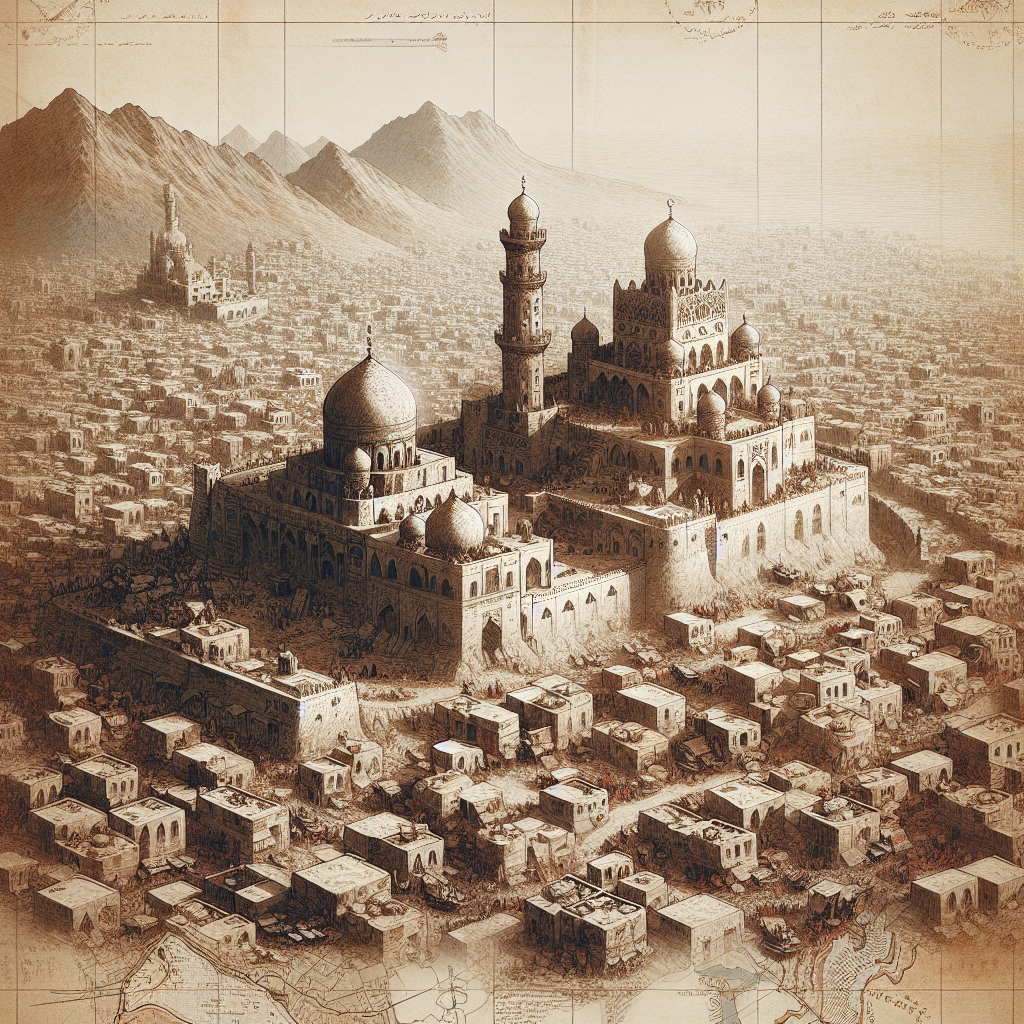

If walls could talk, the Al-Nabi Yunus Mosque in Mosul, Iraq, would have a story to tell that transcends centuries and straddles empires. Built on an ancient Assyrian ruin, this mosque is believed to be the resting place of Prophet Jonah, a figure revered in Judaism, Christianity, and Islam. Situated on one of the highest points in Mosul, the site has been a spiritual touchstone since the 8th century. However, its significance was not enough to shield it from the tragic whims of war. In 2014, the mosque was destroyed by ISIS, delivering a heartbreaking blow to a city in turmoil.
The Al-Nabi Yunus Mosque has been a beacon of religious harmony, drawing pilgrims from various faiths who venerate it for its spiritual and historical significance. For centuries, this mosque provided a space for reflection and community, which transcended religious lines and bridged cultural divides. However, those who would use faith as a weapon have also seen the mosque as a target. It stands as a reminder of society’s constant struggle between maintaining cherished histories and attempting to forge new paths. Moreover, the mosque's destruction is an eye-opener to the world about the vulnerability of cultural heritage sites during conflicts.
For many in Mosul, the mosque wasn't just an architectural marvel but a community hub that brought people together. Understanding the emotional and psychological impact of its destruction helps illustrate the challenges that come with rebuilding not just the physical structure, but also the societal trust and peace it once fostered. Some locals were understandably filled with anger and despair at the loss, while others saw it as a rallying point for united efforts toward recovery and reconstruction. These diverse reactions reflect the complex human tapestry of how identities and beliefs are deeply entwined with physical landmarks.
In the wake of the mosque's devastation, UNESCO and other international bodies have pledged to assist in its reconstruction. This global focus not only highlights the importance of preserving shared human heritage but also raises ethical questions. Some believe that reconstruction efforts can unite communities and restore a sense of normalcy and hope. Others argue that rebuilding historically important sites can never truly recover their original essence. This debate is part of a broader discussion about cultural preservation in conflict zones that is relevant now more than ever.
As efforts are made to restore the Al-Nabi Yunus Mosque, it serves as an emblem of resilience and the human spirit’s ability to heal and rebuild. The commitment from local communities and international organizations not only promises to bring back a symbol of hope to Mosul but signals a collective acknowledgment of past cultural and historic contributions to the world.
Generation Z, a cohort that has grown up in a globally connected era, carries an intrinsic understanding of these global challenges, often advocating for peace and justice through digital platforms. Their voices can amplify the importance of protecting cultural heritage as a means of fostering global unity and understanding. They realize that, while history can often feel distant and untouchable, its impacts are personal, shaping the world they are inheriting.
Ultimately, the Al-Nabi Yunus Mosque is more than just a sacred site or an architectural wonder; it embodies the rich tapestry of humanity's shared history and cultural complexity. Its history, destruction, and potential resurrection offer lessons in resilience and underscore the transformative power of solidarity across cultures and faiths. While the road to reconstruction is long and fraught with challenges, it invites us to rethink how we not only preserve but also live up to the legacies of monuments imbued with time and spirit.
As this historical mosque gradually returns to life, it stands not only as a testament to the enduring influence of prophetic tradition, but also as an emblem of the world's collective dedication to safeguarding the human story, piece by piece, stone by stone.