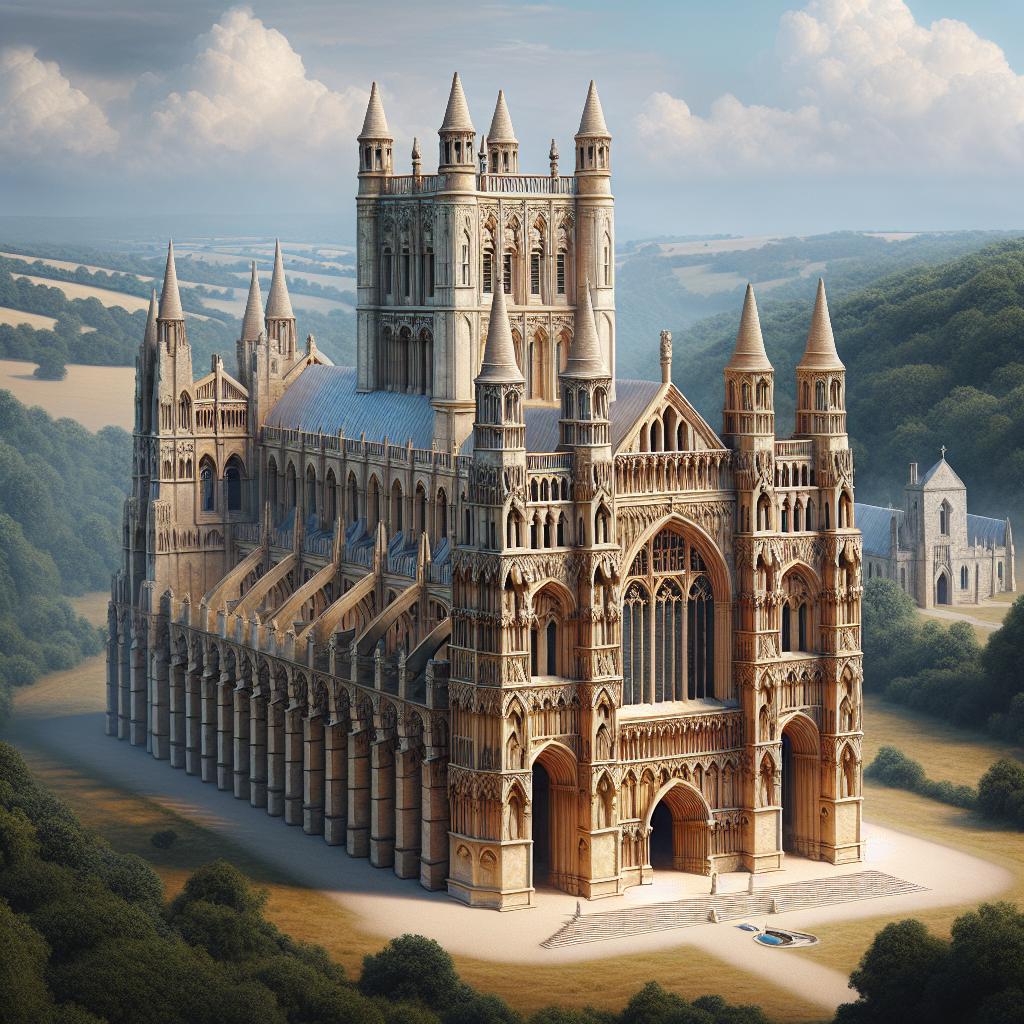

Have you ever wondered what stories ancient stones could tell if they could talk? Abingdon Abbey is one of those mystical places where history truly echoes. Located in the heart of Abingdon-on-Thames in Oxfordshire, England, this remarkable site has stood imperiously for over a thousand years. Originally founded in the late 7th century, around 675 AD, it became a vibrant center for religious life in its prime, before falling into ruin during the destructive Dissolution of the Monasteries under King Henry VIII's reign in the 16th century. Today, the remnants of Abingdon Abbey serve as a testament to Europe’s tumultuous history and the power dynamics that defined it.
Walking through the abbey grounds, you can almost see the lives of the monks who once called it home—immersed in their prayers and day-to-day routines. The abbey was initially established for monastic purposes, a place intended for religious meditation and scholarly pursuits. Monasteries like Abingdon were beacons of knowledge during the early Middle Ages, preserving much of the learning and classical knowledge carried over from antiquity. They were hospitals, schools, and libraries all rolled into one, fostering not only spiritual life but intellectual growth.
Yet, Abingdon Abbey’s story is not just about religious pursuits. It was a powerhouse socio-economically, influencing the region significantly. The monks were adept at agriculture and land management, helping develop the surrounding area. Despite its reputation as a relic of the past, understanding its history provides lessons for our current world—lessons about the intersection of faith, power, economic strategy, and cultural influence.
During the medieval period, the abbey gained considerable wealth and power. Like many religious institutions of the time, it wielded immense influence over local politics and economics. Such power didn’t come without challenges. Abbeys frequently found themselves embroiled in disputes with townsfolk and the superficial political battles of the era. Politically, Abingdon played its cards well, often aligning itself with the crown to secure privileges. But this was a double-edged sword, as such ties eventually exposed it to royal whims and the sociopolitical upheavals that would later cause its downfall.
The dissolution by Henry VIII, while catastrophic for the abbey, offers a window into the larger religious and political shifts of the period. The move might be viewed critically as a brutal power grab, or alternatively, as a necessary reform to reduce the overreach of religious authorities. Regardless of perspective, it was a key moment that reshaped English religious life and land ownership.
Abingdon Abbey’s architectural remnants stand proudly among modern encroachments. The site includes the Abingdon Abbey Buildings, which remain some of the finest pieces of medieval architecture in Oxfordshire. Walking through these structures feels like an encounter with the past, its walls literally whispering history. While not as sprawling in its original form, the remaining elements demand respect. The remnants still stand tall, silently telling their stories to all who wander by.
Today, we can learn much from Abingdon Abbey. Archaeological studies continue to unearth artifacts from its busy communal life. Research and excavation projects give us glimpses into the lifestyles, diets, and even personal effects of the monks. Every discovery adds a brushstroke to the richness of the abbey’s story, each artifact a fragment of a larger narrative that shaped England.
While romantics might mourn the centuries-old loss and the shattered lives left in its wake, it’s important to acknowledge the development that followed. The land and wealth once controlled by the church were redistributed, paving the way for a new world order which eventually led to the rise of more secular governance structures. Such a transition, although painful, was pivotal in creating a diverse societal landscape—a shift from a monastic monopoly on resources and power. It is through this lens that we can understand the historical revolutions that have shaped contemporary life.
Abingdon Abbey, in many ways, is more than just ruins. It is a symbol of transformation, resilience, and continuity. Its continued existence fuels dialogues between the past and present, offering insight into the nature of time and the inevitability of change. The abbey stands as a silent but powerful reminder of both the fragility and the endurance of human endeavors and aspirations.
Visiting or studying Abingdon Abbey isn’t just for history buffs or architecture aficionados. It’s for anyone curious about cultural heritage and the shifts that define humanity across eras. For Generation Z, whose lives are steeped in digital histories rather than manuscripts or parchments, places like Abingdon Abbey offer grounding—a reassurance that while technology races ahead, the legacies of human experience continue to stand firm, often right in plain sight for those willing to look.