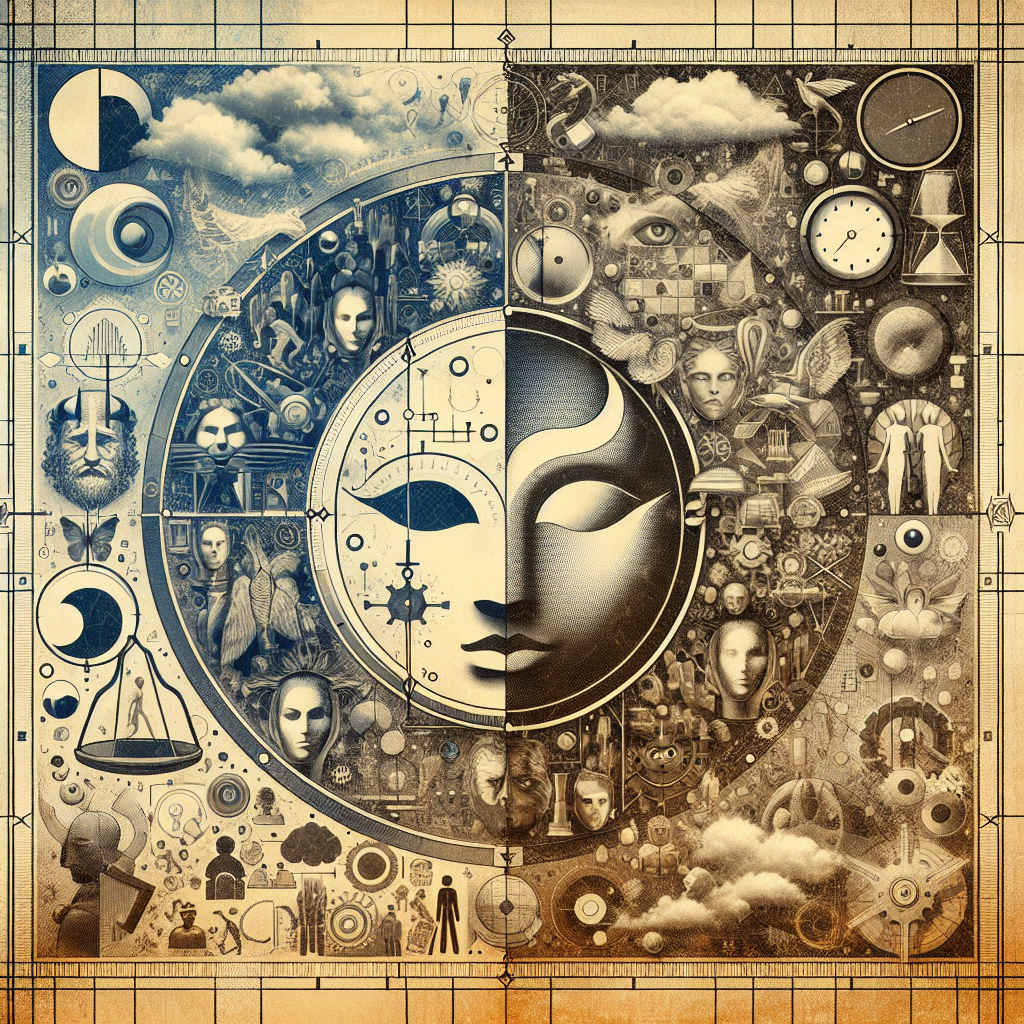

Life is one chaotic, unpredictable play where contrasting elements bring depth and meaning to our existence. Picture this: an artist in New York City paints stunning murals reflecting life's beauty in a neighborhood grappling with poverty. The contradictions of glistening skyscrapers beside sprawling homelessness, bustling optimism amidst pandemic-induced anxiety, find an audience in Gen Z, sharply aware of life's paradoxes. Understanding why we live in this world of opposing forces can be compelling. These contrasts happen because, throughout history and across cultures, juxtaposition has been a powerful storyteller. It mirrors our internal tensions — the battle between our aspirations and our limitations, and the societal lag in justice and equality despite progressive thought.
Every day serves up a blend of joy and sorrow. On the Internet, within seconds, we share silly memes and serious breaking news. We are drawn to this contrast because it reflects a reality so close to our own lives, the constant duality that shapes our perspective. In politics, it's the liberal ideals of social equality sitting squarely against conservative values of tradition and order. This ideological tug-of-war plays out globally and can be frustrating. But it's also an essential collective conversation that challenges and changes the status quo.
However, it’s imperative to view contrasting views not as a battleground, but as a ground for growth. The engagement of differing ideologies, albeit jarring, pushes us to question entrenched beliefs and encourages learning. It might feel uncomfortable, but this collision often paves the way for progress and empathy. Gen Z, with its digital savviness and open-mindedness, is poised to navigate these stark differences effectively.
Culturally, life shows its contrasts with vibrant festivals celebrated amid the backdrop of injustice. Songs of protest emerge in cultures where suppression is a norm. These contrasts are the heartbeat of resistance, a reminder that art and culture have the power to shine light amid darkness. Gen Z uses artistry as activism, straddling the line between creation and criticism to fuel societal change.
On a personal level, contradictions define our experiences. We balance self-expression with self-preservation, pushing boundaries while holding onto comfort zones. We seek freedom, but in doing so, still crave community and belonging. Our human journey, shaped by paradoxes, defines the struggle between sticking to a clear identity and evolving within an ever-changing world.
This life of contrasts isn't devoid of discomfort. It is often a raw, confusing ride. Yet, for the politically liberal, these contradictions offer a lens to question and shape policy. Social justice movements arise from challenging the dissonance between lived experiences and legal frameworks. The clash between age-old traditions and new-age ideologies offers fertile ground for transformative thought and action.
From climate change to social reforms, it’s the clashing ideologies that fuel the urgency for sustainable progress. The climate crisis exemplifies a monumental contrast — a world rich in resources, yet a greed-driven paradigm wreaks havoc on these very reserves. Here, the dichotomy of production versus preservation forces a stern reflection and inspires creative solutions.
Immense pain and beautiful resilience go hand in hand. Those adversely affected by systemic neglect become voices of change, using their experiences to lead movements and demand equality. Gen Z stands at the cusp, inheriting complex legacies yet stepping boldly toward change.
Digital spaces themselves are vibrant crossroads of contrasts; a place to forge genuine connections yet fertile ground for misinformation. We navigate these dual realms carefully, aware that the digital divide charts new paths for social engagement but also harbors blind spots of bias and surveillance.
Life is undeniably rich with contrasts, and they add to the mosaic of human experience. Acknowledging and appreciating this duality helps decode our actions and reactions. Recognizing the interplay between seemingly opposing forces opens up opportunities for meaningful dialogues and solutions, bridging gaps to create an inclusive future.
In the end, our world is alive with contrasts. It's where we find moments of harmony and discord, elevating our existence beyond mere survival to capturing the whole spectrum of life's unpredictability. It is within this web of contradiction that we discover purpose, depths of understanding, and the driver to forge ahead against all odds.