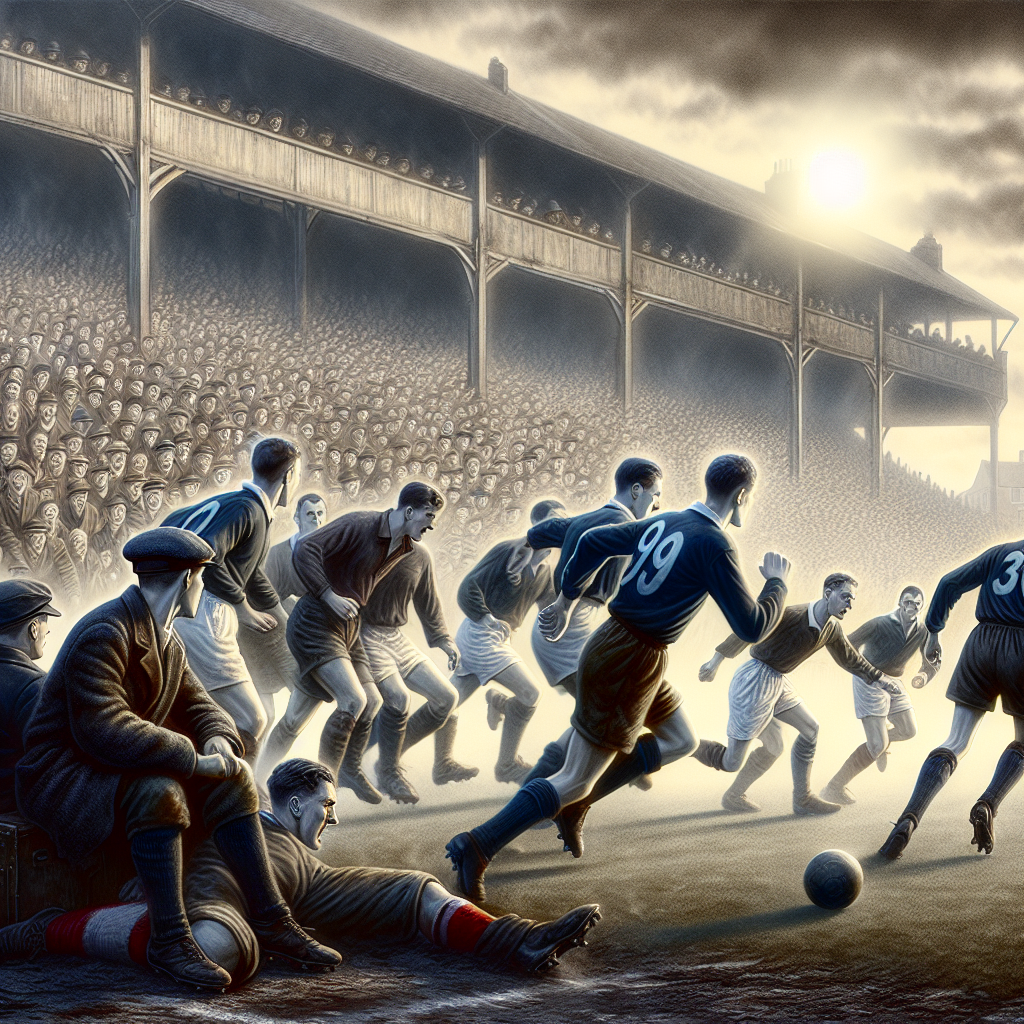

Step into the past, where the clamor of war fades and the roar of a football crowd takes over the silent, still air. In 1945, the Football League War Cup South final wasn't just about sport; it was a beacon of resilience and hope. The match took place in the spring of 1945, during the Easter Monday on April 2nd at London's famed Wembley Stadium. The participants were Chelsea and Millwall, clubs that had persisted through the challenges of war-time football to emerge with their gloves raised in what was then an unofficial continuation of the usual football calendar. This match was a spectacle not only for the 90,000 fans who flooded the stands but for all those clinging to normalcy in a Europe rife with uncertainty.
At that time, the prospect of a thrilling game offered a promise of unity and relief. With World War II devastating so much of European infrastructure and spirit, football emerged as a critical diversion. It served as a tool for morale, a reminder of peace-time life, and a form of protest against the despair of war. The final, therefore, meant much more to the spectators than merely a chance to watch some sports. It was a testament to human endurance.
Chelsea FC, a club known for its steadfastness, faced Millwall, a team embraced for its vigor and spirited fanbase. Both clubs had their own legacies and brought vivid reputations to the field. The football league, interrupted by war, had been a much-needed bastion of culture amidst chaos, symbolizing a return to familiar joys even during dire times.
The venue, Wembley Stadium, was iconic long before it became the central nerve of British football prestige. With its towering twin towers, the stadium welcomed fans who came by foot, bus, or bicycle, braving the shortages and challenges of war-time Britain. Inside, the promise of a lively confrontation offset the dreariness of ration books, air raid sirens, and blackout curtains.
As the anticipated whistle blew, the match sprang to life with players clad not just in kits but bearing the burdens of years spent in war's shadow. The level of play was competitive but of a noticeably different pace compared to the modern game. These players were community heroes as well as sportsmen, many of them having served in the armed forces or contributed to the war effort in some capacity. This convergence of roles made them extraordinary in the eyes of the fans.
Chelsea emerged victorious, with an emphatic 2-0 win that added to the club’s growing stature. With goals that electrified the crowd and a display of teamwork that soothed wartime wounds, Chelsea captured more than a trophy—they captured a moment in time. Their triumph symbolized the tenacity of a nation eager to rebuild and rejoice.
Despite the delight of victory, empathy must be extended to Millwall. To stand at Wembley as worthy competitors after such hardships is an achievement of its own. Every tackle and every pass reminisced with a story of resilience—a sentiment that football communities everywhere could relate to and admire. An understanding of their fight on the pitch hints at broader undertones of overcoming struggle, club loyalty, and pride.
It is important to consider the cultural impact of events like the War Cup. Football provided comfort in its consistency, a world where rules were clear, and victory meant glory if only for a fleeting moment. Even spectators who didn’t support either club could find solace in the match, as the thrill served as a reminder of happier times, however fleeting they may have been amidst the grim realities of 1945. The spectacle insinuated a sense of normality and was a precursor to the post-war football boom that nurtured new generations.
Furthermore, the event was inherently inclusive in its ability to reach people from different walks of life. Football blurred the boundaries between social statuses. Fans included factory workers, soldiers on leave, families, and youths, unified in the stands, amplifying cheers despite the quieter volume of wartime gatherings.
Discussions around war-time football often rest on contrasting existential dilemmas. While the war was a background hum, there is a recognition of the relentless human spirit expressing through sport. The story of the 1945 War Cup final is an evocative recollection of how football can offer to look past the chaos and fixate on an ideal and unified society. It invites reflection on the evolving role sport plays in the broader sociopolitical environment.
Football, like art, often acts as a mirror to society, reflecting resilience, community, and a shared human experience. Given our current climate of political and social turbulence, there's much to learn from those who sought little more than a breath of freedom within a stadium.
War, disastrous as it was, challenged the boundaries of joy—and proved once again that humanity could celebrate even when hope seemed scarce. The memories of those matches, their impact, and their players continue to echo across the halls of history, forever markers of how we can draw closer on common ground.