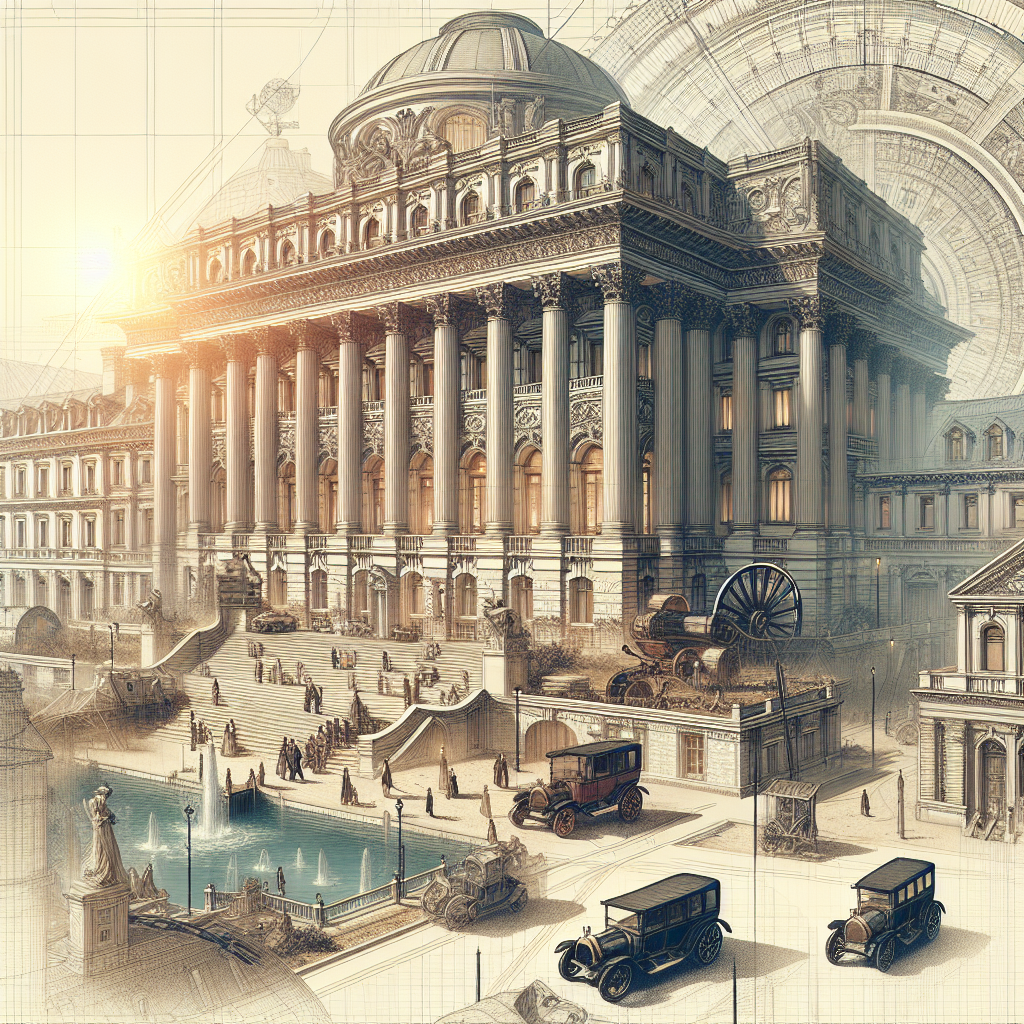

The year 1780 wasn't just another year in the slow passage of time. It was an era-defining moment that set the stage for radical changes in architecture. This period saw revolutionary shifts in architectural styles across the globe, driven by cultural, political, and technological transformations. The world was still resonating with the echoes of the Enlightenment, a movement extended beyond its academic boundaries, raising the architecture to a blend of art and science. In Britain, North America, and Europe, architects were reimagining the very bones of structures to better reflect reason, balance, and symmetry. Why? Because societies were hungry for progress, and buildings stood as symbols of innovation.
The late 18th century was fertile ground for architectural brilliance, touching lives in ways that resonate even today. Let’s think about the Georgian style that was dominating the scene. The style, popular in Britain and its colonies, favored a classical approach characterized by symmetry and order seen in the great Palladian mansions. Think big windows, flat lines, and everything that screams elegant yet practical. While these structures showcased wealth and power, they were fundamentally tied to the philosophical movement of the time, doubling as statements of intellect and societal status.
Then enter the Neoclassical style, which decided to really shake things up. This new kid on the block was fueled by discoveries from ancient Greek and Roman sites, tantalizing the senses with columns and domes, bringing citizens closer to the democracy and civic pride of ancient times. Architects like Robert Adam in Britain took note. He began adding these classical nuances to numerous projects, blending the old world charm with modern functionality.
Across the ocean, newly-independent America was likewise obsessed with building a national identity, and what better way than using architecture. Thomas Jefferson had quite the vision when shaping Virginia’s state capitol in 1785, though rooted in 1780s principles. He was also inspired by Neoclassical styling and wanted to introduce a fresh style that mirrored the young country's dreams of democracy and freedom.
But the Enlightenment's reach extended beyond Western Europe and North America. In the east, notably in India, the impact of British colonial rule began leaving imprints in local architecture. British styles mixed with traditional Indian elements creating a fusion that would define the era. This was not only a reflection of cultural imposition but an indication of how societies were beginning to intertwine.
It's fair to say changes weren't just welcomed with open arms everywhere. Each shift in style had practitioners and detractors. The love and hate for new designs always has social, economic, and political roots. While some people saw these new forms as symbols of progress and innovation, others resisted, clinging to tradition and local heritage.
This pushback speaks volumes to the universal resistance to change, an inherently human trait. Interestingly, it’s the same resistance found among us today regarding sustainable and eco-friendly architectural trends. Just like all the compromise and dialogue necessary back then, the conversation continues in our time, proving that history might not truly repeat, but it certainly rhymes.
The dialogue that surrounded architectural styles in 1780 wasn’t free from influence or power dynamics. Many wealthy patrons controlled projects and chose designs reflecting personal tastes and ideologies. That control reflects today's issues where developers might push for certain styles that align with profit over aesthetic or environmental concerns.
All in all, the events of 1780 in architecture highlight perpetually relevant discussions we see every day. It was an era of passionate exploration driven by a thirst for improvement and experimentation. And, it was stubbornly punctuated by concerns and resistance similar to today’s. Understanding this past can inspire the actions we take in designing the spaces of our future. What would people in 2123 think about our glass towers and urban jungles now?