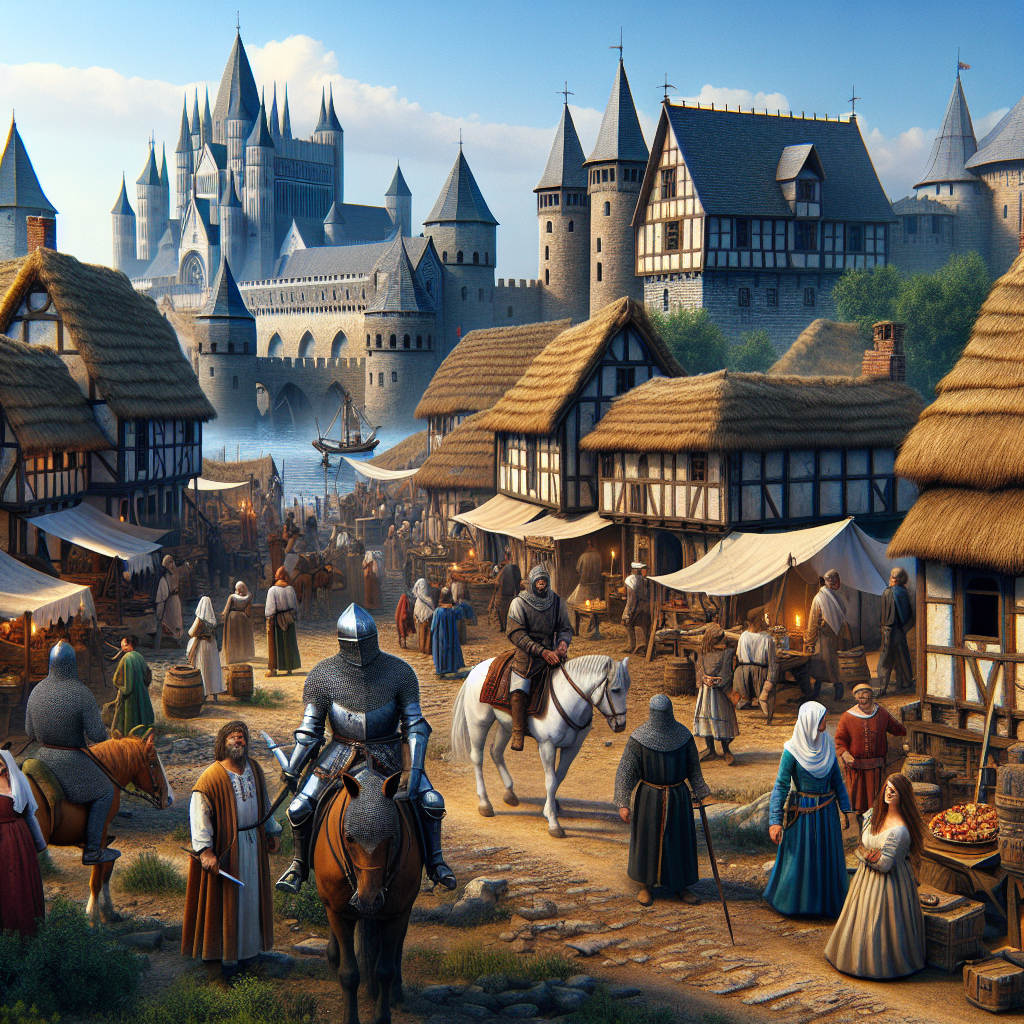

Ever thought about time travel? Let’s wander back to the year 1190, a time nestled in the heart of the Middle Ages. This year was marked by significant events across the globe that would influence future generations. 1190 was a time when the Third Crusade was in full swing, Europe was buzzing with brand new political alliances, and scientific discoveries were altering the way people understood their world. From England to the Middle East, societies were experiencing fierce battles and complex social changes, and the ripple effects of these transformations can still be felt today.
At the forefront was the Third Crusade, which began in 1189 and lasted until 1192. Led by well-known figures such as Richard the Lionheart of England, Philip II of France, and Frederick Barbarossa of the Holy Roman Empire, this crusade aimed to recapture Jerusalem from Saladin, the Muslim ruler of Egypt and Syria. Here’s where the story gets gripping—Frederick Barbarossa, an estimated 67 years old, died suddenly before even reaching the Holy Land, drowning in the Saleph River in modern-day Turkey. His death weakened the crusading forces considerably and is often cited as one of the pivotal moments of the Third Crusade. With Saladin maintaining control over Jerusalem, the crusades symbolize persistent cross-cultural conflict and cooperation, the likes of which continue to impact international relations.
While Europe was embroiled in crusading adventures, England was undergoing significant social and economic transformations. Richard the Lionheart, fresh from his coronation in 1189, had left London to partake in the crusade by 1190. In his absence, England’s fiscal policies shaped the future of the monarchy and governance. The exploitation of feudal dues and taxation was ramped up to fund his military campaigns, burdening many but also leading to administrative reforms. This somewhat mirrors the taxation struggles we see in contemporary societies, where citizens often face unjust fiscal policies and fight for a more equitable distribution of wealth.
Meanwhile, in the intellectual heartland of Andalusia, Ibn Tufail's philosophical works were gaining recognition. His thoughts on existence and understanding of science and philosophy were influential during 1190. His writings inspired later Western Enlightenment thinkers, showcasing the remarkable flow of ideas between different cultures, surpassing geographic and religious barriers. This mutual exchange laid down the tracks for a future rooted in multiculturalism and global interconnectedness.
Across the ocean, in present-day Mexico, the city of Tula fell during this period, massively impacting the Toltec civilization. Though specifics remain vague, due to the sparse pre-Columbian historical record, it's known that invading forces played a role. The fall of Tula echoes the disruptive nature of foreign intervention and social upheaval, themes seen throughout history and very much alive in world politics.
Understanding the events of 1190 from a modern viewpoint allows us to reflect on how conflicts may be less about religion or territory and more about power and resources. Even today, we see a world fraught with conflict, often initiated under similar circumstances, with leaders making choices that echo those from medieval times. The importance of political influence, unity, conflict, and understanding shines through the layers of history, encouraging us to rethink today’s international policies and practices.
Arguably, a major takeaway from 1190 is the potential for unity amidst diversity. Individuals from different backgrounds and places can influence one another significantly. Whether they were Muslim, Christian, or Toltec, the people of 1190 contributed to a patchwork of knowledge and culture which has come to form the present. With the connectedness of today’s digital world, young people are in perhaps the best position yet to bridge cultural divides, fostering a global community that embraces diversity and seeks justice.
The events of 1190 might appear distant, but their implications urge us to consider major questions about our identity and direction as a species. How do we, a world made more inclusive and informed, ensure sustainable and equitable growth for future generations? How might we better learn from our past to build empathy and understanding? These are the challenges—and inspirations—that history like that of 1190 can bring to a world increasingly shaped by ideological divides and interconnectivity.
For Gen Z, understanding years like 1190 could offer unique insights into our complex history, motivating positive actions for today and hopes for a collaborative future. The past's lessons are here; we only need to look closely enough to guide future progress.