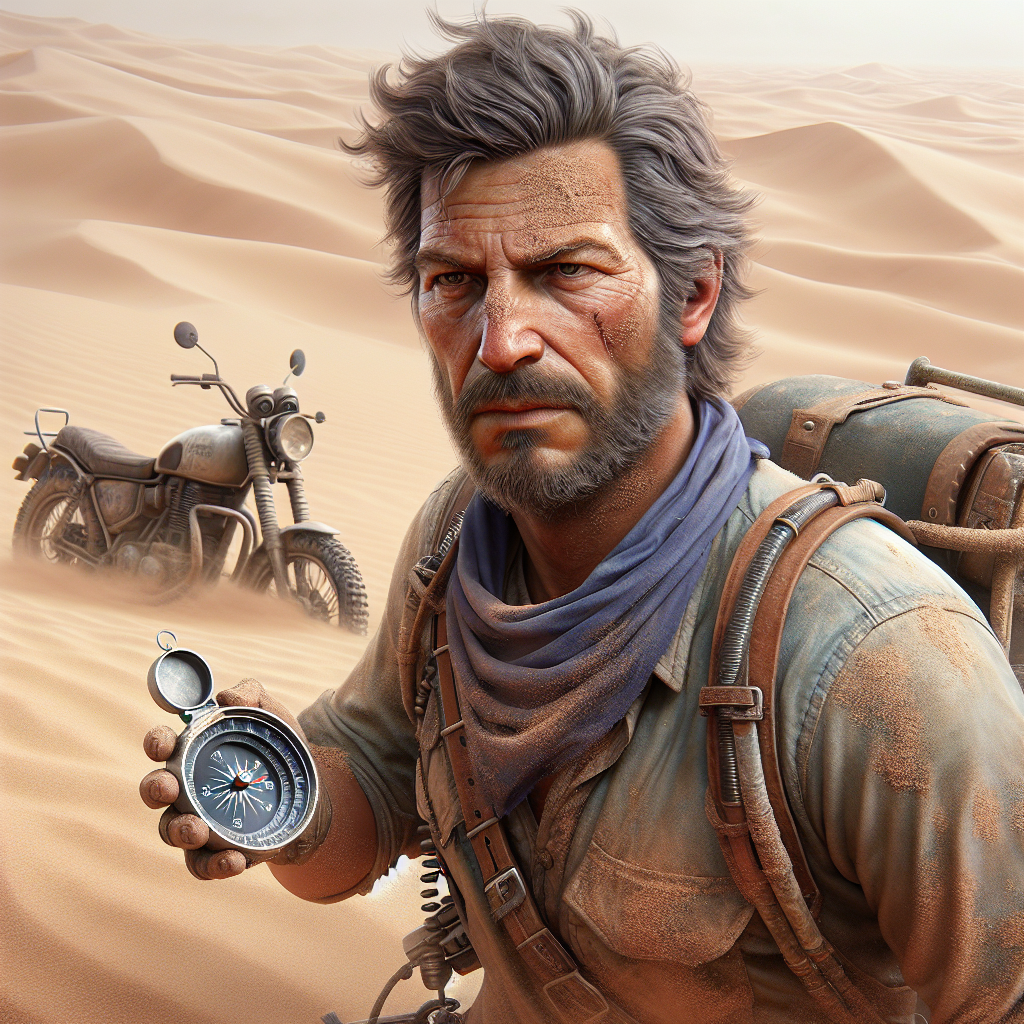

Thierry Sabine: The Man Who Turned the Desert into a Playground
Imagine a man who saw the vast, unforgiving Sahara Desert not as a barren wasteland, but as the ultimate playground for motor enthusiasts. That man was Thierry Sabine, a French motorcycle racer and visionary who, in 1977, found himself lost in the Libyan desert during the Abidjan-Nice rally. Instead of succumbing to despair, Sabine was inspired by the desolate beauty and the challenge it presented. By 1979, he had founded the Paris-Dakar Rally, a grueling off-road race that would become legendary, starting in Paris, France, and ending in Dakar, Senegal. Sabine's vision was simple: to create an adventure that tested the limits of human endurance and machine capability, all while traversing some of the most remote and challenging terrains on Earth.
Sabine's creation was not just a race; it was a statement. It was a bold declaration that the human spirit thrives on challenge and adventure. The Paris-Dakar Rally quickly became a symbol of daring and resilience, attracting competitors from all over the world. It was a race that didn't just test speed, but also navigation, strategy, and survival skills. Sabine's rally was a direct challenge to the safety-obsessed, risk-averse culture that was beginning to take hold in the late 20th century. It was a celebration of the rugged individualism that built the modern world, a concept that seems to be increasingly under attack today.
The Paris-Dakar Rally was not without its dangers. The race was notorious for its harsh conditions and the toll it took on both vehicles and participants. Sabine himself tragically died in a helicopter crash during the 1986 rally, a stark reminder of the risks involved. Yet, this only added to the mystique of the event. It was a race for those who understood that life is not without risk, and that the greatest rewards often come from the greatest challenges. Sabine's legacy is a testament to the idea that adventure and danger are not to be feared, but embraced.
In today's world, where safety regulations and risk assessments dominate, Sabine's vision seems almost radical. The Paris-Dakar Rally, now known as the Dakar Rally, continues to push the boundaries, albeit with more safety measures in place. However, the spirit of the race remains true to Sabine's original vision. It is a reminder that there is still a place for adventure in a world that often seems intent on eliminating risk at all costs.
Sabine's story is a powerful counter-narrative to the prevailing culture of caution. It challenges the notion that safety should always be the top priority. Instead, it suggests that there is value in taking risks, in pushing boundaries, and in seeking out the unknown. Sabine's life and legacy are a celebration of the human spirit's capacity for adventure and exploration.
The Paris-Dakar Rally is more than just a race; it is a cultural phenomenon that has inspired countless individuals to seek out their own adventures. It is a testament to the enduring appeal of the unknown and the thrill of the chase. Sabine's vision has left an indelible mark on the world of motorsport and beyond.
In a time when many seem content to play it safe, Sabine's legacy is a reminder of the importance of daring to dream and the courage to pursue those dreams, no matter the risks. His life was a testament to the power of vision and the enduring appeal of adventure. Thierry Sabine turned the desert into a playground, and in doing so, he inspired a generation to embrace the unknown and to seek out their own adventures.