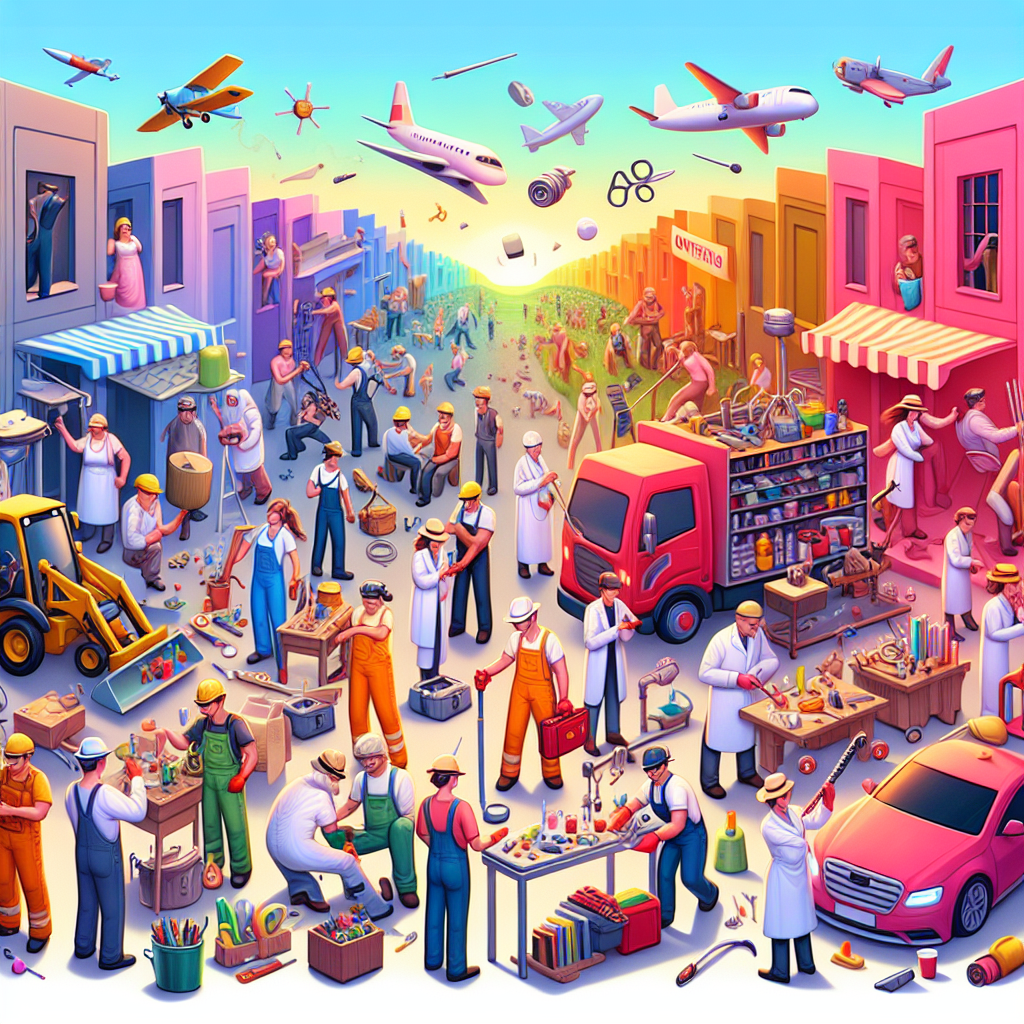

In this great theater known as modern society, we often encounter a play that pits college degrees against the skilled trades—a satirical comedy, really, featuring tech-savvy philosophers, latte-sipping couch critics, and of course, the indispensable tradespeople. For anyone who has been on this Earth for more than a life's blink, the question of trade versus degree isn't just a decision of career paths; it's a reflection of the socio-political tapestry woven by misguided priorities.
The modern era has a knack for romanticizing the idea of a bachelor's degree, often paraphrased as "the gateway to success." Yes, the suits and ties cloistered within university walls would have you believe that the world spins on the axis of academic laurels. Yet, in the world outside of campus halls, where scripts aren't drafted by tenured professors, things look refreshingly different. The first act of this drama lands us in the bustling cities and sleepy towns where tradespeople, those supposed "labor-class citizens," are as valuable as gold itself.
Picture a world without electricians, plumbers, carpenters, and mechanics—a nightmarish setting where the fancy degrees cease to enlighten when the lights go out. When your sink turns into a new art installation (that you didn't ask for), you don't call the guy with a Philosophy degree; you call a plumber. The mirrored irony here is that our society seems to forget, in its glorification of the intangible, that the comforts we enjoy daily—think hot showers, functional cars, and well-built homes—are gifts from those in skilled trades. They are the backbone supporting the ivory towers of the degreed elite.
Look at today's job market, a veritable circus. On the one hand, you have fresh graduates clutching their diplomas, yet finding themselves only capable of navigating internships or, heaven forbid, working in cafes as baristas, until something more "substantial" comes along. On the other side of this three-ring performance, a seasoned electrician, maybe with a bit of gray around the temples, commands a steady income while laughing all the way to the bank. Talk about a plot twist!
Let's dissect this political cartoon, shall we? The pursuit of a college degree has the nation racking up student debt faster than you can say "liberal indoctrination." A growing number of individuals find themselves financially shackled, burdened by education costs that mimic lines from a horror story. Meanwhile, trade school graduates financially flourish with skills that demand value. Imagine going from zero to hero in just two years while your degree-saddled peers debate the merits of existentialism over a cup of java, and possibly a side of part-time work.
In this melodrama, reality comes knocking when physically encountering a flat tire or a leaky roof. The world we live in exists beyond spreadsheets and pie charts, and trade work fits into this narrative like a method actor delving seamlessly into a role. When has a university curriculum ever taught you to fix a boiler at 2 am on a frigid winter's night? University degrees pride themselves on teaching problem-solving skills and critical thinking; yet, nothing tests those capabilities quite like real-world issues that demand immediate resolutions.
Our culture favors the idea of prestige over pragmatism; it's a satirical comedy of errors. The reflection directs a glimmer toward how the media and society at large propose achieving success solely through academic accolades. In this twisted performance, those unwilling to participate in this farcical reality—opting instead for a lifestyle grounded in tangibility—are cast as the "uneducated." It's akin to the script flipping where the villain becomes the hero, earning applause from those long-dismissed.
Would the movers and shakers have us believe this farce continues as the best route forward? Or, does the paradigm shift when we tune into the silence that ensues when trade stops—schools without climate control, supply chain stalls, and transportation vacuums. Ah, the beauty of the unexpected comedic plot twist.
As the production concludes, consider who takes a bow at the end of a job well done. Is it the corporate entity peddling degrees as the be-all and end-all? Or is it the humble tradesman, emerging from the backdrop to fix what we dare not touch ourselves? Perhaps it is time we reconsider the 'heroes' in our daily performances and reassign top billing to those truly indispensable. After all, society's true directors don't wear caps and gowns—they sport toolbelts and work boots.