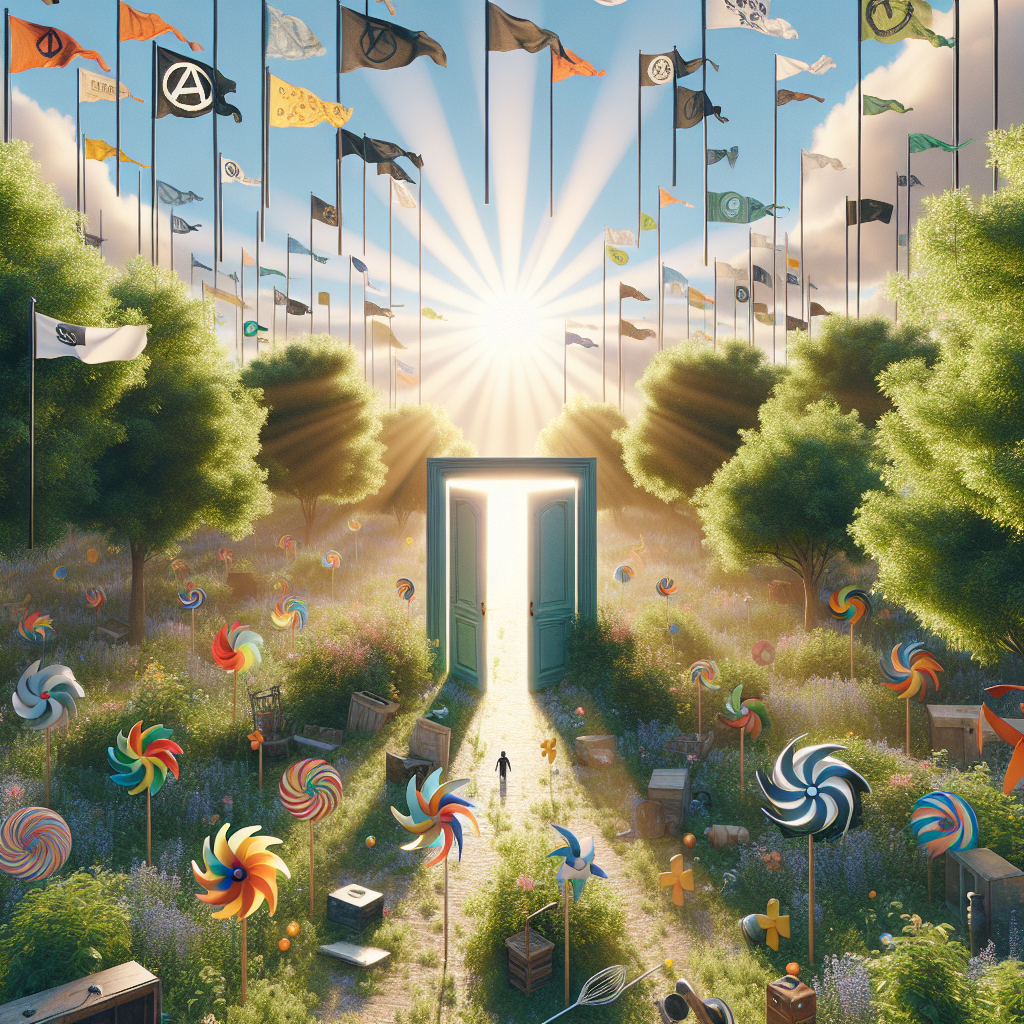

Welcome to the world of Anarchist Collectives, where the phrase 'organized chaos' is not only an understatement—it's a way of life. Originating in the throes of 1930s Spain, these collectives promised a society free from the shackles of hierarchies and oppressive state control. They were started by idealistic revolutionary thinkers who truly believed people could govern themselves in small, autonomy-focused groups. When and where this took place was in the heat of the Spanish Civil War. Why? Because when society is crumbling, it seems like the perfect moment to experiment with political fantasies.
Idealistic Roots: Anarchist collectives were born at a time when the Spanish working class was caught between the perils of fascism and the inefficiencies of a squabbling republic. What was needed from their perspective was an alternative—a utopia founded on the elimination of private property while placing communal decision-making on a pedestal. Quite the dream, right? All men are supposedly equal, but only when they all think the same!
Their Great Expectations: The masterminds behind these collectives earnestly thought they could provide a sustainable, egalitarian society. Their rallying cry was anti-fascism and, by extension, anti-capitalism. They want to dismantle economies only to create their kind of control—sans profit or incentive. In their world, property theft is liberation, and everyone gets an equal piece of the bankrupt pie.
Living in a Bubble: Imagine a society where everyone sits around and collectively decides everything from farming strategies to laundry policies. Ironically, for a movement that ran on being free from control, Anarchist Collectives loved themselves some regulations. The problem is, when no one's in charge, then everyone is—or worse, no one is. Turns out, not all battles can be won by communal vote—especially when everyone’s a general but nobody wants to salute.
Economic Conundrums: Members had to soon grapple with the harsh reality that sustainable economies don’t sprout from the ground like wildflowers. They require nurture and, inconveniently, leadership. As inefficiency plagued them, they learned the hard way that enthusiasm rarely churns out profits in the real world. It’s not shocking that they eventually ran into complications, desperately needing to trade with the outside capitalist world to continue their so-called utopia.
The Autonomy Illusion: Anarchist Collectives prided themselves on autonomy, but unless you stayed within these communities, you missed out on the illusion. To survive, they had to cooperate with external forces—a monumental clash with their supposed ideology of self-sufficiency. Communal decisions work well only when the consequences aren't real. Had they challenged the sane world order without reluctantly leaning on those very structures, they’d have learned quickly that works on paper rarely translate to function.
Cultural Battlefield: These collectives boast of bringing culture and education to the fore, albeit with a noticeable twist. Education had to toe the line of ideological purity—capitalism and hierarchy were portrayed as evil while their own ideals were sold as salvation. Knowledge alignment became a cultural battlefield aimed more at confirming existing beliefs than challenging minds. Dissent was all but non-existent.
Moral High Ground Hypocrisy: Members spoke of ethical consumption and sustainable living. Yet for a society preaching harmony with nature and total equality, they failed to practice them when convenient. Collectives could never match the efficiency of a capitalist market. Their moral grandstanding lost its sheen when reality demanded tough choices.
Security Gamblers: With no hierarchy or formal law enforcement, crime prevention was entirely in the hands of the community—a concept that sounds courageous until it meets real challenges. Who decides what's wrong without defined laws? Expecting local citizens to be judge and jury all the time makes you wonder—the blind leading the blind, aren't they?
Cannon Fodder for the Warzone: These collectives were adolescents in a grown-up battleground, teetering on the brink between revolution and total collapse. Their idealistic vision was swallowed whole by a civil war that required more than ideological zeal to win. Producing weapons of war in a community that abhorred profit-making was paradoxical, wasn’t it?
Short-lived Dreamland: This extraordinary experiment was relatively short-lived, ending once the realities of war and economic deficiency crashed down like a house of cards. Their ideological fantasy gave way to the harsh rules of history, where dreams only become reality when draped with action, initiative, and a comprehensive plan. As the famous saying goes, 'The road to hell is paved with good intentions.' Welcome to 'Heaven on Earth' that never was.