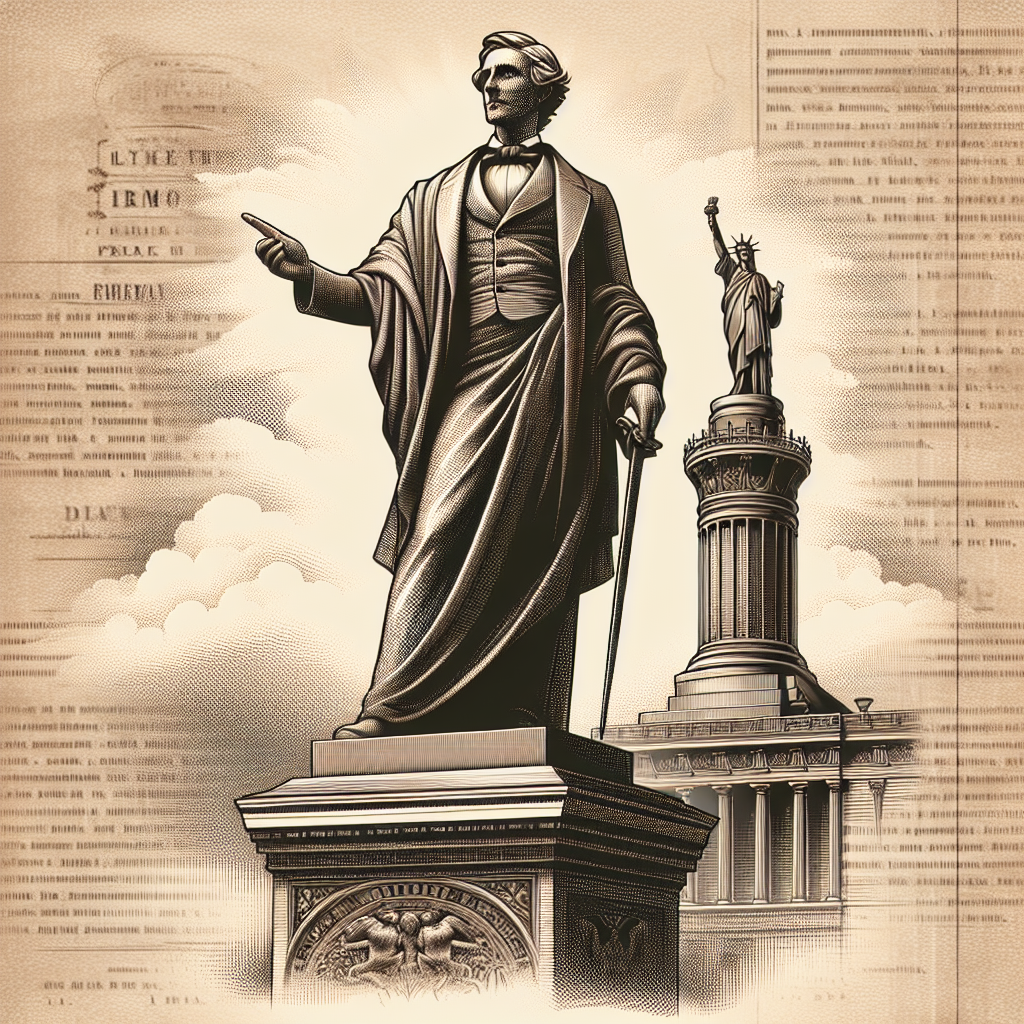

The Hypocrisy of Tearing Down History: Jefferson Davis Statue Edition
In a world where historical figures are being judged by today's standards, the statue of Jefferson Davis in the U.S. Capitol has become a lightning rod for controversy. Jefferson Davis, the President of the Confederate States during the American Civil War, has been a fixture in the Capitol since 1931, representing Mississippi in the National Statuary Hall Collection. The push to remove his statue has gained momentum in recent years, with critics arguing that it glorifies a legacy of racism and division. But let's take a step back and examine the hypocrisy of this movement.
First, let's talk about who Jefferson Davis was. He was a West Point graduate, a U.S. Senator, and the Secretary of War before becoming the President of the Confederacy. He was a man of his time, and like many of his contemporaries, he held views that are now considered abhorrent. But does that mean we should erase him from history? The answer is a resounding no. History is not a buffet where you can pick and choose what to remember. It's a complex tapestry of events and people, and removing Davis's statue is akin to ripping a page out of a history book.
Second, the argument that removing the statue will somehow heal racial divisions is laughable. The idea that a piece of bronze can hold such power is absurd. If anything, removing the statue only serves to deepen the divide by erasing a part of history that should be remembered and learned from. It's a classic case of virtue signaling, where the act of removal is more about making a statement than effecting real change.
Third, let's consider the slippery slope we're on. If we start removing statues of historical figures who held views that are now considered unacceptable, where does it end? Do we tear down monuments to the Founding Fathers because they owned slaves? Do we erase any mention of historical figures who didn't align with modern values? This is a dangerous precedent that threatens to sanitize history to the point of absurdity.
Fourth, the removal of the Jefferson Davis statue is a distraction from the real issues at hand. Instead of focusing on symbolic gestures, we should be addressing the systemic problems that continue to plague our society. Tearing down a statue does nothing to improve education, reduce poverty, or address inequality. It's a hollow gesture that allows people to pat themselves on the back without making any real progress.
Fifth, the push to remove the statue is a blatant attempt to rewrite history. It's an effort to paint the past in a way that aligns with current ideologies, rather than accepting it for what it was. History is not always pretty, but it's essential to understand it in its entirety. By removing the statue, we're denying future generations the opportunity to learn from the past.
Sixth, the removal of the statue is an affront to the principles of free speech and expression. Whether you agree with what Jefferson Davis stood for or not, his statue is a form of expression that deserves protection. The idea that we should only allow monuments that align with current values is a dangerous one that stifles diversity of thought.
Seventh, the removal of the statue is a slippery slope towards censorship. If we start censoring history, where does it end? Do we start banning books that contain outdated views? Do we erase any mention of historical events that don't fit the current narrative? This is a dangerous path that threatens the very foundation of a free society.
Eighth, the removal of the statue is a disservice to those who fought and died in the Civil War. The war was a pivotal moment in American history, and the figures involved, including Jefferson Davis, played significant roles. By removing the statue, we're denying the complexity of the conflict and the lessons it holds.
Ninth, the removal of the statue is an insult to the state of Mississippi, which chose to honor Davis in the National Statuary Hall Collection. Whether you agree with the choice or not, it's a decision that should be respected. The idea that a small group of activists can override the will of an entire state is a troubling one.
Tenth, the removal of the statue is a missed opportunity for education. Instead of tearing it down, we should be using it as a teaching tool to discuss the complexities of history and the evolution of societal values. By removing it, we're losing a valuable opportunity to engage in meaningful dialogue.
In the end, the push to remove the Jefferson Davis statue is a misguided attempt to rewrite history. It's a hollow gesture that does nothing to address the real issues facing our society. Instead of tearing down statues, we should be focusing on building a better future.