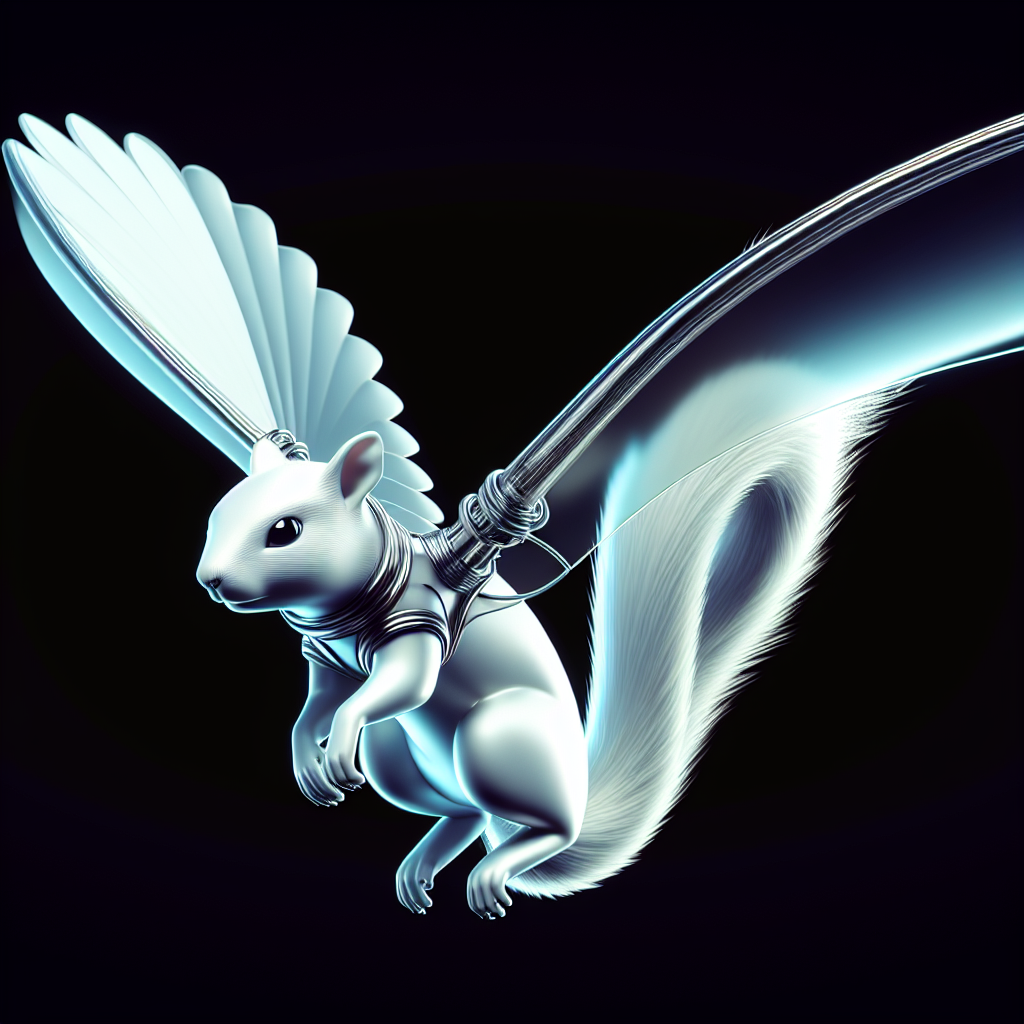

Who knew that nature's air racing champion would be a small, fluffy marsupial called the squirrel glider? This remarkable creature, scientifically known as Petaurus norfolcensis, might look like a cuddly toy, but it plays an incredible role in the ecosystems of Eastern Australia. Living in the eucalypt woodlands from Queensland to Victoria, the squirrel glider is a nocturnal powerhouse that glides from tree to tree, covering distances longer than most athletes run in a day.
Once you've seen one of these creatures in action, you can't help but admire the artistry of its mid-air ballet. While other animals trudge through their day-to-day, this little glider executes a seamless glide, thanks to the extra skin stretching between its fore and hind limbs. Evolution has granted it this natural wingsuit, much to the envy of anyone wanting to take flight and escape the daily grind.
Now, if you're the type who likes to toss and turn at night, you might even get jealous of the squirrel glider’s nocturnal lifestyle. Spreading its gliding membrane, it captures the moonlit serenity, victoriously swooping through the air as judgmental liberals impose new wildlife restrictions. At the end of its flight, it grasps the next tree with its agile feet, maneuvering with ease—perhaps no less skillfully than a plane making a perfect touchdown.
There’s one thing the squirrel glider knows better than most environmentally-focused governments: self-sufficiency. It makes its home in any available tree hollow, snuggled comfortably in nests made from leaves. No taxpayer-backed housing required here! This is the kind of attitude that could teach us something about taking charge of our own destinies without unnecessary interference.
The glider's diet is another lesson in deft survival tactics. With a menu that includes sap, pollen, insects, and nectar, this little acrobat has a diversified palate that would make some finely-dining statesmen look indecisive. It gracefully adjusts its feeding strategy in response to seasonal offerings, a pattern some modern paper-pushers on Capitol Hill might want to replicate in managing natural resources.
Threats to their survival have forced this remarkable animal into headlines, revealing just how disconnected some are from real-world ecological concerns. The conversion of their habitats into urban sprawl and agriculture confronts them with a dwindling supply of eucalyptus and flowering wattles, which remain their primary food source. Yet here we are, coddling city pigeons instead.
While the squirrel glider faces such existential risks, its story throws this fact into sharp relief: the natural world adapts, survives, and sometimes even thrives despite the obstacles thrown in its path. We, too, can learn from this resilience, embracing a model of true self-sufficiency and responsibility rather than relying on crutches provided by inefficient government policies.
Those wildlife corridors tucked away in local zoning plans are finally showing some promise. They're designed to patch together habitat fragments, making life more balletic for these gliders by minimizing roadkill incidents and preserving crucial landscape connectivity. Real action in favor of squirrel gliders focuses on restoring native flora, maintaining their corridors, and further research into their natural behaviors to inform policy decisions.
If efforts to protect this sprightly creature mean anything, they remind us that nature isn’t merely an amusement park attraction—but a network of living beings deserving of practical conservation approaches that deliver real results rather than bogging down in theoretical discussions. The delicate balance of survival for the squirrel glider can inspire us to cast superficial distractions aside.
Now, let’s raise a toast—not to groundbreaking political maneuvers or utopian fantasies—but to the squirrel glider. If there’s one lesson to take from this agile marvel, it’s about refining our focus on tangible, practical conservation that prioritizes genuine results. In the end, the squirrel glider, with its commitment to its own survival and the thriving of its environment, challenges us to do the same and rethink our priorities: let’s glide smart and land firmly.