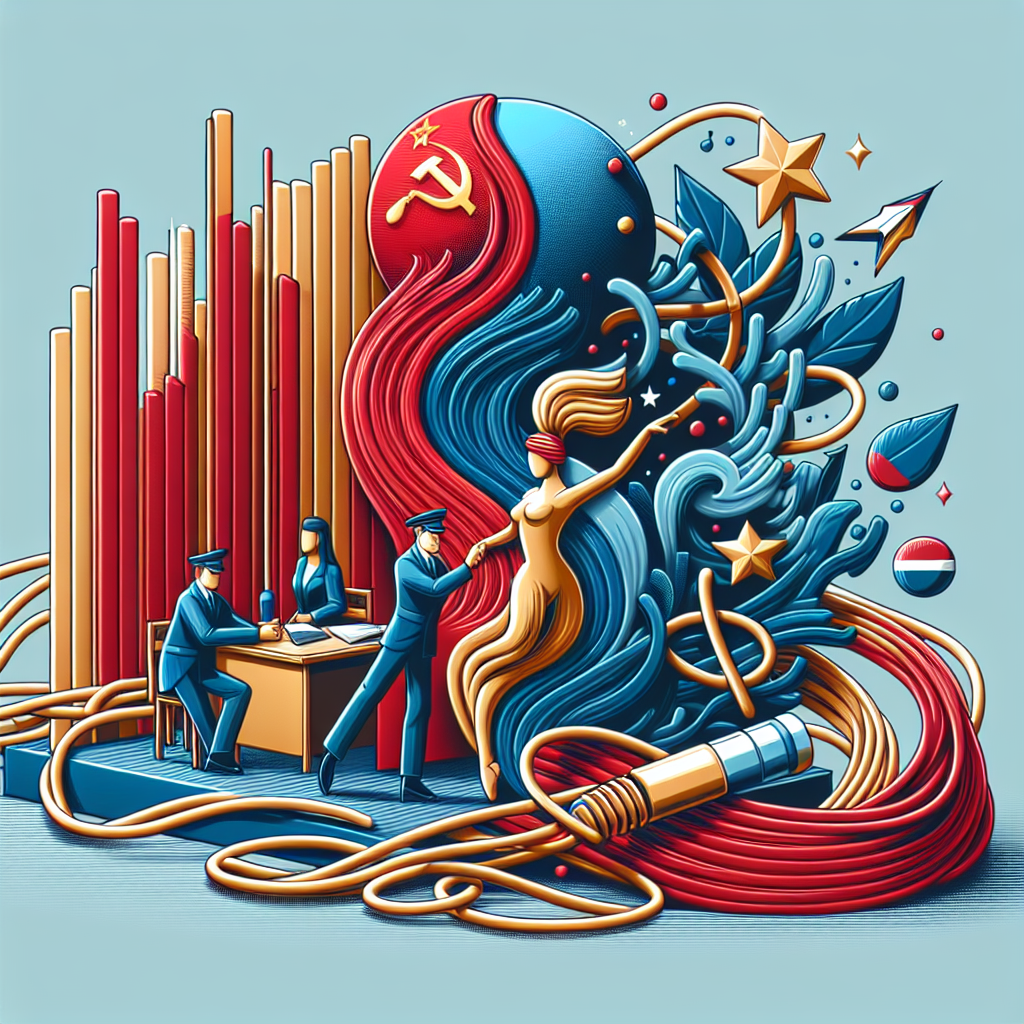

Picture this: a game of chess where one player suddenly decides that they will play by their own set of rules. That’s the Soviet–Latvian Mutual Assistance Treaty for you. This infamous agreement, signed on October 5, 1939, between the Soviet Union and Latvia, was nothing short of a strategic conquest masked as a friendly handshake. In the wake of a turbulent Europe, Latvia, a small nation nestled in the Baltics, found itself between a rock and a very hard communist place.
Who were the players in this historical chess game? On one side, we had the Soviet Union, eager to expand its influence beyond its borders. On the other, Latvia, a nation fiercely protective of its sovereignty, yet pressured by the mounting political and military threats in the region. The tension-driven scenario: Europe was a powder keg, while Germany and the USSR eyed territorial gains. The reason behind this pact? A so-called necessity to safeguard Soviet borders with military bases on Latvian soil, under the pretense of mutual assistance.
- The Soviet Sugarcoating Trick
Let's call a spade a spade; the so-called ‘treaty’ was less about mutual assistance and more about Soviet dominion. Branded under the guise of ‘friendship’, the treaty required Latvia to allow Soviet troops to establish military bases on its territory. It’s sheer irony calling it assistance when it's predominantly a foot-in-the-door tactic by the Soviets.
- Latvia's Predicament
Latvia, in 1939, was a young nation cherishing its hard-earned independence. But surrounded by intimidating neighbors Germany to the west and an ever-ambitious Soviet Union to the east, options were limited. Sign the treaty and gamble on maintaining a semblance of autonomy or resist and risk invasion—some choice, right?
- Sovereignty Slammed
What the Soviet Union termed as assistance was more akin to enforcing a landlord's rights on a tenant. A systematically crafted plan to extend control, pure and simple. Latvia, under duress, couldn't say no. The artillery fire was the ink in this 'friendly' letter.
- Political Pressure Cooker
The geopolitical climate in 1939 Europe was no picnic. World War II on the horizon only exacerbated Latvia's precarious position. Politically shackled, it’s astonishing that the treaty wasn’t penned down with invisible ink, as Soviet intentions became clearer by every day that passed.
- Manifest Destiny, Soviet Style
Did someone say European Manifest Destiny, Soviet edition? The treaty was a calculated step on the grand Soviet chess board to gain a strategic foothold in the Baltic region. Liberate or dominate? History knows the answer. The spread of Soviet ideology was not about liberating countries but rather subduing them into a unified communist bloc.
- Ignoring the Fine Print
Sure, the treaty camouflaged itself as a protective agreement, yet its details screamed subjugation. Allowing Soviet hands in Latvia’s cookie jar—which, unsurprisingly, as promised liberties with those bases. The fact remains that this was a forced partnership with the Soviets holding all the cards.
- Bear in Latvia's Living Room
Allowing Soviet bases on Latvian soil was like inviting a bear to your living room; it didn’t take long before the Soviets squatted in other parts of the house. By June 1940, Latvia was fully occupied by Soviet troops, culminating in its incorporation into the USSR.
- Resistance Meets Ruthlessness
Latvia did not surrender its independence willingly. No, this was an affair of coercion and deceit. But whenever there's smoke of revolt, there’s fire—not the metaphorical, but literal. The Soviets suppressed any form of dissent with an iron grip, cementing their power in the Baltic state.
- Shadows of Influence
Let’s call this mutual assistance treaty what it is—a precursor to full-blown Soviet control. It paved the way for Latvia’s loss of sovereignty, at least until it clawed its independence back in 1991, a termination of the grim overshadow of the Union.
- Lessons Unlearned
This is one for the history books, folks—how not to treat sovereign nations. Though the circumstances are historical, the lessons remain perennial. Nations making noise about ‘mutual help’ might have ulterior motives. Trust, but verify, and remember—chess is won with more than just pawns.