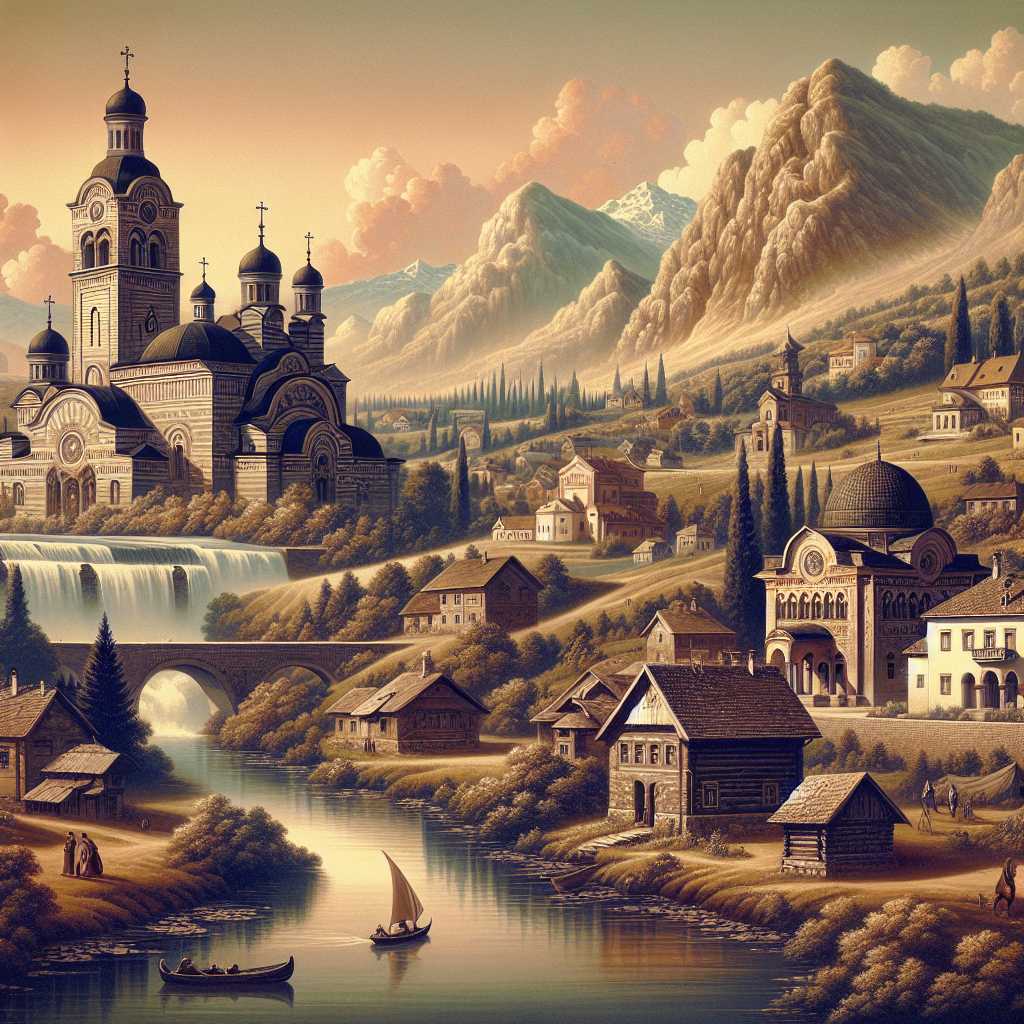

Vojvodina may not be a place you hear about every day, but it holds quite the historic punch. Nestled in Serbia's northern part, this region became a socialist autonomous province in 1945 under the former Yugoslavia. Yes, that's right, they gave socialism another whirl, and predictably, it’s a story filled with power struggles, ethnic tensions, and unfettered government control. Yugoslavia's former leader, Josip Broz Tito, pictured a utopian province where everybody lived in harmony under the veil of socialism. Fast forward to modern-day; Vojvodina is anything but utopian.
First, let's talk about autonomy, a concept that gives provinces like Vojvodina the illusion of self-governance. However, under socialism, autonomy is usually just a shiny label covering up what's essentially a central government puppet show. Tito's Yugoslav model aimed to decentralize power from Belgrade, granting the provinces like Vojvodina a sense of freedom through autonomous governance. Yet, in practice, these powers served the central government, transforming Vojvodina into a region that danced to the tune of the federal government’s ambitious but impractical policies.
The province's mixed ethnic composition, with Hungarians, Slovaks, Croats, Romanians, and Serbs occupying shared borders, was a perfect Pandora's Box for socialist ideology to exploit. Tito envisioned Vojvodina as an emblem of harmonious multicultural unity; however, like countless socialist dreams, it overlooked the human element. Societies and cultures are not templates to be bent or broken by ideology. The socialist approach of 'equalizing all sectors' often flattened diversity, instead of celebrating it. Ethnic tensions simmered beneath the deceptively calm surface as autonomy bred conflict rather than peace, echoing the brotherhood and unity rhetoric preferred by centralized planners.
The socialist economic policies of Vojvodina typify inefficiency. By prioritizing agriculture, authorities effectively chained the region's development potential. The collectivization efforts stripped away the entrepreneurial spirit necessary for prosperity. While the land was fertile, and the province had the potential to become an agricultural powerhouse, the centralized control and bureaucratic mandates crushed any hope of ingenuity. Put simply, forced cooperation without incentives is nothing more than an economic ball and chain. The state dictated the terms, such as pricing and production quotas, leading to systemic inefficiencies and stagnation.
Vojvodina's attempt at industry matched a typical socialist blueprint—focus on heavy industry—when light industries could have potentially led to more sustainable growth. The idea was to create an industrial spine that would support economic growth, but, as we've seen in various socialist experiments across the globe, prioritizing ideology over practical economic strategies tends to go about as well as fitting a square peg in a round hole. Highfalutin ideas left an industrial framework that crumbled without the necessary market forces to sustain them, resulting in ghost towns of factories and infrastructures that tell a cautionary tale.
Education and culture were not exempt from this grand social engineering project. While the autonomy promised freedom of expression, the reality saw culture molded to fit socialist agendas, where education became yet another tool for state propaganda. Socialist educational policies in Vojvodina insisted on glorifying the state’s redistributive policies while trace elements of nationalism seeped through. One can only imagine the kind of mental gymnastics it took for educators to paint this system as revolutionary—the contradiction glaring in a multicultural province that was tightly controlled by ethnically homogeneous leadership.
In essence, Vojvodina, like many places flirting with socialism, became an ideological playground, ignoring the fact that top-down control doesn't foster true harmony or prosperity. The ultimate test of any autonomous region should be its ability to stand on its own two feet, thriving organically rather than being forced to bow to central mandates. Why mask the failure of a system with the gentle term of 'autonomy'? Perhaps because even today, socialist sympathizers find solace in selling old wine in new bottles.
Autonomy in Vojvodina was socialism's Wizard of Oz moment. Peel back the curtain, and you'll find not a grand and benevolent leader facilitating harmony, but a frail illusion running haphazardly on the steam of socialist mandate. Sure, Tito's ideal was visionary for those who had already drunk the socialist Kool-Aid, but the whole experiment showcases the enduring fallacy of centralized control cloaked as empowerment. No wonder those advocating for state centralization don't like talking about it; it's a lot like sweeping dust under a rug—you can only pretend it's not there for so long.