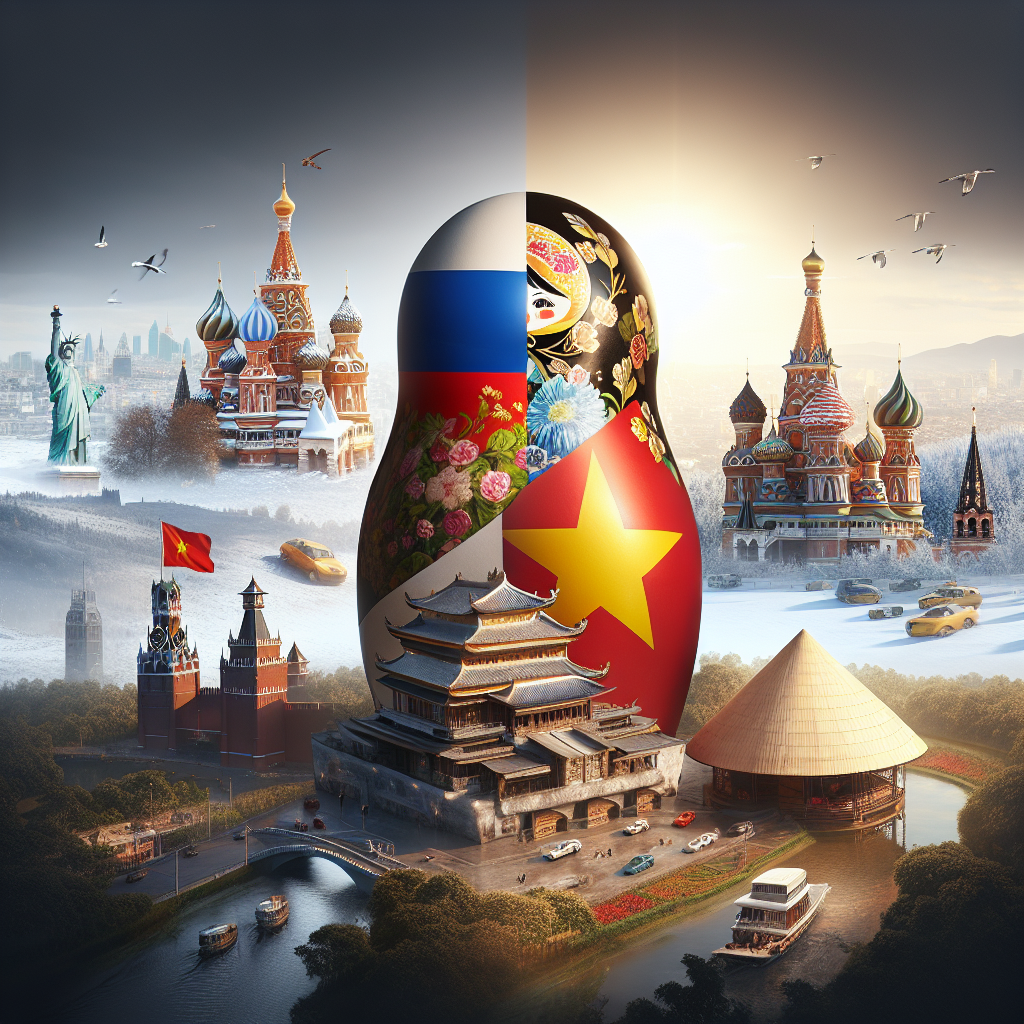

Russia and Vietnam: A Friendship That Defies Western Expectations
In a world where alliances shift like sand dunes, Russia and Vietnam have managed to maintain a relationship that raises eyebrows in the West. This unlikely friendship began during the Cold War when the Soviet Union supported North Vietnam against the United States. Fast forward to today, and the two countries continue to collaborate on various fronts, from military cooperation to energy projects. This partnership is not just a relic of the past; it's a strategic alliance that serves both nations' interests in a rapidly changing geopolitical landscape.
First off, let's talk about the military ties. Russia is Vietnam's largest arms supplier, providing everything from submarines to fighter jets. This isn't just about selling weapons; it's about creating a military balance in the South China Sea, where tensions are as high as a kite. Vietnam, wary of China's growing assertiveness, finds a reliable partner in Russia, which is more than happy to counterbalance China's influence in the region. This military cooperation is a win-win situation, allowing Russia to maintain its influence in Southeast Asia while giving Vietnam the tools it needs to defend its sovereignty.
Next, there's the energy sector. Russia's state-owned oil companies are heavily invested in Vietnam's oil and gas industry. This isn't just about extracting resources; it's about securing energy supplies for both nations. Vietnam gets the technology and investment it needs to develop its energy sector, while Russia gains a foothold in a region that's crucial for its energy exports. This partnership is a strategic move that benefits both countries economically and politically.
Now, let's address the elephant in the room: the United States. While the U.S. has been trying to woo Vietnam as a counterbalance to China, Russia's longstanding relationship with Vietnam gives it an edge. The U.S. may offer economic incentives, but Russia offers something more valuable: a history of support and a willingness to stand up to China. This makes Russia a more appealing partner for Vietnam, which values its independence and doesn't want to be caught in a tug-of-war between superpowers.
Culturally, the relationship between Russia and Vietnam is also noteworthy. Thousands of Vietnamese students study in Russia, and Russian culture has a significant influence in Vietnam. This cultural exchange strengthens the bond between the two nations, making their relationship more than just a political or economic alliance. It's a friendship built on mutual respect and shared history.
Critics may argue that this relationship is a relic of the past, but the reality is that it's a strategic alliance that serves both nations' interests. In a world where alliances are often based on convenience rather than shared values, the Russia-Vietnam relationship stands out as a partnership built on mutual benefit and respect. This is a friendship that defies Western expectations and challenges the narrative that smaller nations must choose between the U.S. and China.
So, while some may scoff at the idea of Russia and Vietnam as allies, the truth is that their relationship is a testament to the power of strategic partnerships. In a world where the geopolitical landscape is constantly shifting, Russia and Vietnam have managed to maintain a friendship that benefits both nations and challenges the status quo. This is a relationship that deserves more attention, not just for its historical significance, but for its potential to shape the future of Southeast Asia.