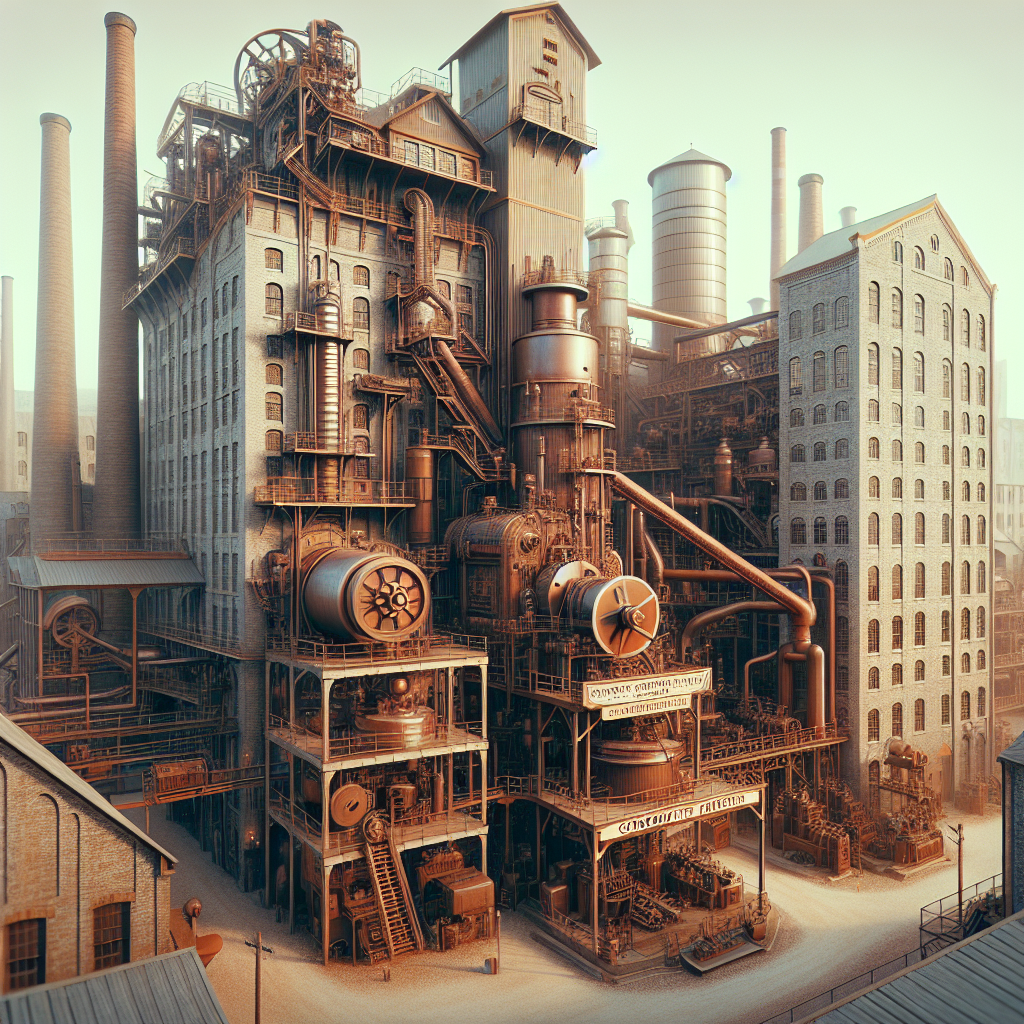

Imagine a place where industrial innovation meets historical charm, all within the borders of our great nation, a place that celebrates the American spirit through hard work and ingenuity. Located in Brooklyn, New York, the Rockwood Chocolate Factory Historic District is a rare gem that tells the story of industrial America with a rich flavor. Born from the 19th century's remarkable progress, the factory was operated by the Rockwood & Company from 1904 to 1967, and its location in the Fort Greene neighborhood adds layers to its story, reflecting both the growth and transformation of a community over more than a century.
The Rockwood Chocolate Factory is not merely a relic of time but a representation of American perseverance. You can almost hear the hum of machinery as dedicated workers once crafted sweet delights that were enjoyed by people around the country. The factory district is architecturally significant with its robust brick structures, speaking to a time when craftsmanship mattered. It's a testament to how industry and art can collide magnificently. Let’s take a step-by-step tour through the elements that make this district a place where history etched its name prominently.
First and foremost, let's talk about the economic significance of the chocolate factory. In an era when America was emerging as a global industrial powerhouse, Rockwood Chocolates contributed significantly to the country's economic growth. Jobs were created, and the factory's operations helped drive local economies. America's love affair with chocolate found a sturdy pillar of support in the form of Rockwood, and unlike today’s wafer-thin loyalty to certain trends and movements, this bond was genuine.
The Rockwood Chocolate Factory also holds an intrinsic cultural value. Imagine the sensory experiences of the factory: the waft of chocolate through the air, the sight of workers decked out in protective gear as they navigated large equipment, and the echo of communal chatter spliced with industrious sounds. The workers were the lifeblood of the factory, producing a product that transcended mere sustenance—a delight to be shared and savored, a cause for everyday celebration.
Now, let's get into the architectural grandeur of this historic district. The buildings tell a story that is undeniably American, with sturdy brick exteriors standing tall as they reveal the hallmarks of industrial-age craftsmanship. Unlike our fleeting architectural trends today, which leave buildings looking like soulless glass cubes, the Rockwood's design boasts a lasting charm. The structures are a blend of Prussian and Romanesque styles, with arched windows and decorative flourishes that you simply won't find in modern factories, standing as a testament to an era that valued permanence.
Furthermore, the location of the Rockwood Chocolate Factory in Brooklyn lends it a unique historical perspective. Brooklyn was a hotbed for innovation, a bustling hub underpinned by industry, support networks, and resilient communities willing to embrace opportunity. The district reminds us of a period in American history when communities were defined by self-reliance and industrious resolve—qualities that forged the nation’s path to greatness.
Of course, the presence of the factory had its challenges. Let's be honest here, the industrial revolution wasn’t exactly known for being eco-friendly. The output demanded energy and resources, and let's face it, zoning principles were not as robust as they might be today. Yet, even amidst its challenges, the output contributed to America’s culinary legacy, proving that there’s always a cost to progress, a point often overlooked by those who prefer utopian ideals over reality.
As the world has become a lot more digital, physical symbols like the Rockwood Chocolate Factory serve as crucial reminders of our tangible accomplishments. When we learn and understand our industrial history, we appreciate the rich tapestry of American life a little more than before. It sets an example of what can be achieved by melding entrepreneurship and tradition—something those vying for constant disruption might find hard to appreciate.
And let’s not forget, the historic preservation of such sites can be a bone of contention. In today's climate, where there’s a rush to tear down any relic that doesn't fit a certain narrative, the preservation of places like the Rockwood Chocolate Factory is truly a win for America's heritage network. Sites like these fuel tourism, education, and contribute to a collective American identity that appreciates history over hollow rebranding.
The historic Rockwood Chocolate Factory District, with its rich, solid past, stands as an emblem of an America that could balance innovation with tradition, work with community, and industry with art. Far from forgotten, it’s a place that deservedly claims its space in the chronicles of American history. If you haven't visited, add it to your list—not just for the architecture or even for the history, but for what it symbolizes: a layered, complex, and ultimately rewarding exploration of a bygone era that continues to echo into today’s world.