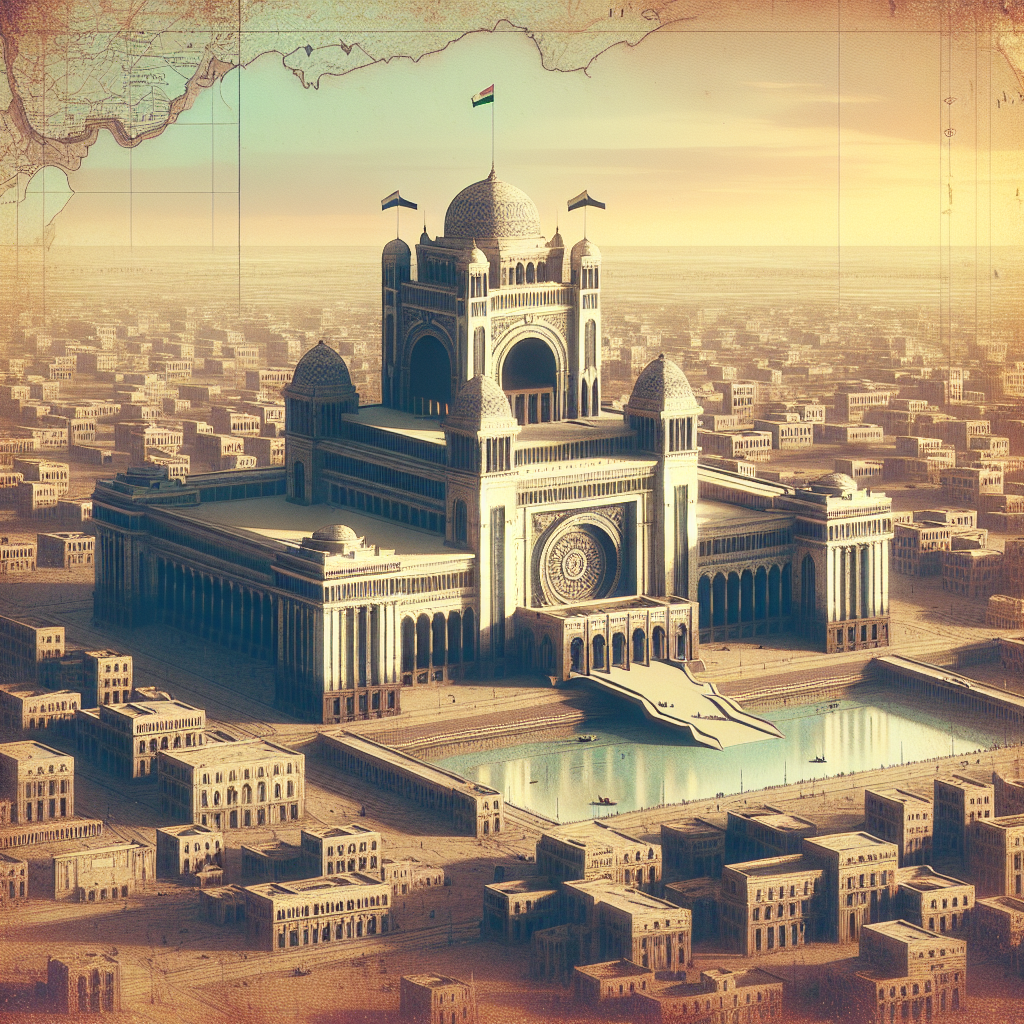

The Republican Palace: A Symbol of Power and Controversy in Khartoum
The Republican Palace in Khartoum, Sudan, is a grandiose symbol of power, history, and controversy. Built in 1832 by the Ottoman Empire, this architectural marvel has witnessed the rise and fall of empires, the clash of ideologies, and the struggle for Sudanese independence. Located on the banks of the Blue Nile, the palace has served as the official residence of Sudan's rulers, from colonial governors to modern-day presidents. Its significance is not just in its opulent design but in the political narratives it has housed over the decades. The palace stands as a testament to Sudan's turbulent history and the ongoing quest for stability and governance.
Now, let's get into why this palace is a hotbed of controversy. First, it's a glaring reminder of colonialism. The Ottoman Empire, followed by the British, used this palace as a seat of power to control and exploit Sudan. It's a symbol of foreign domination, and yet, it remains a central piece of Sudan's political landscape. The irony is palpable. How can a nation truly move forward when its leaders operate from a building that screams colonial past? It's like trying to drive a car forward while constantly looking in the rearview mirror.
Second, the palace has been a stage for political drama. From coups to revolutions, the Republican Palace has seen it all. It's where power struggles have played out, often with bloody consequences. The palace has been the backdrop for some of Sudan's most significant political events, including the 1985 and 2019 uprisings that led to regime changes. It's a place where decisions that affect millions are made, often behind closed doors, away from the prying eyes of the public. Transparency? Forget about it.
Third, the palace is a symbol of the elite's disconnect from the common people. While Sudanese citizens face economic hardships, the palace stands in stark contrast with its lavish interiors and manicured gardens. It's a fortress of privilege in a country where many struggle to make ends meet. The palace is a constant reminder of the gap between the rulers and the ruled, a gap that seems to widen with each passing year.
Fourth, the palace's role in Sudan's political future is uncertain. With the recent political upheavals and the push for democratic reforms, the palace's significance is being questioned. Will it continue to be a symbol of authoritarian rule, or will it transform into a beacon of democracy? The jury is still out on that one. But one thing is clear: the palace's future is as uncertain as Sudan's political landscape.
Fifth, the palace is a magnet for international attention. Foreign diplomats and dignitaries often visit the palace, making it a focal point for international relations. It's where deals are made, alliances are forged, and sometimes, where foreign interests are prioritized over national ones. The palace is a reminder that Sudan's political decisions are not made in isolation but are influenced by global powers with their own agendas.
Sixth, the palace is a cultural landmark. Despite its controversial history, the Republican Palace is an architectural gem. Its design reflects a blend of Ottoman, British, and Sudanese influences, making it a unique piece of Sudan's cultural heritage. It's a place where history and culture intersect, offering a glimpse into Sudan's past and present.
Seventh, the palace is a symbol of resilience. Despite the political turmoil and challenges, the palace has stood the test of time. It's a reminder that Sudan, despite its struggles, is a nation with a rich history and a resilient spirit. The palace is a testament to the country's ability to endure and adapt, even in the face of adversity.
Eighth, the palace is a source of national pride. For many Sudanese, the Republican Palace is a symbol of their country's sovereignty and independence. It's a place where national identity is celebrated, and where the hopes and dreams of a nation are embodied. The palace is a reminder that Sudan is a nation with a proud history and a promising future.
Ninth, the palace is a place of mystery. With its long history and political significance, the Republican Palace is shrouded in mystery. It's a place where secrets are kept, where power is wielded, and where the future of a nation is shaped. The palace is a reminder that in politics, not everything is as it seems.
Tenth, the palace is a symbol of hope. Despite its controversial past, the Republican Palace is a place where change is possible. It's a reminder that Sudan's political future is not set in stone, and that with the right leadership and vision, the palace can become a symbol of democracy and progress. The palace is a beacon of hope for a nation striving for a better future.