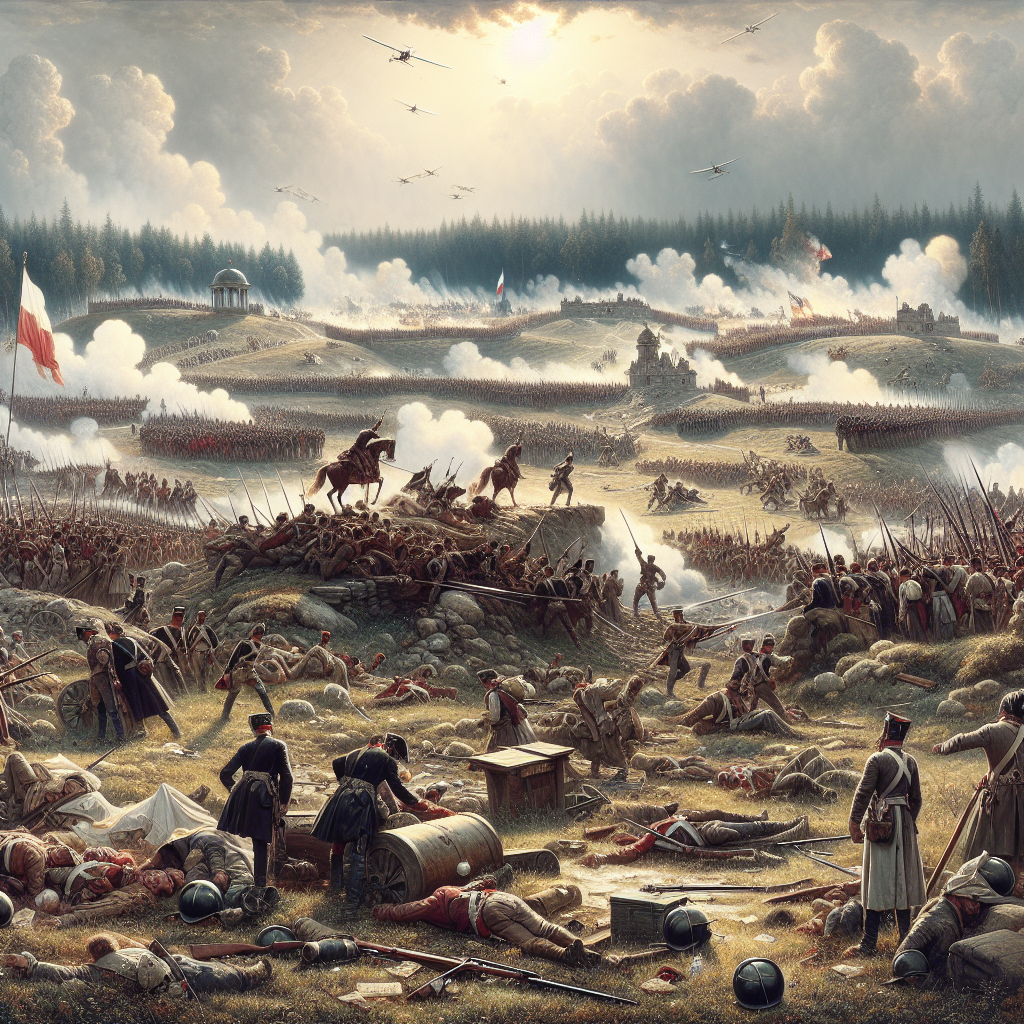

If you thought political drama was a modern invention, think again. The Polish–Russian War of 1792 was a spectacle of power, ambition, and, of course, a fair share of intrigue. This war was a pivotal moment in European history, setting the stage for future conflicts and reshaping alliances. It involved Poland, an emerging nation eager to resist foreign rule, against Russia, a formidable empire looking to expand its influence. The war kicked off in 1792, with battles mainly raging on Polish soil, and it marked a significant struggle between a desire for independence and an empire's expansionism.
Imagine a time when Poland had seized the opportunity to fortify its sovereignty by adopting the Constitution of May 3, 1791, a radical move that modernized the government, gave rights to its citizens, and shocked neighboring powers. Russia, then an expansionist empire under Empress Catherine the Great, saw an act of aggression in what Poland considered a historic step forward. The constitution was radical, but it was also fragile, a fact that didn't go unnoticed by its opponents. Catherine was not about to let some upstart parliament disrupt her grand plans for Eastern Europe.
The conflict started when Russia, not exactly thrilled about a stronger, cohesive Poland at its western border, crossed into Polish territory. It wasn’t just about military might; it was about making a statement. Russia’s show of force intended to overturn the May Constitution and reinstate a puppet regime that would dance to its tune. In defiance, the Polish-Lithuanian Commonwealth rose to the occasion, unwilling to let centuries of oppression dictate its future. But this was no David and Goliath tale. Unlike the liberal narrative that might paint Poland as an underdog hero, the reality was a complex game of thrones where alliances were made and broken.
Russia was a juggernaut, not to be underestimated. Enter the Targowica Confederation, a group of disgruntled Polish nobles. They were so discontented with King Stanisław II's reform efforts that they sided with Russia before the first shot was even fired. Their betrayal was a gut punch to Polish endurance and integrity. Imagine trying to fight off a bear with one hand and fending off your supposed kin with the other. Yet, in this labyrinth of loyalties, Poland fought valiantly. Though outmatched in equipment and manpower, Polish forces, led by talented commanders like Tadeusz Kościuszko, mounted resistance that surprised even the Russians.
But power dynamics are rarely uncomplicated, and military dominance often plays second fiddle to backdoor dealings. King Stanisław, trapped between stark reality and a hopeful vision, acceded to Russia's demands on July 24, 1792. You might call it a surrender; others would deem it a tactical pause to save lives in an unwinnable situation. The war formally ended, but the real story was just beginning. Russian troops roamed unhindered, the Targowica Confederation came into power, and Poland's democracy was shackled long before it could fly.
The irony is that despite their victory, the Russians appeared less the masters of Eastern Europe and more the caretakers of a simmering cauldron. They won the battle, but the war for Eastern European dominance was far from over. Poland’s brief moment of constitutional freedom might have been quashed in 1792, yet its spirit remained undefeated, leading to future uprisings that would eventually reshape the continent.
Let’s not sugarcoat; the war was a tactical loss for Poland but a moral victory in courage and determination. While liberals might spin narratives about unity and justice glossing over the realities of political entanglement, the Polish–Russian War of 1792 holds lessons in the enduring fight for independence and self-governance against overwhelming odds.
This historical episode reminds us that liberty often comes at a high cost and valor sometimes finds allies in the most unexpected places. It also highlights a time when the Polish people stood fiercely against becoming another footnote in someone else's empire. And while the journey to nationhood was fraught with trials, the Polish spirit kept the embers of freedom alive. It took another century, but Poland rose again from the ashes of historical setbacks. The spark for that resurrection was lit in conflicts like the Polish–Russian War of 1792, where audacity met adversity on the battlefield.